If you’re working on building rafters or making precise cuts, mastering the speed square can change everything. This simple tool helps you measure angles quickly and make straight, accurate cuts every time.
Imagine saving time, avoiding costly mistakes, and feeling confident with each mark you make. In this guide, you’ll discover easy steps to use a speed square like a pro, even if you’re new to carpentry. Ready to boost your skills and get your project done right?
Let’s dive in.
Basics Of A Speed Square
A speed square is a tool used in carpentry and building. It helps measure and mark angles for cuts.
This tool is especially useful for rafters and making precise cuts quickly. It is simple to use and reliable.
Design And Features
A speed square is usually made of metal or plastic. It has a triangular shape with different markings.
The tool has a lip or fence that rests against the edge of the material. This helps keep the square steady.
- Triangle shape with a right angle
- Ruler marks in inches or centimeters
- Degree markings for angles
- Notches for scribing lines
- Durable material for long use
Common Uses
Carpenters use the speed square to mark angles for rafters. It helps cut wood at the right angle.
The tool also helps mark straight lines and check if corners are square. It is useful for many woodworking tasks.
- Marking 90-degree and 45-degree angles
- Measuring and marking rafters and stair stringers
- Checking the squareness of frames
- Drawing straight cut lines quickly
- Using notches to scribe parallel lines
Choosing The Right Speed Square
A speed square helps you make accurate cuts for rafters and other woodwork. Picking the right one matters for your project’s success. This guide covers what to look for before buying.
Material and size affect the tool’s durability and ease of use. Knowing your options will make your work faster and more precise.
Material Options
Speed squares come in different materials. Each type has its own benefits and drawbacks. Choose the one that fits your needs and budget.
- Aluminum:Lightweight and rust-resistant. Good for outdoor use and long-lasting.
- Steel:Very strong but heavier. May rust if not cared for.
- Plastic:Affordable and light. Less durable and can break easily.
Size Considerations
Speed squares come in various sizes. The size affects how you measure and mark your wood. Pick a size that matches your typical project size.
| Size | Common Use | Pros | Cons |
|---|---|---|---|
| 7 inches | General framing and small cuts | Easy to carry, fits in tool belt | May be hard to use on larger lumber |
| 12 inches | Larger framing and roofing | Good for wider boards and rafter cuts | Heavier, less portable |
| 16 inches | Special projects and large timbers | Better for big cuts and layouts | Bulky, not for everyday use |
Preparing For Rafter Cuts
Using a speed square helps you make precise rafter cuts. Getting ready correctly saves time and wood.
Learn how to measure roof pitch and mark cut angles before cutting rafters.
Measuring Roof Pitch
Roof pitch shows how steep your roof is. It is the vertical rise over a 12-inch horizontal run.
Use your speed square to find the roof pitch number quickly.
- Place the speed square on the rafter’s edge.
- Look at the numbers where the lip of the square meets the rafter.
- Find the pitch number, usually between 1 and 12.
- Write down the pitch for cutting angles.
Marking Cut Angles
After measuring the pitch, mark the cut angles on your rafter. The speed square makes this easy.
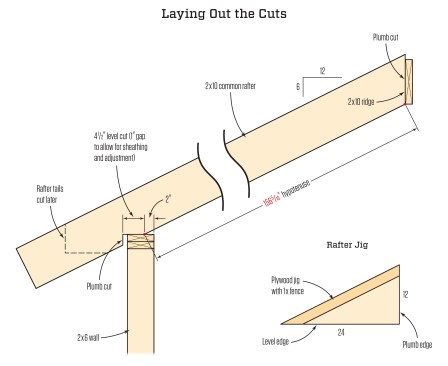
Align the pivot point of the speed square with the edge of the rafter. Rotate the square to the pitch angle.
- Hold the speed square firmly at the pivot point.
- Rotate it until the tongue points to the roof pitch number.
- Draw a line along the speed square’s edge for the cut.
- Repeat for all rafters before cutting.
Credit: www.jlconline.com
Making Common Cuts
A speed square is a handy tool for roofing work. It helps you make quick, accurate cuts for rafters.
This guide explains how to use a speed square for three common cuts: plumb cuts, birdsmouth cuts, and heel cuts.
Plumb Cuts
Plumb cuts are vertical cuts made at the top of the rafter. They fit against the ridge board or wall plate.
To make a plumb cut, place the speed square on the rafter’s end. Align it with the rise measurement on the square’s degree scale. Draw the cut line along the square’s edge.
- Place the pivot of the speed square at the rafter edge
- Rotate the square to the correct pitch number
- Draw the plumb cut line with a pencil
- Cut along the line with a saw
Birdsmouth Cuts
A birdsmouth cut lets the rafter sit flat on the top plate of the wall. It is a notch cut with two parts: the seat cut and the plumb cut.
Use the speed square to mark the plumb cut first. Then mark the seat cut by placing the square flat on the top plate edge. Draw a horizontal line for the seat cut.
- Mark the plumb cut line using the pitch on the speed square
- Place the square flat on the top plate edge
- Draw the seat cut line perpendicular to the plumb cut
- Cut out the notch with a saw
Heel Cuts
The heel cut is the angled cut at the rafter’s bottom end. It allows the rafter to rest firmly on the wall plate.
To mark a heel cut, place the speed square on the rafter’s bottom edge. Use the pitch scale to set the angle. Draw the cut line along the square’s edge.
- Set the speed square to the rafter’s pitch
- Place the square on the bottom edge of the rafter
- Draw the heel cut line with a pencil
- Saw along the line carefully
Using The Speed Square For Layout
The speed square is a simple tool for making accurate marks on wood. It helps you draw straight lines and mark angles quickly. Using it right saves time and improves your cuts.
This guide shows how to use the speed square for layout tasks like drawing lines and marking angles on rafters and other wood pieces.
Drawing Straight Lines
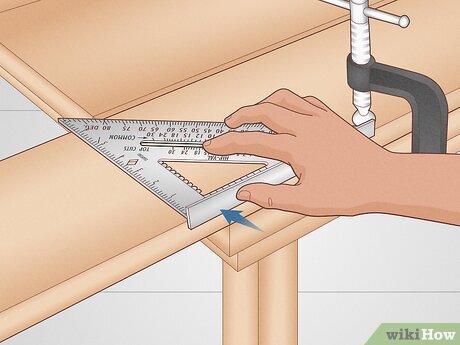
Place the speed square firmly against the edge of the board. Use the flat side to keep it steady. Draw a line along the straight edge of the square. This line will be perfectly straight and square to the board edge.
- Hold the speed square tightly against the wood’s edge.
- Use a pencil to trace along the square’s straight edge.
- Check that the square does not move while drawing.
- Use this line as a guide for cutting or measuring.
Marking Angles Quickly
The speed square has degree markings for fast angle layout. To mark an angle, place the pivot point on the board edge. Rotate the square until the desired degree aligns with the board edge. Draw along the square’s edge to mark the angle line.
| Angle (Degrees) | Use |
| 45° | Common for rafters and braces |
| 30° | Used in roof pitch layouts |
| 60° | Helps in stair stringers |
Tips For Accuracy And Safety
Using a speed square helps make precise cuts for rafters. Accuracy is key for strong roof framing.
Safety matters when cutting wood. Follow simple steps to avoid accidents and errors.
Securing The Workpiece
Hold the wood firmly before marking or cutting. A moving piece can cause mistakes or injury.
Use clamps or a workbench to keep the wood steady. This keeps your hands safe and your cuts straight.
- Place clamps near the cutting area
- Check that the wood does not wobble
- Keep your hands away from the blade path
Double-checking Measurements
Measure twice before cutting to avoid waste. Small errors can cause big problems later.
Use the speed square to verify angles and lengths. Take your time and be sure.
- Mark your cut line clearly with a pencil
- Confirm angles match the rafter design
- Recheck the tape measure or ruler readings
- Compare measurements with the building plans
Advanced Speed Square Techniques
The speed square is a useful tool for cutting rafters and other wood pieces. Learning advanced techniques helps you work faster and more accurately.
These techniques go beyond simple measurements. They include scribing complex angles and using the speed square with other tools.
Scribing Complex Angles
Scribing complex angles lets you mark wood precisely for cutting. This is important when rafters need to fit tight or meet at unusual angles.
To scribe, place the speed square on the wood edge. Align the pivot point with your starting mark. Rotate the square until the desired angle matches the wood edge. Use a pencil to draw the angle line.
- Mark the pivot point on the wood edge
- Rotate the square to the needed angle
- Hold the square firmly to avoid slipping
- Draw a clear line along the square’s edge
- Check the angle with a protractor if needed
Using With Other Tools
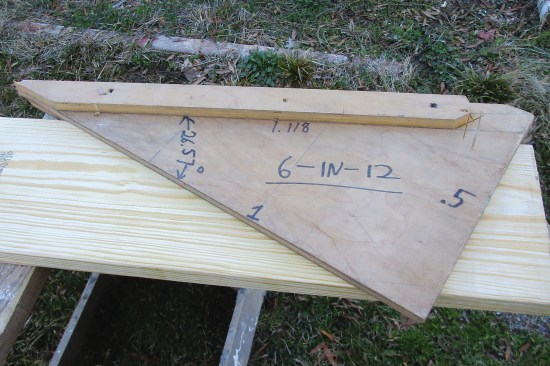
The speed square works well with tools like a tape measure, framing square, and circular saw. Combining tools improves accuracy and speed.
For example, use a tape measure to find the exact length. Then, use the speed square to mark the cut line. A framing square can double-check angles for rafters. When cutting, a circular saw guided by the speed square line gives a clean cut.
- Measure length with a tape measure
- Mark angles with the speed square
- Check angles using a framing square
- Guide cuts with a circular saw
- Use clamps to hold wood steady
Credit: www.jlconline.com

Credit: www.wikihow.com
Frequently Asked Questions
What Is A Speed Square Used For In Roofing?
A speed square helps mark precise angles and cuts for rafters. It ensures accurate measurements and straight lines, speeding up roofing tasks. This tool is essential for framing, making it easier to create consistent, strong roof structures.
How Do You Mark Angles With A Speed Square?
Place the pivot point on the board’s edge, align the ruler to the desired angle, and mark the line. This method lets you quickly draw common angles like 30°, 45°, or 60° for cuts and layouts.
Can A Speed Square Measure Rafter Lengths?
Yes, it can measure and mark rafter lengths accurately. The speed square’s built-in scales and markings help calculate lengths and angles for birdsmouth cuts, ensuring a perfect fit for rafters.
How Do You Cut Rafters Using A Speed Square?
Use the speed square to mark the birdsmouth and plumb cuts on the rafter. Follow the marked lines with a saw for precise cuts. This process ensures rafters fit securely on the top plate and ridge beam.
Conclusion
Mastering the speed square simplifies your woodworking tasks. It’s a versatile tool. Handy for precise cuts and angles. With practice, accuracy improves. Measure, mark, and cut with confidence. Speed squares save time and effort. They’re essential for every toolbox. Keep practicing for better results.
Each project becomes easier and more efficient. Now, you have the basics. Start your woodworking journey with a speed square. Happy building!