You’ve got a utility knife in hand, and you’re ready to tackle that project on your to-do list. But before you make the first cut, let’s talk about something crucial: safety.
Utility knives are incredibly handy tools, but they can pose risks if not used correctly. Have you ever felt a twinge of uncertainty about how to handle one safely? You’re not alone. Many people overlook the simple yet essential precautions necessary to avoid accidents.
By the end of this article, you’ll feel confident and secure in your ability to use a utility knife without fear of injury. Stick with me, and discover how you can make every cut with precision and peace of mind.
Choosing The Right Utility Knife
Utility knives are handy tools for cutting many materials. Picking the right one helps you work safely and well.
Think about what you will cut and how often you use the knife. This guide helps you choose the best utility knife for your needs.
Types Of Utility Knives
Utility knives come in different styles. Each type fits certain tasks and cutting needs better.
- Retractable knives:The blade slides in and out for safety and storage.
- Fixed blade knives:These have blades that do not move, offering strong cutting power.
- Snap-off knives:Blades have sections that can be snapped off to show a new sharp edge.
- Folding knives:The blade folds into the handle, making it compact and safe to carry.
Blade Selection
Choose a blade that fits your cutting job. Different blades work best for different materials.
| Blade Type | Best For | Notes |
| Standard straight blade | Cutting cardboard, plastic, and thin wood | Sharp and easy to replace |
| Hook blade | Cutting roofing materials and linoleum | Prevents damage to surfaces below |
| Rounded tip blade | Cutting carpet and vinyl | Reduces risk of puncture |
| Heavy-duty blade | Cutting thick materials like rubber or leather | Stronger and thicker blade |
Ergonomic Features
Look for a knife that feels comfortable in your hand. Ergonomic features reduce strain and improve control.
- Soft, non-slip grip to prevent slipping
- Lightweight design for less fatigue
- Blade lock mechanism for safety during use
- Easy blade change system to save time

Credit: excelblades.com
Preparing For Safe Cutting
Using a utility knife can be dangerous without the right preparation. You must get ready before cutting to avoid injuries.
This guide covers key steps to prepare safely for cutting with a utility knife.
Inspecting The Knife
Check the utility knife before use. Look for any damage or wear on the blade and handle.
- Make sure the blade is sharp and not chipped.
- Check that the blade locks securely in place.
- Look for cracks or damage on the handle.
- Replace the blade if it is dull or bent.
Wearing Protective Gear
Wear gear that protects your hands and eyes. It reduces the risk of cuts and other injuries.
| Protective Item | Purpose |
| Cut-resistant gloves | Protect hands from sharp blades |
| Safety glasses | Shield eyes from flying debris |
| Long sleeves | Cover arms to avoid scratches |
Setting Up A Stable Workspace
Create a steady area for cutting. A stable surface helps you control the knife better.
- Use a flat, hard surface like a workbench or table.
- Clear the area of clutter and distractions.
- Ensure good lighting to see the cutting line clearly.
- Keep your body balanced and hands steady.
Proper Cutting Techniques
Using a utility knife safely requires good cutting techniques. These techniques help prevent accidents and ensure clean cuts.
Focus on how you hold the knife, the direction you cut, and how much pressure you apply. These details make a big difference.
Correct Grip And Hand Placement
Hold the utility knife firmly but not too tight. Use your dominant hand to grip the handle near the blade. Keep your other hand away from the cutting line.
- Wrap your fingers around the handle securely.
- Place your thumb on the side of the blade for control.
- Keep your non-cutting hand clear of the blade path.
- Do not hold the material too close to the blade.
Cutting Away From The Body
Always cut away from your body to avoid injuries. This reduces the risk if the blade slips.
Position your body so the knife moves outward, not toward you. Keep your arms steady and clear from the blade’s path.
Controlling Blade Pressure
| Pressure Level | Effect | Tip |
|---|---|---|
| Light | Blade may slip or not cut fully | Use steady, firm pressure for safety |
| Medium | Clean, controlled cuts | Apply consistent pressure throughout the cut |
| Heavy | Blade may break or cut too deep | Avoid pressing too hard; let the blade do the work |

Credit: olfa.com
Maintaining Your Utility Knife
Keeping your utility knife in good shape helps it work better and last longer.
Regular care makes cutting safer and more precise. Here are key tips for maintenance.
Regular Blade Replacement
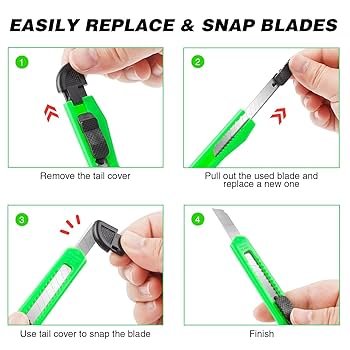
Replace the blade often to keep cuts clean and safe. Dull blades can slip and cause injuries.
- Unlock the blade holder safely.
- Remove the old blade carefully.
- Insert a new sharp blade securely.
- Lock the blade holder back in place.
- Dispose of old blades in a blade-safe container.
Cleaning And Storage
Clean your knife after each use to stop rust and dirt build-up.
Follow these cleaning and storage tips:
- Wipe blade with a damp cloth and dry well.
- Use rubbing alcohol to remove sticky residue.
- Store the knife in a dry place away from moisture.
- Keep the blade retracted when not in use.
Checking For Damage
Look over your utility knife before use to find any damage.
| Damage Type | What to Check | Action Needed |
| Blade chips or cracks | Blade edge and tip | Replace blade immediately |
| Loose blade holder | Blade tightness | Tighten or repair holder |
| Rust spots | Blade and metal parts | Clean or replace if severe |
Handling Emergencies
Using a utility knife can lead to cuts if you are not careful. It is important to know how to act quickly and safely in case of an injury.
This guide explains what to do if you get cut, when to get medical help, and how to avoid injuries in the future.
First Aid For Cuts
Clean the cut gently with water to remove dirt. Stop the bleeding by pressing a clean cloth on the wound. Use a bandage to cover the cut and keep it clean.
- Wash your hands before touching the cut.
- Rinse the cut with clean water.
- Press firmly to stop bleeding.
- Apply antibiotic ointment if available.
- Cover with a sterile bandage.
- Change the bandage daily or if it gets wet.
When To Seek Medical Help
Some cuts need a doctor’s care. Look for deep wounds, heavy bleeding, or cuts that won’t stop bleeding. Also seek help if the cut is from a dirty or rusty object.
| Condition | Action |
| Bleeding doesn’t stop after 10 minutes | Go to the emergency room |
| Cut is deep or gaping | Get stitches from a doctor |
| Signs of infection (redness, swelling, pus) | See a healthcare provider |
| Cut caused by animal or human bite | Seek medical care immediately |
| No tetanus shot in last 5 years | Consult a doctor |
Preventing Future Injuries
Use the knife safely to avoid cuts. Keep the blade sharp and use a cutting surface. Always cut away from your body and wear protective gloves if possible.
- Hold the knife firmly and cut slowly.
- Store the knife with the blade retracted.
- Keep your work area clean and well-lit.
- Never use a damaged or dull blade.
- Wear cut-resistant gloves when needed.
- Keep knives out of reach of children.

Credit: www.youtube.com
Frequently Asked Questions
How Do I Hold A Utility Knife Safely?
Hold the knife firmly with your dominant hand. Keep fingers away from the blade edge. Use a steady grip to control cuts precisely and avoid slips.
What Safety Gear Should I Wear With A Utility Knife?
Wear cut-resistant gloves to protect your hands. Safety goggles shield your eyes from debris. Proper footwear and clothing also reduce injury risks.
How Often Should I Replace Utility Knife Blades?
Replace blades when dull or damaged. A sharp blade cuts cleanly and reduces force. Frequent replacement ensures safer, more efficient cutting.
What Is The Best Cutting Technique With A Utility Knife?
Cut away from your body and hands. Use smooth, controlled strokes. Avoid forcing the blade to prevent slips and accidents.
Conclusion
Using a utility knife safely protects you from serious injuries. Always keep the blade sharp and cut away from your body. Wear gloves and use a stable surface for cutting. Never rush and take your time with each cut. Store the knife properly when not in use.
Small habits make a big difference in safety. Stay alert and respect the tool’s power. These simple steps help you work confidently and avoid accidents. Safety first, every time you use a utility knife.