Measuring angles accurately can be tricky, especially when you don’t have the right tools or know how to use them properly. If you’ve ever struggled with getting the perfect angle for your project, a bevel gauge could be your best friend.
But knowing how to measure angles with a bevel gauge isn’t always straightforward. You’ll discover simple, practical tips that will make your measurements precise and your work look professional. Ready to take your skills to the next level? Keep reading, and you’ll master the bevel gauge in no time.
Choosing The Right Bevel Gauge
Measuring angles with a bevel gauge requires the right tool. Choosing the correct bevel gauge makes your work easier and more accurate.
Consider the type and material of the bevel gauge before buying. These factors affect durability and precision.
Types Of Bevel Gauges
There are several types of bevel gauges. Each type fits different tasks and user needs. Understanding them helps you pick the best one.
- Fixed Bevel Gauge:Has a set angle that cannot change. Good for repeated work at the same angle.
- Adjustable Bevel Gauge:Allows you to set and lock any angle. Useful for various projects.
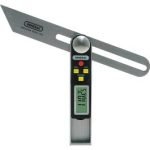
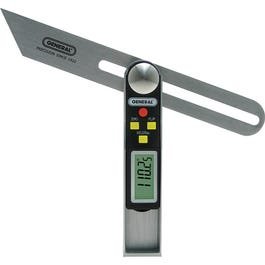
- Digital Bevel Gauge:Shows angle readings on a digital display. Offers high accuracy and ease of use.
Material And Build Quality
The material and build quality affect how long the bevel gauge lasts and how well it works. Choose materials that resist wear and damage.
| Material | Advantages | Disadvantages |
| Steel | Strong and durable, resists bending | May rust if not cared for |
| Brass | Resists corrosion, looks good | Can be softer and bendable |
| Plastic | Lightweight and cheap | Less durable, can break easily |
| Aluminum | Light and rust-resistant | Less strong than steel |

Credit: www.amazon.com
Preparing For Accurate Measurement
Measuring angles with a bevel gauge requires careful preparation. Small mistakes can cause big errors in your work.
Follow clear steps to get precise angle readings every time you use the tool.
Calibrating The Gauge
Calibration ensures your bevel gauge shows the correct angle. Always check it before measuring.
- Close the gauge blades completely so they line up perfectly.
- Tighten the locking screw to fix the blades in place.
- Use a protractor to compare the gauge angle with a known 0° or 90° angle.
- Adjust the gauge if the angle does not match the standard.
- Repeat the check to confirm accuracy.
Securing The Workpiece
Hold the workpiece steady to prevent movement during measurement. This step is vital for exact results.
| Method | Description |
|---|---|
| Clamps | Use clamps to lock the workpiece on a flat surface. |
| Workbench Vise | Secure the piece in a vise to keep it firm. |
| Non-slip Mat | Place a rubber mat under the workpiece for extra grip. |
| Assistants | Ask someone to hold the workpiece steady if needed. |
Techniques For Measuring Angles
Measuring angles with a bevel gauge needs care. Using the right technique helps you get exact angles.
This guide shows simple ways to use a bevel gauge for angle measuring. Follow these tips to work with ease.
Aligning The Bevel Gauge
Place the bevel gauge on the surface where you want to measure the angle. Make sure the blade moves freely.
Adjust the blade to match the angle’s edge carefully. The blade must be tight once set to avoid errors.
- Loosen the locking knob to move the blade
- Fit the blade along one side of the angle
- Match the handle to the other side
- Tighten the knob to lock the blade in place
Reading The Angle Correctly
After setting the bevel gauge, use a protractor to find the exact angle. Place the protractor base along the handle.
Read the degree where the blade points. This shows the angle size you measured with the bevel gauge.
- Place the protractor flat on your work surface
- Align the protractor’s baseline with the bevel gauge handle
- Look where the blade crosses the protractor scale
- Note the angle in degrees

Credit: www.amazon.com
Common Mistakes To Avoid
Using a bevel gauge to measure angles can be easy if you avoid common errors. These mistakes can cause wrong readings and wasted materials.
Below are two frequent problems to watch for when measuring angles with a bevel gauge.
Incorrect Positioning
Placing the bevel gauge in the wrong spot leads to inaccurate angle measurements. Make sure the tool sits flat against the surfaces you are measuring.
- Do not hold the gauge at an angle or tilt it.
- Align the blade tightly against the edge or corner.
- Check that the handle is stable and not moving.
- Keep the bevel gauge steady while reading the scale.
Misreading The Scale
Reading the bevel gauge scale incorrectly can cause errors. The numbers may look confusing if you do not know how to read them well.
| Common Error | How to Fix It |
| Reading from the wrong side of the scale | Check which side shows degrees and use that side only |
| Ignoring small increments | Look closely at the lines between numbers for precise angles |
| Mixing up minutes and degrees | Learn the difference and note the units before recording |
| Parallax error when viewing scale | Look straight at the scale to avoid misreading |
Maintaining Your Bevel Gauge
Keeping your bevel gauge in good shape helps you measure angles correctly. Proper care makes your tool last longer.
Simple maintenance tasks can prevent damage and keep the gauge accurate. Focus on cleaning, storage, and calibration.
Cleaning And Storage
Clean your bevel gauge after each use. Remove dust, dirt, and any sticky residue carefully.
Store the gauge in a dry place to avoid rust. Keep it away from extreme heat or moisture.
- Use a soft cloth to wipe the tool
- Apply a light oil layer to metal parts
- Keep it in a protective case if possible
- Store in a drawer or toolbox
Regular Calibration
Check your bevel gauge’s accuracy regularly. Calibration ensures your angle measurements stay correct.
Use a known angle or a protractor to compare readings. Adjust the gauge if it shows different angles.
- Set the gauge to a 90-degree angle and test
- Compare with a reliable angle tool
- Tighten or loosen screws to adjust
- Recheck after any adjustment

Credit: m.youtube.com
Frequently Asked Questions
What Is A Bevel Gauge Used For?
A bevel gauge measures and transfers angles accurately. It’s essential for woodworking, metalworking, and construction projects that require precise angle replication.
How Do You Set An Angle On A Bevel Gauge?
Loosen the locking mechanism, adjust the blade to the desired angle, and then tighten the lock to secure it. This ensures consistent and accurate angle measurement.
Can A Bevel Gauge Measure Both Inside And Outside Angles?
Yes, a bevel gauge can measure both inside and outside angles by adjusting the blade accordingly. This versatility makes it useful for various angle measurement tasks.
How To Read The Angle Measured By A Bevel Gauge?
After setting the bevel gauge, place it against a protractor or angle finder to determine the exact angle. The bevel gauge itself does not show numeric values.
Conclusion
Mastering a bevel gauge takes practice and patience. Start with simple angles. Gradually tackle more complex measurements. Always double-check your readings for accuracy. Clean and maintain your tools regularly. This ensures precision and longevity. Share your experiences with fellow woodworking enthusiasts.
Learn and grow together. Remember, accurate measurements lead to better projects. Happy woodworking!