
If you want to get the best results from your belt sander, knowing how to operate it efficiently is key. Using this powerful tool the right way not only saves you time but also gives your projects a smooth, professional finish.
Whether you’re a beginner or have some experience, these tips will help you work smarter, avoid common mistakes, and protect your safety. Keep reading to discover simple yet effective ways to make your belt sander work harder for you.
Choosing The Right Belt Sander
Choosing the right belt sander helps you work faster and better. It is important to pick one that fits your project needs.
The right sander makes sanding smooth and saves effort. Consider the type, grit, power, and speed before buying.
Types Of Belt Sanders
Belt sanders come in different types for different jobs. Knowing these types helps you select the best one.
- Handheld Belt Sanders: Good for small to medium jobs and easy to control.
- Stationary Belt Sanders: Fixed on a bench, ideal for heavy sanding tasks.
- Edge Belt Sanders: Designed for sanding edges and corners with precision.
- Detail Belt Sanders: Small and narrow belts for tight spaces.
Selecting The Appropriate Grit
The grit of the sanding belt affects how smooth the surface will be. Pick the right grit for your task.
Coarse grit removes material fast but leaves rough marks. Fine grit smooths surfaces gently.
- Coarse Grit (40-60): Use for heavy material removal and shaping.
- Medium Grit (80-120): Good for general sanding and smoothing.
- Fine Grit (150-220): Best for finishing and polishing surfaces.
Power And Speed Considerations
Power and speed affect how well the sander works on different materials. Choose according to your needs.
Higher power means the sander can handle tough jobs. Variable speed lets you adjust for better control.
- Low Power (below 5 amps): Suitable for light sanding and small projects.
- Medium Power (5-7 amps): Good for most household sanding tasks.
- High Power (above 7 amps): Used for heavy-duty and professional work.
- Variable Speed: Allows control over sanding speed for different materials.

Credit: www.reddit.com
Preparing For Sanding
Using a belt sander safely and well needs good preparation. Getting ready helps you work faster and avoid mistakes.
This guide covers key steps before you start sanding. Follow these tips for a smooth job.
Safety Gear Essentials
Protect yourself with the right safety gear. This gear lowers the risk of injury and keeps you comfortable.
- Wear safety goggles to protect your eyes from dust and debris.
- Use a dust mask or respirator to avoid breathing in fine particles.
- Put on hearing protection to guard against loud noise from the sander.
- Wear gloves to protect your hands from rough surfaces and heat.
- Choose tight-fitting clothes to avoid loose fabric getting caught.
Workpiece Setup
Secure the workpiece firmly before sanding. This keeps it steady and prevents accidents.
| Tip | Reason |
| Clamp the workpiece to a stable surface | Stops movement during sanding |
| Check that the surface is flat | Ensures even sanding |
| Remove nails, screws, or staples | Prevents damage to the belt and workpiece |
| Mark the area to sand clearly | Helps focus sanding on the right spot |
Cleaning And Inspection
Check the sander and belt for any dirt or damage before use. Clean parts help the tool work well and last longer.
Follow these cleaning and inspection steps:
- Unplug the sander before inspection.
- Remove dust from the belt and rollers with a soft brush.
- Look for tears or wear on the sanding belt.
- Check that the belt tracks correctly and adjust if needed.
- Make sure the power cord is not damaged.
Operating Techniques
Using a belt sander correctly can save time and improve your work quality. It is important to know the right methods for control and safety.
This guide covers key tips to help you handle the tool with ease and efficiency.
Proper Handling And Grip
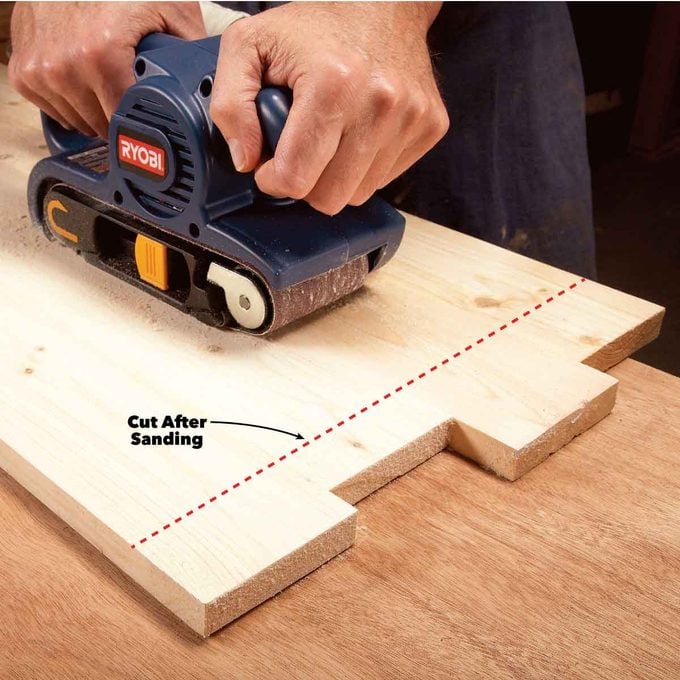
Hold the belt sander firmly with both hands. Use one hand on the main handle and the other on the front knob. This gives you better control and balance.
- Keep your fingers away from the moving belt.
- Do not grip too tightly; a steady hold works best.
- Stand in a balanced position to avoid slipping.
Maintaining Consistent Pressure
Apply even pressure on the sander to avoid uneven sanding. Too much pressure can damage the surface or wear out the belt quickly.
| Pressure Level | Effect |
| Light | Slow sanding but smooth finish |
| Moderate | Efficient sanding without damage |
| Heavy | Possible gouges or belt wear |
Avoiding Common Mistakes
Many users make simple errors that reduce sanding quality. Watch for these to improve your results.
- Do not hold the sander in one spot for too long.
- Keep the belt aligned and clean to prevent burns.
- Make sure the workpiece is secure before sanding.
- Replace worn belts promptly to maintain performance.
Credit: www.familyhandyman.com
Maximizing Efficiency
Using a belt sander correctly saves time and improves results. Knowing how to adjust settings and use proper techniques helps you work faster.
This guide covers key tips for optimizing speed, sanding patterns, and belt care to get the best from your tool.
Optimizing Speed Settings
Adjust the belt sander speed to match the material and task. Too fast can damage the surface. Too slow wastes time.
- Start with a medium speed for most wood types.
- Use lower speeds for soft woods or delicate finishes.
- Use higher speeds for hard woods and removing old finishes.
- Test on scrap wood before sanding the final piece.
- Adjust speed gradually if the belt slips or burns the wood.
Using The Right Sanding Pattern
Follow a consistent sanding pattern to avoid uneven surfaces. Change directions to smooth the wood better.
- Sand along the grain to reduce scratches.
- Use overlapping passes for full coverage.
- Shift sanding direction 90 degrees between passes.
- Do not press hard; let the sander do the work.
- Keep the sander moving to avoid gouges.
Preventing Belt Wear
Proper belt care extends tool life and improves sanding quality. Avoid damage by following simple steps.
| Tip | Action |
| Clean the belt | Use a rubber belt cleaner to remove dust and debris regularly |
| Check belt tension | Keep the belt tight but not overly stretched |
| Use the correct belt grit | Match grit size to the job for less wear and better finish |
| Avoid overheating | Do not press too hard or sand for too long in one spot |
| Store belts properly | Keep belts flat and dry to prevent warping |
Maintenance Tips
Keeping your belt sander in good condition helps it last longer. Regular maintenance keeps the machine running smoothly.
Simple care steps can prevent problems and improve sanding results. Follow these tips to maintain your belt sander well.
Cleaning The Belt And Machine
Dust and debris can build up on the belt and inside the machine. Clean these parts often to avoid damage and poor sanding.
- Use a soft brush to remove dust from the belt surface.
- Wipe the machine body with a dry cloth after each use.
- Use compressed air to blow dust from inside the sander.
- Check for stuck debris under the belt and remove it carefully.
Replacing And Tracking Belts
Replace worn belts to keep your sander working well. Proper belt tracking prevents uneven wear and damage.
| Task | Instructions |
| Replacing Belt | Turn off and unplug the sander. Release the belt tension and slide off the old belt. Fit the new belt and reapply tension. |
| Tracking Belt | Switch on the sander at low speed. Adjust the tracking knob until the belt runs centered on the rollers. |
Lubrication And Storage
Lubricate moving parts to reduce wear. Store the sander in a dry, cool place to protect it from rust and damage.
- Apply a few drops of machine oil to the bearings and shafts as per the manual.
- Do not over-lubricate; wipe off excess oil to avoid dust buildup.
- Cover the sander with a cloth or plastic when not in use.
- Keep the sander away from moisture and extreme temperatures.
Troubleshooting Common Issues
Operating a belt sander smoothly needs attention to some common problems. Fixing these issues keeps your work clean and fast.
Here are tips to handle belt slippage, uneven sanding, and overheating. These help keep your sander working well.
Dealing With Belt Slippage
Belt slippage happens when the sanding belt moves incorrectly or stops. It lowers sanding quality and can damage your project.
Check the belt tension and adjust it if loose. Clean the rollers and belt to remove dust and debris. Replace worn belts to avoid slipping.
- Inspect belt tension regularly
- Clean rollers and belt after use
- Replace belts that are worn or torn
- Make sure the belt is installed in the right direction
Handling Uneven Sanding
Uneven sanding means some areas get more sanded than others. It can ruin your project’s surface finish.
Ensure the belt is flat and not warped. Keep steady pressure and move the sander evenly. Check the platen for damage and replace if needed.
- Use a flat sanding belt without wrinkles
- Apply even pressure across the surface
- Move the sander at a steady pace
- Check and replace damaged platen
Fixing Overheating Problems
Overheating can cause damage to the sander and belt. It also reduces sanding performance and may burn the wood.
Let the sander cool down if it feels hot. Clean air vents to keep the motor cool. Use the right grit belt for the job to avoid extra strain.
- Turn off and cool the sander if hot
- Clean dust from air vents regularly
- Use correct grit size for the material
- Avoid pressing too hard on the sander

Credit: benchmarkabrasives.com
Frequently Asked Questions
How Do You Choose The Right Belt Sander?
Choosing the right belt sander depends on the project size and material. Consider the power, belt size, and speed. For smaller projects, a compact sander is ideal. For larger surfaces, opt for a more powerful model. Always select a sander with adjustable speed for better control.
What Safety Precautions Should You Take?
Always wear protective gear like goggles and masks. Ensure the workspace is well-ventilated. Keep loose clothing away from the sander. Secure the material you’re sanding properly. Always unplug the sander when changing belts. Following these precautions minimizes the risk of accidents during operation.
How Do You Maintain A Belt Sander?
Regularly clean the belt sander to remove dust and debris. Check the belts for wear and replace them as needed. Lubricate moving parts to ensure smooth operation. Tighten any loose screws or bolts. Proper maintenance ensures the sander operates efficiently and prolongs its lifespan.
Why Is Belt Tension Important?
Proper belt tension ensures efficient sanding and prevents slippage. An overly tight belt may damage the sander or the material. A loose belt reduces sanding effectiveness. Regularly check and adjust the tension according to the manufacturer’s instructions. This ensures optimal performance and extends the belt’s life.
Conclusion
Operating a belt sander well saves time and effort. Always keep the belt clean and tight for best results. Use steady, even pressure to avoid damage. Change belts often to keep sanding smooth. Safety gear protects you from dust and injury.
Practice these tips to work smarter and safer. A good belt sander job makes projects look better. Keep learning and improving with each sanding task. Your work will show the difference. Simple steps lead to great results every time.