
Are your chisels feeling dull and making your woodworking tasks harder than they should be? Sharpening your chisels the right way can make a huge difference in how smoothly and precisely you work.
You’ll discover simple, effective tips to sharpen your chisels quickly and keep them in top shape. Whether you’re a beginner or have some experience, these easy steps will help you save time and get better results every time. Keep reading—you’re just moments away from turning those dull tools into sharp, reliable ones you’ll love to use.
Choosing The Right Tools
Sharpening chisels needs the right tools to get good results. Using proper tools helps keep the chisel sharp and safe to use.
Picking the right sharpening tools makes the process easier and faster. It also helps protect the blade from damage.
Types Of Sharpening Stones
Sharpening stones come in different types. Each type works best for certain sharpening steps.
Common stones include oil stones, water stones, and diamond stones. Each has its own surface texture and use.
- Oil stones:Use oil to lubricate. They last long and are good for medium sharpening.
- Water stones:Use water as lubricant. They cut fast and need flattening often.
- Diamond stones:Use diamond grit. They stay flat and sharpen quickly.
Using Honing Guides
Honing guides help keep the sharpening angle steady. This makes the edge even and sharp.
They are easy to use and good for beginners. Honing guides reduce mistakes and save time.
- Attach the guide to the chisel blade.
- Set the correct angle for sharpening.
- Move the chisel across the stone evenly.
Essential Accessories
Some accessories make sharpening easier and safer. They help keep the tools in good shape.
Common accessories include strops, flattening stones, and clamps. Each helps improve the sharpening process.
- Strops:Used to polish the edge after sharpening.
- Flattening stones:Keep water stones flat for better results.
- Clamps or vises:Hold the chisel steady while sharpening.
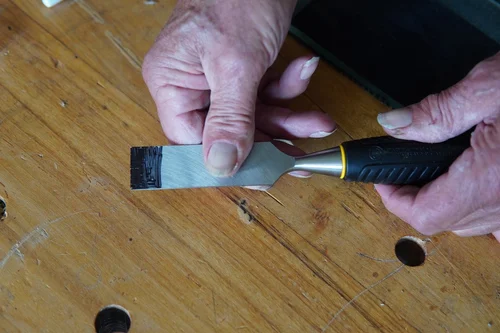
Credit: www.anneofalltrades.com
Preparing Your Chisel
Sharpening a chisel starts with good preparation. Taking time to get your chisel ready makes sharpening easier and better.
Cleaning and fixing your chisel before sharpening helps you get a smooth, sharp edge. This guide covers key steps to prepare your chisel well.
Cleaning And Inspecting The Blade
First, clean the blade to remove dirt and old oil. Use a cloth and some mild cleaner to wipe the metal surface.
Check the blade closely for any damage. Look for cracks, bends, or dull spots that need extra attention.
- Wipe the blade with a soft cloth
- Use a small brush to clean hard spots
- Look for any chips or bends on the edge
- Note areas that look dull or scratched
Removing Rust And Nicks
Rust can stop your chisel from sharpening well. Use fine steel wool or sandpaper to gently remove rust from the blade.
Small nicks or dents need smoothing before sharpening. Use a sharpening stone or file to carefully level these rough spots.
- Rub rusted areas with steel wool or sandpaper
- Be gentle to avoid damaging the blade
- Use a file to smooth out nicks and chips
- Check often to keep the blade even
Sharpening Techniques
Sharpening chisels keeps them effective and safe to use. Good techniques bring out the best edge.
Learn how to set angles, use tools safely, and sharpen by hand. These tips help you get sharp edges.
Setting The Correct Bevel Angle
Bevel angle affects how sharp and strong the chisel edge is. Most chisels need a 25 to 30-degree bevel.
- Check manufacturer’s recommendations for angle
- Use a bevel gauge or angle guide for accuracy
- Keep the angle steady during sharpening
- A lower angle is sharper but less durable
- A higher angle is stronger but less sharp
Using A Bench Grinder Safely
Bench grinders speed up sharpening but can overheat the metal. Follow safety steps to avoid damage and injury.
- Wear eye protection and gloves
- Hold the chisel firmly and steady
- Touch the edge lightly to the grinding wheel
- Keep the chisel moving to prevent heat build-up
- Dip the chisel in water often to cool it
- Check the bevel angle regularly
Hand Sharpening On Stones
Hand sharpening gives control and a fine edge. Use sharpening stones of different grits for best results.
| Stone Grit | Purpose |
|---|---|
| Coarse (100-400) | Remove nicks and reshape edge |
| Medium (800-1500) | Refine bevel and smooth scratches |
| Fine (3000+) | Polish edge for sharpness |
Creating A Micro-bevel
A micro-bevel adds a small angle on the edge for extra sharpness and strength. It is easy to add after main sharpening.
- Hold chisel at 5 degrees higher than main bevel
- Make a few light passes on the stone or sharpener
- Check edge for a polished, crisp finish
- This reduces edge roll and chips

Credit: woodworkersinstitute.com
Honing And Polishing
Sharpening chisels requires more than just grinding. Honing and polishing improve the edge.
These steps make the blade sharper and help it last longer during use.
Using Leather Strops
Leather strops help polish the chisel edge after honing. They remove tiny burrs and smooth the blade.
Pull the chisel backward on the strop with light pressure. Keep the angle steady for best results.
- Use a clean, flat leather strop
- Pull the blade away from the edge
- Keep the bevel angle consistent
- Repeat 10-20 times for a polished edge
Applying Honing Compounds
Honing compounds improve the polishing effect on the leather strop. They contain fine abrasive particles.
Spread a small amount evenly on the strop surface. This helps sharpen and polish the chisel edge better.
- Choose a fine abrasive compound
- Apply a thin, even layer on the strop
- Use sparingly to avoid mess
- Reapply as needed during stropping
Testing Sharpness
Check sharpness by carefully feeling the edge or cutting test material. A sharp chisel cuts wood easily.
Use a soft wood or paper to test. The blade should slice without much force or tearing.
- Lightly run your finger across the edge (not along)
- Try cutting a thin wood shaving
- Slice a piece of paper cleanly
- Repeat honing and stropping if dull
Maintaining Sharp Edges
Keeping your chisels sharp helps you work better and safer. Sharp edges make clean cuts and last longer.
Regular care and proper handling can keep your chisels in top shape. Learn simple tips to maintain sharp edges easily.
Proper Storage Tips
Store chisels in a dry place to stop rust. Keep them away from moisture and dust for longer sharpness.
- Use a chisel roll or wooden rack to avoid edge contact.
- Cover the blade with a protective cap or sheath.
- Keep chisels separated to prevent them from hitting each other.
- Store in a toolbox with silica gel packs to absorb moisture.
Regular Touch-ups
Frequent light sharpening keeps edges keen without removing too much metal. Use a fine sharpening stone often.
| Tool | Frequency | Purpose |
| Sharpening Stone | Weekly | Remove minor dullness |
| Honing Guide | Monthly | Maintain correct edge angle |
| Leather Strop | After every sharpening | Polish and refine edge |
Avoiding Common Mistakes
Wrong habits can dull your chisels fast. Avoid these errors to keep edges sharp longer.
- Do not use chisels on hard materials like metal or stone.
- Avoid using excessive force; let the sharp edge do the work.
- Never store chisels loosely in a drawer without protection.
- Do not skip cleaning chisels after use; dirt can damage edges.

Credit: woodworkersinstitute.com
Frequently Asked Questions
How Often Should Chisels Be Sharpened?
Chisels need sharpening whenever they become dull or fail to cut cleanly. Frequent use may require weekly sharpening. Regular honing can extend sharpness between major sharpening sessions.
What Tools Are Best For Sharpening Chisels?
Whetstones, diamond stones, and sharpening systems work best. Start with coarse grit and finish with fine grit for a sharp edge. Honing guides help maintain proper bevel angles.
How Do I Maintain The Bevel Angle When Sharpening?
Use a honing guide or angle jig to keep consistent bevel angles. Maintaining the original angle ensures effective cutting and prolongs chisel life.
Can I Sharpen Chisels Without Professional Equipment?
Yes, you can use sandpaper on a flat surface as a budget option. However, whetstones provide better precision and a sharper edge.
Conclusion
Sharpening chisels can be simple with the right tips. Remember to choose the correct sharpening stone for your needs. Consistent pressure ensures even sharpening. Keep your angles steady for best results. Practice makes perfect, so don’t rush the process. Check your progress frequently.
A well-sharpened chisel makes woodworking easier and more enjoyable. Proper maintenance extends your tools’ life and performance. Invest time in learning and refining your technique. With patience, you will see improvement. Happy chiseling!
