Are your hammers constantly disappearing in the clutter of your toolbox or garage? Do you find yourself wasting time searching for the right one every time a project starts?
You’re not alone. Many people struggle with efficiently storing their hammers, which can lead to frustration and wasted time. Imagine how much more smoothly your projects would run if you knew exactly where to find each hammer at a glance.
We’re diving into practical tips that can transform your workspace from chaotic to organized. You’ll discover easy-to-implement strategies that not only save space but also make your hammers readily accessible whenever you need them. Stick around, and unlock the secrets to a more efficient and stress-free work environment.

Credit: www.velcro.com
Choosing The Right Storage Spot
Storing your hammers properly helps keep your workspace clean. It also protects your tools from damage.
Choosing the right spot for your hammers makes them easy to find and safe to use. Think about space, access, and safety.
Assessing Available Space
Look around your workspace to find places for hammer storage. Check walls, shelves, or toolboxes for free space.
Use vertical space to save room. Hooks or pegboards work well for hanging hammers.
- Measure open wall areas
- Check shelf heights and depths
- Consider drawer or toolbox space
- Use unused corners or ceiling hooks
Considering Accessibility
Place hammers where you can reach them easily. Keep them close to your main work area.
Store them at a comfortable height. Avoid putting hammers too high or too low to prevent strain.
- Keep hammers near your workbench
- Store at waist or eye level
- Use labeled holders for quick ID
- Group similar tools together
Evaluating Safety Factors
Think about safety when choosing a hammer storage spot. Avoid places where hammers might fall or cause injury.
Use secure holders to keep hammers stable. Keep children and pets away from tool storage areas.
- Use wall mounts with strong hooks
- Keep storage away from high traffic areas
- Lock toolboxes if children are nearby
- Check that tools do not block walkways

Credit: www.thisoldhouse.com
Wall-mounted Solutions
Storing hammers on the wall saves space and keeps them easy to find. Wall-mounted options keep your tools organized and within reach.
These solutions work well in garages, workshops, or sheds. They protect your hammers and keep your work area tidy.
Using Pegboards
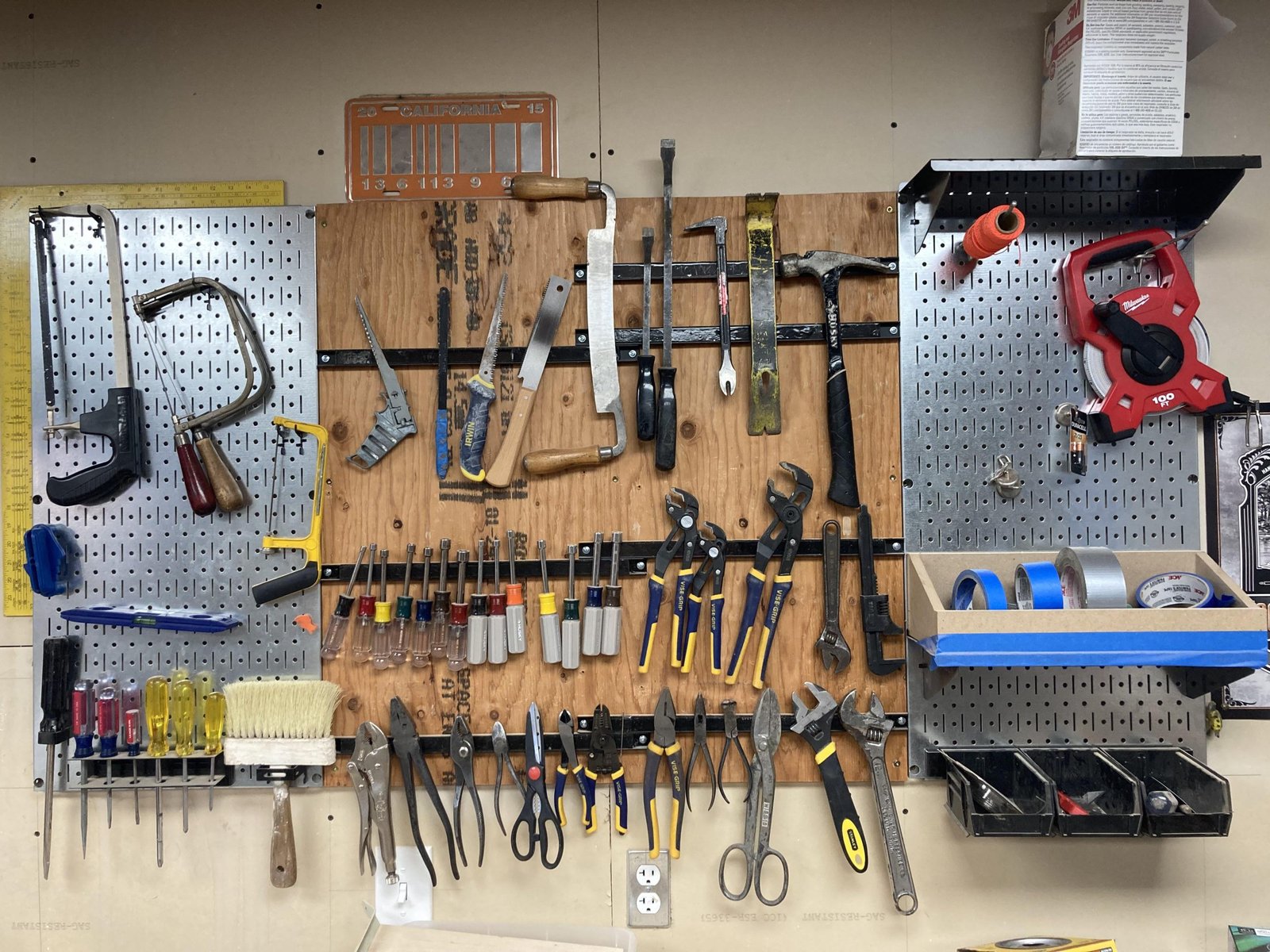
Pegboards are versatile boards with holes. You can hang hooks and holders on them to store hammers neatly.
Pegboards let you arrange hammers by size or type. This makes it easy to grab the one you need quickly.
- Mount the pegboard on a wall near your work area
- Use sturdy hooks to hold each hammer
- Label spots to keep the order consistent
- Combine with other tools for full organization
Installing Magnetic Strips
Magnetic strips hold metal hammers firmly on the wall. They are easy to install and use.
These strips keep hammers visible and off surfaces. You can place them at different heights for convenience.
- Choose strong magnets that can hold heavy hammers
- Install strips on a clean, sturdy wall
- Keep magnets spaced to avoid clutter
- Check magnet strength regularly for safety
Hanging With Hooks And Racks
Hooks and racks are simple ways to hang hammers on walls. They come in many sizes and shapes to fit different tools.
Use hooks for individual hammers or racks for multiple tools. This keeps your workspace neat and tools easy to find.
- Install strong hooks at a comfortable height
- Use racks with slots to hold several hammers
- Place heavier hammers on lower hooks for safety
- Keep hooks spaced to avoid tool damage
Drawer And Cabinet Storage
Storing hammers in drawers and cabinets keeps your workspace tidy. It also protects your tools from damage.
Organizing hammers properly helps you find them quickly. It saves time and avoids clutter.
Custom Inserts For Organization
Custom inserts fit perfectly inside drawers or cabinets. They keep each hammer in its own place. This stops hammers from moving around or scratching each other.
- Measure your drawer or cabinet space before buying inserts.
- Choose inserts made from wood or plastic for durability.
- Design inserts with slots or compartments matching hammer sizes.
- Label each slot for quick hammer placement.
Using Foam Liners
Foam liners add cushioning and reduce noise in drawers. They also prevent hammers from sliding when you open or close the drawer.
| Foam Type | Benefit |
| Closed-cell foam | Water-resistant and easy to clean |
| Open-cell foam | Soft and good for delicate hammer heads |
| Egg crate foam | Provides extra padding and shock absorption |
Labeling For Easy Identification
Labeling helps you find the right hammer fast. Use clear labels inside drawers or on cabinet shelves to mark each hammer’s spot.
- Use waterproof labels or tags.
- Write hammer type or size clearly.
- Place labels where you can see them easily.
- Update labels if you add or remove hammers.

Credit: www.gz-supplies.com
Portable And Mobile Options
Storing hammers efficiently helps keep your workspace neat and tools safe. Portable and mobile storage solutions make it easy to carry and organize your hammers.
Choose a storage method that suits your needs and allows quick access. Here are some great options to consider.
Toolboxes With Compartments
Toolboxes with compartments keep your hammers separated from other tools. These compartments prevent damage and make it easy to find the right hammer.
- Look for toolboxes with adjustable dividers.
- Choose a size that fits your hammer collection.
- Pick lightweight materials for better portability.
- Ensure the toolbox has a secure lock to protect your tools.
Rolling Carts
Rolling carts offer mobility and large storage capacity. They allow you to move your hammers and other tools to any work area.
| Feature | Benefit |
| Multiple drawers | Organize hammers by size and type |
| Wheels | Easy to move around |
| Sturdy handle | Simple to pull or push |
| Lockable drawers | Keep hammers secure |
Diy Hammer Holders
DIY hammer holders are an affordable and custom storage option. You can build them to fit your space and hammer sizes perfectly.
Try these DIY ideas:
- Use a wooden board with nails or hooks to hang hammers vertically.
- Attach a magnetic strip to hold metal hammer heads securely.
- Create a small bucket or container on wheels to carry hammers easily.
Space-saving Hacks
Storing hammers properly saves space and keeps your tools easy to find. Using smart methods helps organize your work area.
These tips focus on saving room while keeping your hammers safe and accessible. Try these ideas for a neat workspace.
Stacking Techniques
Stacking hammers carefully can reduce clutter. Use racks or shelves that fit multiple hammers in one spot.
- Place hammers with similar sizes together
- Use foam inserts to prevent damage
- Stack handles in the same direction for easy reach
- Label shelves to identify hammer types
Multi-tool Storage Solutions
Combine storage for hammers and other tools to save space. Use containers or holders that fit more than one tool.
| Storage Type | Tools Included | Space Use |
| Wall-mounted rack | Hammers, screwdrivers, pliers | Low |
| Toolbox with compartments | Hammers, wrenches, nails | Medium |
| Magnetic strip | Hammers, metal tools | Very Low |
Using Vertical Space Efficiently
Vertical space is often unused. Hang hammers on hooks or pegboards to keep surfaces clear.
Try these ideas:
- Install pegboards on walls
- Use S-hooks to hang hammer handles
- Add shelves above workbenches
- Keep heavy hammers lower for safety
Maintenance Tips For Stored Hammers
Keeping your hammers in good shape is important for safety and durability. Proper storage and care help your tools last longer.
This guide covers easy ways to prevent rust, inspect your hammers, and clean them correctly before storing.
Preventing Rust And Damage
Rust weakens hammers and makes them unsafe to use. Store hammers in dry places to avoid moisture. Use protective coatings like oil to stop rust from forming.
- Apply a light layer of machine oil on metal parts
- Keep hammers away from damp areas
- Use silica gel packets in storage boxes to reduce moisture
- Wrap hammer heads in cloth or plastic to protect from dust and scratches
Regular Inspection Routines
Check your hammers often to catch problems early. Look for cracks, loose handles, and signs of rust. Fix small issues before they get worse.
| Inspection Task | What to Look For | Action Needed |
| Handle | Cracks or splinters | Replace or sand smooth |
| Head | Rust or dents | Clean rust and smooth dents |
| Connection | Loose head on handle | Tighten or replace wedge |
| Overall | Cleanliness | Wipe clean before storage |
Proper Cleaning Methods
Cleaning your hammer after use keeps it ready and safe. Remove dirt and sweat to avoid damage. Use mild soap and water for cleaning, then dry fully.
Follow these cleaning steps:
- Wipe off dirt with a dry cloth
- Use warm soapy water to clean metal and handle
- Rinse with clean water
- Dry completely with a towel
- Apply oil to metal parts to prevent rust
Frequently Asked Questions
How Can I Store Hammers To Save Space?
Store hammers on wall-mounted racks or pegboards. This keeps them organized and frees up drawer space. Vertical storage prevents damage and makes hammers easy to access.
What Is The Best Way To Organize Multiple Hammers?
Group hammers by size or type on labeled hooks or bins. This method speeds up tool selection and maintains order. Use foam inserts in drawers for extra protection.
How Do I Prevent Hammer Damage During Storage?
Keep hammers in dry, clean areas to avoid rust. Use padded holders or cases to protect handles and heads. Regularly inspect and clean tools before storage.
Can Magnetic Strips Be Used For Hammer Storage?
Yes, magnetic strips hold metal hammer heads securely. They save space and offer quick access. Ensure the strip is strong and mounted in a convenient location.
Conclusion
Storing hammers properly saves space and keeps tools ready. Use hooks, racks, or pegboards to keep them organized. Label spots to find hammers quickly when needed. Regularly check for rust and clean your tools. A tidy workspace helps you work faster and safer.
Small steps make a big difference in tool care. Start with one storage tip and build from there. Good habits protect your tools and your work. Simple organization makes your projects easier every time.