
If you’re planning to work on cabinetry, a power drill can be your best friend—or your biggest frustration. Getting the hang of using it properly will save you time, prevent mistakes, and make your project look professional.
You might think it’s just about drilling holes, but there’s more to it if you want strong, precise results. Keep reading, and you’ll discover simple tips that will boost your confidence and help you handle your power drill like a pro.
Your cabinets will thank you!

Credit: www.familyhandyman.com
Choosing The Right Drill
Picking the right drill makes your cabinetry work easier. The right tool helps you drill holes cleanly and quickly.
There are many drills to choose from. Look at power type, drill bits, and speed settings before you buy.
Corded Vs Cordless Options
Corded drills plug into power outlets. They give constant power but limit your movement. Cordless drills run on batteries. They are easy to carry and use anywhere.
- Corded drills are lighter since no battery is inside.
- Cordless drills offer more freedom but need charging.
- Corded drills usually have more power for tough jobs.
- Cordless drills work well for small to medium tasks.
Drill Bit Types For Cabinetry
Different drill bits create different holes. Use the right bit to avoid splitting wood or making rough holes.
| Drill Bit Type | Use | Material |
| Brad Point Bit | Clean holes with no tear-out | Wood |
| Spade Bit | Large holes quickly | Softwood and plywood |
| Twist Bit | General purpose drilling | Wood and metal |
| Forstner Bit | Flat-bottom holes | Wood |
Power And Speed Settings
Power and speed affect how well you drill. High speed is good for small holes. Low speed helps with larger holes and tough wood.
- Use low speed for thick or hardwood.
- Use high speed for thin or softwood.
- Adjust power to avoid burning the wood.
- Start slow to keep drill steady.
Preparing Your Workspace
Before using a power drill for cabinetry, set up your workspace carefully. A clean and organized area helps you work safely and efficiently.
Preparing the space reduces accidents and makes it easier to find tools. It also protects your materials from damage.
Safety Gear Essentials
Wear the right safety gear before starting your project. Safety gear protects you from dust, noise, and flying debris.
Always use safety glasses to protect your eyes. Ear protection helps reduce noise from the drill.
- Safety glasses or goggles
- Ear plugs or earmuffs
- Dust mask or respirator
- Gloves to protect your hands
Securing Cabinet Materials
Make sure your cabinet pieces are stable before drilling. Secure materials to avoid slipping or moving during work.
Use clamps or a sturdy workbench to hold parts in place. This helps you drill accurately and safely.
- Use clamps to hold cabinet panels firmly
- Work on a flat, stable surface
- Check that materials do not wobble
- Keep your hands away from drill paths
Organizing Tools And Accessories
Arrange your drill bits, screws, and other tools nearby. An organized workspace saves time and avoids frustration.
Group similar items together so you can find them quickly. Keep your power drill charged and ready to use.
- Place drill bits in a small container or tray
- Keep screws sorted by size and type
- Have a screwdriver and measuring tape nearby
- Keep a clean cloth to wipe dust and debris
Drilling Techniques
Using a power drill for cabinetry needs care and skill. Good drilling techniques protect your wood and tools.
Learn how to mark points, keep the drill steady, and avoid wood damage. These tips help you drill clean holes.
Marking And Measuring Drill Points
Mark drill points clearly before you start drilling. Measure twice to get the exact spot for each hole.
Use a pencil or a sharp awl to make a small indent. This stops the drill bit from slipping off the mark.
- Use a ruler or tape measure for accuracy
- Mark all points before drilling
- Make small indentations to guide the drill
- Check measurements against your plan
Maintaining Drill Angle And Pressure
Keep the drill bit straight and steady. Hold the drill at a right angle to the cabinet surface.
Apply steady, even pressure. Do not push too hard or the bit may break or overheat.
- Hold drill firmly with both hands
- Keep drill perpendicular to the wood
- Use slow, steady pressure
- Let the drill bit do the work
Preventing Wood Splitting
Wood can split when drilling near edges. Take steps to protect your wood from cracks and splits.
Use a backing board behind the drilling spot. Drill slowly and avoid large drill bits close to edges.
- Place a scrap piece of wood under the cabinet
- Start drilling at low speed
- Use smaller drill bits near edges
- Drill pilot holes before larger ones
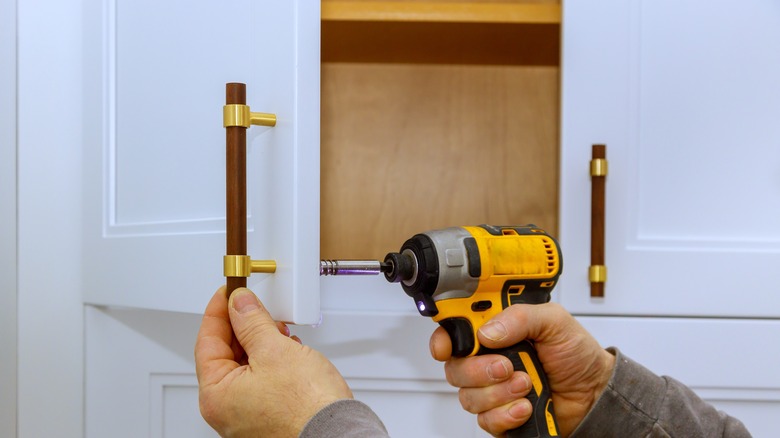
Credit: www.thetakeout.com
Advanced Drill Tips
Using a power drill for cabinetry requires skill beyond basic drilling. Advanced tips help improve accuracy and prevent damage.
This guide covers pilot holes, countersinking screws, and working with various wood types for better results.
Using Pilot Holes
Pilot holes guide screws and stop wood from splitting. They make driving screws easier and more precise.
- Choose a drill bit slightly smaller than the screw’s core.
- Drill straight and deep enough for the screw length.
- Use pilot holes for hardwood and softwood alike.
- Check the hole size matches the screw type for a tight fit.
Countersinking For Screws
Countersinking lets screw heads sit flush or below the wood surface. This creates a clean finish and avoids splitting.
| Tip | Description |
| Use a countersink bit | Drill a cone-shaped hole before screwing in. |
| Match countersink size | Choose a bit that fits the screw head diameter. |
| Adjust drill speed | Slow speed prevents overheating and burning. |
| Test on scrap wood | Check the screw head depth before final use. |
Working With Different Wood Types
Different woods need different drill bits and settings to avoid damage and get clean holes.
Here are key tips for common wood types:
- Softwood:Use standard bits with moderate speed. Avoid too much pressure.
- Hardwood:Use sharp, high-quality bits. Drill slowly to reduce heat.
- Plywood:Use a backing board to prevent splintering on exit holes.
- MDF:Drill with low speed and steady pressure to avoid chipping.
Maintenance And Care
Proper maintenance of your power drill keeps it working well. Caring for your drill helps it last longer.
Regular cleaning and good storage protect your tool and ensure safe use during cabinetry projects.
Cleaning And Lubricating Drill Bits
Clean drill bits after each use to remove wood dust and debris. Use a wire brush or cloth for cleaning.
- Wipe bits with a clean cloth to remove dirt.
- Apply light machine oil to prevent rust.
- Use a lubricant spray on moving parts of the bit.
- Store bits in a dry place to avoid moisture damage.
Battery Care For Cordless Drills
Keep batteries charged but avoid overcharging. Remove batteries if not in use for long periods.
| Battery Care Tip | Explanation |
| Charge Regularly | Keep battery charged to maintain power |
| Avoid Overcharging | Disconnect charger once full to protect battery life |
| Store Cool | Keep battery in a dry, cool place to prevent damage |
| Remove for Storage | Take battery out if drill will not be used for weeks |
Storing Your Drill Properly
Store your drill in a clean, dry place. Avoid leaving it in damp areas or extreme temperatures.
- Use a case or toolbox to protect the drill.
- Keep drill bits and accessories organized nearby.
- Wipe the drill clean before storing.
- Check the drill and battery regularly for any damage.

Credit: www.familyhandyman.com
Frequently Asked Questions
How Do I Choose The Right Drill Bit?
Selecting the right drill bit is crucial for cabinetry projects. Consider the material you’re drilling into, such as wood or metal. Use a smaller bit for pilot holes and a larger one for hinges. Always ensure the drill bit is sharp and compatible with your power drill.
What Speed Should I Use For Cabinetry Drilling?
Adjust your drill’s speed based on the material. For wood, use a medium speed setting. For metals, use a slower speed to prevent overheating. Always start at a lower speed and gradually increase as needed, ensuring smooth and precise drilling.
How Can I Prevent Splintering When Drilling?
To prevent splintering, use a sharp drill bit and apply even pressure. Place masking tape over the drilling area to reduce surface damage. Drill slowly and avoid forcing the drill, allowing the bit to cut smoothly through the material.
Why Is Pilot Hole Important For Cabinetry?
Pilot holes are essential for preventing wood from splitting. They guide screws, ensuring accurate placement and reducing stress on the material. By using pilot holes, you achieve a cleaner finish and a more secure fit for screws in cabinetry projects.
Conclusion
Using a power drill safely makes cabinetry work easier and faster. Always choose the right drill bit and keep your drill steady. Take your time and check measurements twice. Practice on scrap wood before starting your project. Remember to wear safety gear to protect yourself.
With these tips, your cabinet work will improve step by step. Keep learning and enjoy building beautiful cabinets with confidence.