If you want your woodworking projects to look smooth and professional, using a belt sander for finishing is a game-changer. You might think a belt sander is just for rough sanding, but when used right, it can give your surfaces a flawless finish quickly and easily.
You’ll discover simple tips and tricks to master your belt sander and get that perfect, polished look every time. Keep reading, and you’ll learn how to save time, avoid common mistakes, and make your work stand out like never before.

Credit: www.vevor.ca
Choosing The Right Belt Sander
Using a belt sander for finishing can save time and give smooth results. Picking the right belt sander is important for good work.
This guide helps you understand types, grit, power, and size for your sanding needs.
Types Of Belt Sanders
Belt sanders come in different styles. Each style fits certain tasks better.
Handheld sanders are easy to move and good for small jobs. Stationary belt sanders stay in one place. They work well for big projects.
- Handheld belt sanders – portable and versatile
- Stationary belt sanders – for large or detailed work
- Edge belt sanders – designed for sanding edges precisely
Selecting The Correct Grit
Grit size affects how smooth your surface will be. Lower grit numbers remove more material fast.
Higher grit numbers make surfaces smooth and ready for finishing. Choose grit based on your project stage.
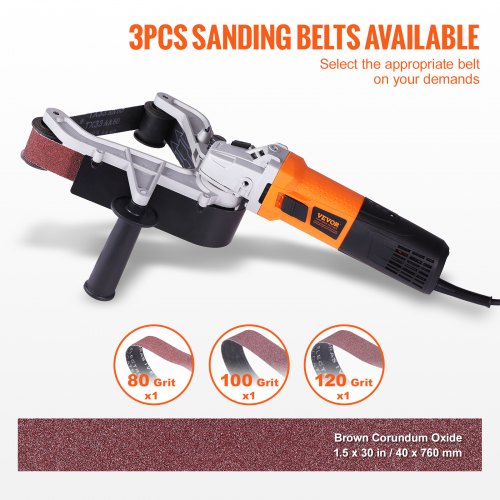
- Coarse grit (40-60) for heavy material removal
- Medium grit (80-120) for smoothing rough surfaces
- Fine grit (150-220) for finishing and polishing
Power And Size Considerations
Power affects how well the sander handles tough jobs. Higher power means faster sanding and less strain on the motor.
Size matters for the belt width and sander weight. Wide belts cover more area quickly. Smaller sanders work better in tight spots.
- Higher motor power (3+ amps) for heavy sanding
- Medium power (2-3 amps) for general use
- Smaller belts (3-4 inches) for detail work
- Larger belts (6+ inches) for big surfaces
Credit: www.vevor.ca
Preparing Your Workspace
Using a belt sander requires a clean and safe workspace. Preparing your area helps you work better and avoid accidents.
This guide covers how to secure your workpiece, ensure good ventilation, and use the right safety gear.
Securing The Workpiece
Keep your workpiece firmly in place to avoid slips and mistakes. Use clamps or a vise on a sturdy workbench.
- Choose clamps that fit the size of your workpiece
- Check that the clamps hold tightly before sanding
- Avoid holding the piece by hand during sanding
- Place padding under the workpiece to protect surfaces
Ensuring Proper Ventilation
Sanding creates dust that can harm your lungs. Good airflow keeps the air clean and safe.
| Ventilation Method | Details |
| Open Windows | Allow fresh air to enter and dust to exit |
| Use Fans | Direct airflow away from your face |
| Dust Collection System | Attach to the sander to catch dust at the source |
Safety Gear Essentials
Wear the right gear to protect your eyes, ears, and lungs while sanding.
- Safety glasses or goggles to shield your eyes
- Hearing protection like earplugs or earmuffs
- A dust mask or respirator to avoid inhaling dust
- Gloves to protect your hands from rough edges
Techniques For Smooth Finishing
Using a belt sander can make wood finishing faster and easier. Knowing the right techniques helps avoid damage and creates a smooth surface.
Focus on control and movement to get even results. This guide covers key methods for a fine finish with your belt sander.
Maintaining Consistent Pressure
Keep steady pressure on the sander. Too much force can leave marks or gouges in the wood. Too little pressure slows the sanding process.
- Hold the sander firmly but without pushing hard.
- Let the weight of the tool do most of the work.
- Move the sander in smooth, even motions.
- Check the surface often to avoid over-sanding spots.
Sanding With The Grain
Always sand in the direction of the wood grain. Sanding across the grain can cause scratches and rough patches.
Follow these tips for sanding with the grain:
- Look closely at the wood to see the grain lines.
- Align the sander so its motion matches the grain direction.
- Make long, straight passes instead of small circles.
- Change sanding belts if you need a finer grit for finishing.
Avoiding Uneven Surfaces
Uneven sanding can leave dips or high spots on your wood. Check for these problems regularly.
| Cause | Effect | Solution |
|---|---|---|
| Uneven pressure | Dents or dips | Keep pressure steady across the surface |
| Staying too long in one spot | Burn marks or deep sanding | Keep the sander moving at all times |
| Dirty or worn sanding belt | Rough finish | Replace or clean the sanding belt often |
Handling Common Challenges
Using a belt sander for finishing can be tricky. Small mistakes may cause damage to the wood surface.
This guide covers common problems and how to handle them safely and effectively.
Preventing Gouges And Scratches
Gouges and scratches ruin the smooth finish. Keep the sander moving steadily to avoid these marks.
- Do not press too hard on the sander.
- Use light, even pressure across the surface.
- Keep the sander flat and avoid tilting it.
- Check the sanding belt for damage before use.
- Sand with the grain of the wood, not against it.
Dealing With Heat Buildup
Heat buildup can burn the wood or damage the sander belt. Work in short bursts to reduce heat.
| Cause | Effect | Solution |
| Too much pressure | Wood burns | Apply light pressure |
| Slow belt speed | Heat builds up | Increase speed or pause sanding |
| Dull sanding belt | Friction rises | Replace the belt regularly |
Managing Dust And Debris
Dust and debris can clog the sanding belt and cause poor results. Clean the workspace often.
- Use a vacuum attachment on the sander.
- Wear a dust mask for safety.
- Clean the sanding belt with a rubber cleaning stick.
- Wipe surfaces regularly to remove dust buildup.
Post-sanding Tips
Using a belt sander helps smooth wood surfaces quickly. After sanding, you must prepare the wood for the next steps.
Following these tips will improve your finish and make your project look better.
Cleaning The Surface
Dust and debris from sanding can stick to the wood. Clean the surface well to avoid rough spots.
Use a vacuum or a soft brush to remove loose dust. Then wipe the wood with a damp cloth or tack cloth.
- Vacuum dust from all corners
- Use a damp cloth to pick up fine dust
- Let the wood dry if you used a damp cloth
Inspecting For Flaws
Look closely at the wood after cleaning. Check for scratches, dents, or uneven areas.
Fix any flaws by sanding lightly with fine-grit sandpaper. This step ensures a smooth finish.
- Check under good lighting
- Feel the surface with your hand
- Sand small flaws gently
Preparing For Staining Or Sealing
Make sure the wood is clean and dry before applying stain or sealant. This helps the finish stick well.
Use a pre-stain conditioner if needed to avoid blotches. Test the stain on a small area first.
- Apply stain or sealant evenly
- Follow manufacturer instructions
- Allow proper drying time
Credit: www.familyhandyman.com
Frequently Asked Questions
What Is The Best Grit For Finishing With A Belt Sander?
For finishing, use finer grits like 120 to 220. They smooth the surface without deep scratches. Start with 120 grit and progress to 220 for a polished finish.
How To Avoid Swirl Marks When Sanding With A Belt Sander?
Keep the sander moving steadily and avoid pressing too hard. Use a finer grit for the final passes. This prevents uneven sanding and swirl marks.
Can A Belt Sander Be Used On Delicate Wood Finishes?
Yes, but use the lowest speed and finest grit. Test on a scrap piece first to avoid damage. Gentle pressure and steady movement are essential.
How To Properly Hold A Belt Sander For Finishing?
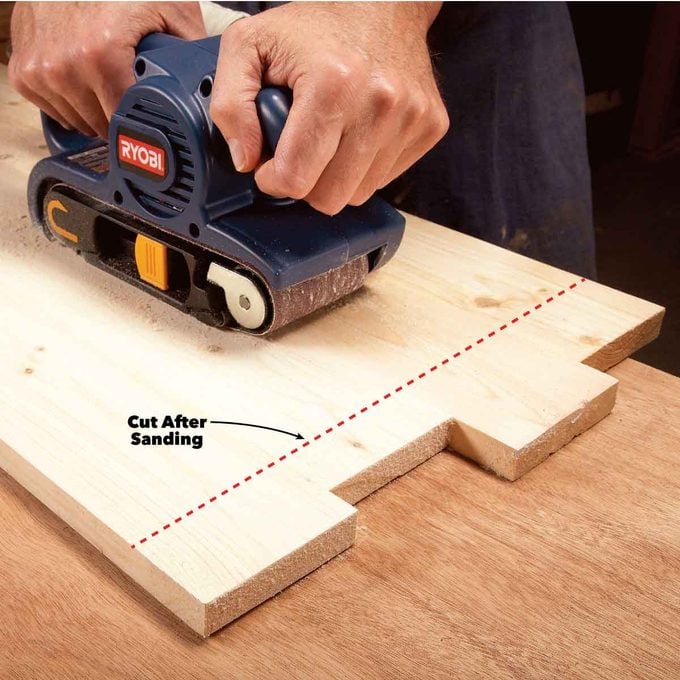
Hold the sander firmly with both hands. Keep it flat and move it evenly along the grain. This ensures smooth, consistent sanding without gouges.
Conclusion
A belt sander transforms your finishing projects. It smoothens surfaces effortlessly. This tool saves time and energy. Remember to choose the right grit. Practice safety measures always. Clean your workspace regularly. This ensures a dust-free environment. Belt sanders are versatile.
They handle various materials with ease. Perfect for wood, metal, and plastic. Invest in quality sanding belts. They last longer and work better. With practice, you’ll achieve professional results. Your projects will look polished. With patience and care, success is certain.
Happy sanding!