Are rough edges on your wood projects driving you crazy? You want smooth, clean finishes that look professional and feel great to the touch.
Using a belt sander is one of the fastest and easiest ways to get those perfect edges. But if you’re not sure how to use it right, you might end up with uneven surfaces or wasted materials. You’ll learn simple, step-by-step tips to master your belt sander and transform your rough edges into flawless surfaces you’ll be proud of.
Keep reading—you’re just moments away from upgrading your woodworking skills!
Choosing The Right Belt Sander
Using a belt sander helps smooth rough edges quickly. Picking the right sander makes your work easier and safer.
There are different types of belt sanders, grits, and power levels. These factors affect how well you can finish your project.
Types Of Belt Sanders
Belt sanders come in many styles. Each type fits different sanding jobs and materials.
- Handheld belt sanders are easy to move and good for small to medium jobs.
- Stationary belt sanders stay in one place and are best for large, flat surfaces.
- Detail belt sanders have smaller belts for tight corners and edges.
Selecting The Proper Grit
The grit of the sanding belt controls how much material the sander removes. Lower grit means rougher and faster sanding.
Start with a coarse grit for rough edges, then use finer grits to smooth the surface.
- 36 to 60 grit for heavy material removal
- 80 to 120 grit for smoothing rough surfaces
- 150 to 220 grit for finishing and fine sanding
Power And Speed Considerations
Higher power belt sanders handle bigger jobs and hard materials better. They keep steady speed under load.
Variable speed controls let you adjust how fast the belt moves. Slow speed works for delicate sanding. Fast speed removes material quickly.
- Low power for light sanding and small projects
- High power for heavy sanding and tough materials
- Adjustable speed for control and precision
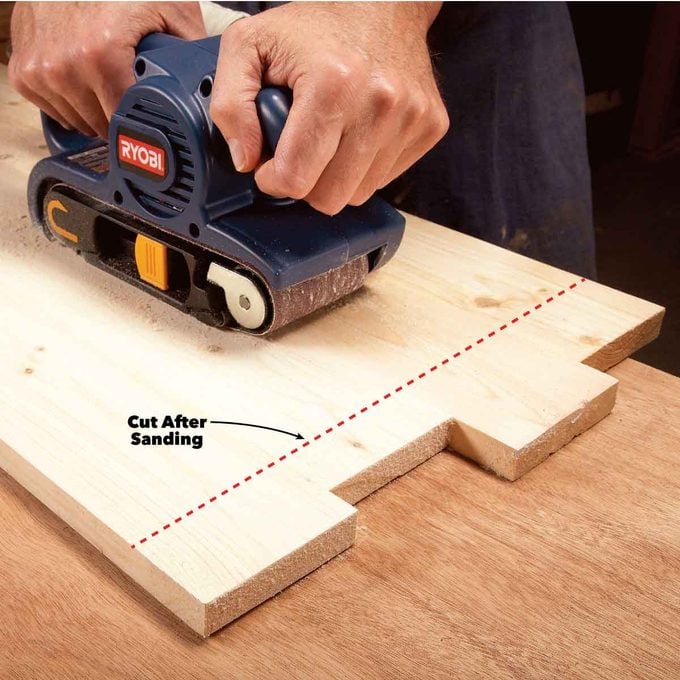
Credit: www.familyhandyman.com
Preparing Your Workspace
Using a belt sander safely starts with a clean and organized workspace. A well-prepared area helps you work smoothly and avoid accidents.
Before you begin, check your tools and surroundings. This will make the sanding process easier and safer.
Safety Gear Essentials
Wear the right safety gear before using a belt sander. This protects you from dust and injury.
- Safety glasses to protect your eyes
- Dust mask to avoid breathing in particles
- Hearing protection to reduce noise
- Gloves to protect your hands
- Close-fitting clothes to prevent snagging
Securing The Workpiece
Hold the workpiece firmly so it does not move while sanding. A steady piece helps you get smooth edges.
| Method | Description |
| Clamps | Use clamps to fix the piece on a workbench |
| Vise | A vise holds small pieces tightly |
| Non-slip Mat | Place a rubber mat under the piece to prevent sliding |
Clearing The Area
Clear the workspace of any tools or objects that can cause accidents. Keep only what you need nearby.
Tips to clear your workspace:
- Remove loose tools from the workbench
- Keep cords and wires out of the way
- Make sure the floor is dry and free of debris
- Arrange good lighting to see your work clearly
Techniques For Smooth Edges
Using a belt sander to smooth rough edges requires skill and care. Proper techniques help you get clean and even results. This guide covers key methods to improve your sanding work.
Focus on handling the sander correctly, applying steady pressure, and avoiding common errors. These steps will help you create smooth edges safely and efficiently.
Proper Sander Handling
Hold the belt sander firmly with both hands for control. Keep it flat against the edge you want to smooth. Move the sander in steady strokes along the edge, not side to side.
- Wear safety goggles to protect your eyes.
- Keep your fingers away from the sanding belt.
- Start the sander before touching the wood.
- Turn off the sander before setting it down.
Maintaining Consistent Pressure
Apply even pressure as you move the sander. Too much pressure can cause deep scratches. Too little pressure slows the process and gives uneven results.
| Pressure Level | Effect |
| Light | Slow sanding, uneven edges |
| Moderate | Best for smooth, even edges |
| Heavy | Can damage wood surface |
Avoiding Common Mistakes
Many beginners make errors that affect edge smoothness. Avoid these to improve your work quality and safety.
- Do not hold the sander in one spot; keep it moving.
- Do not sand too fast; use steady, controlled strokes.
- Do not ignore the dust collection; it keeps your work clean.
- Do not use a worn-out sanding belt; replace it when needed.
Dealing With Different Materials
A belt sander is useful for smoothing rough edges on many materials. Each material needs a different approach to avoid damage.
Understanding how to use a belt sander on wood, metal, and plastic helps you get smooth, clean edges every time.
Wood Edges
Wood is the easiest material to sand with a belt sander. Use medium grit sandpaper to remove rough edges quickly.
Move the sander along the edge steadily. Avoid staying in one spot to prevent uneven sanding or burns.
- Start with 80-grit sandpaper for rough edges
- Switch to 120 or 150 grit for a smooth finish
- Keep the sander flat to the wood surface
- Sand with the grain, not against it
Metal Edges
Sanding metal edges needs care. Use a belt sander with a fine grit belt made for metal.
Wear safety glasses and gloves to protect yourself from sparks and sharp edges.
- Use belts with 80 to 120 grit for metal
- Apply light pressure to avoid overheating
- Move the sander smoothly along the edge
- Check the metal often to avoid removing too much material
Plastic And Composite Edges
Plastic and composite materials can melt or crack if sanded too fast. Use a lower speed belt sander if possible.
Use fine grit sandpaper and sand gently to avoid damage. Keep the sander moving to prevent heat build-up.
- Start with 120 or 150 grit sandpaper
- Use slow, steady movements
- Keep the sander flat to the surface
- Allow breaks to cool the material if needed
Finishing Touches
Smoothing rough edges with a belt sander is just the start. The final look depends on careful finishing.
Paying attention to small details ensures your project looks neat and lasts longer.
Hand Sanding For Precision
After using a belt sander, hand sanding helps reach tight corners and fine edges. Use fine-grit sandpaper for a smooth finish.
- Choose sandpaper grit between 180 and 220 for smoothness
- Sand along the grain to avoid scratches
- Use a sanding block for flat surfaces
- Lightly sand curved or detailed areas by hand
- Clean dust off before moving to the next step
Applying Sealants Or Paints
Sealants or paints protect your work and improve its appearance. Choose the right product for the material you sanded.
| Material | Recommended Finish |
| Wood | Clear sealant or wood stain |
| Metal | Rust-resistant paint |
| Plastic | Plastic primer and paint |
Apply thin, even coats and let each dry fully before adding another layer.
Regular Maintenance Of The Sander
Keep your belt sander in good shape with regular care. This extends tool life and ensures safe use.
- Clean dust and debris from the machine after each use
- Check the sanding belt for wear and replace if torn
- Lubricate moving parts as recommended by the manufacturer
- Store the sander in a dry place
- Inspect power cords for damage before use

Credit: www.reddit.com

Credit: www.homebuilding.co.uk
Frequently Asked Questions
How Do You Use A Belt Sander For Rough Edges?
To smooth rough edges, hold the belt sander firmly and move it along the edge evenly. Keep the sander flat to avoid gouging. Use moderate pressure and sand in the direction of the grain for best results.
What Grit Sandpaper Is Best For Rough Edges?
Start with a coarse grit like 60 or 80 to remove roughness quickly. Finish with finer grits such as 120 or 150 for a smooth surface. Using the right grit ensures efficient sanding and a clean edge.
Can A Belt Sander Damage Wood Edges?
Yes, if used improperly, a belt sander can gouge or round edges. Always keep the sander flat and move it steadily. Avoid applying excessive pressure to prevent damage and maintain control over the sanding process.
How Do I Prevent Uneven Sanding With A Belt Sander?
Maintain a consistent speed and pressure while sanding. Keep the sander flat against the wood and move it evenly along the edge. Regularly check your progress to avoid creating dips or uneven surfaces.
Conclusion
Smoothing rough edges with a belt sander is simple and effective. This tool saves time and effort in woodworking projects. Always prioritize safety by wearing protective gear. Choose the right grit for your project needs. Practice makes perfect, so don’t rush the process.
Keep your workspace clean and organized. Regular maintenance of your sander ensures longevity and efficiency. Embrace the satisfaction of a smooth finish. With patience and practice, you’ll achieve professional results. Remember, each project is a learning opportunity. Enjoy the process and watch your skills grow over time.
Happy sanding!