When you pick up a drill press, you’re handling a powerful tool that can make your work easier and more precise. But without the right safety steps, it can also be dangerous.
Imagine avoiding costly mistakes, injuries, or damaged materials just by following a few simple rules. This guide will show you exactly how to use your drill press safely, so you can work confidently and protect yourself every time. Ready to master your drill press without risk?
Keep reading to learn the key safety tips that every user needs to know.
Choosing The Right Drill Press
Using a drill press safely starts with picking the right one for your needs. Different drill presses suit different jobs and skill levels. This guide helps you choose wisely.
Consider the type, features, and setup before buying. These factors affect safety and performance.
Types Of Drill Presses
There are several types of drill presses. Each type fits certain tasks better than others. Choose one that matches your projects.
- Bench-Top Drill Press:Small and portable, fits on a workbench.
- Floor Drill Press:Larger, stands on the floor, best for heavy tasks.
- Radial Drill Press:Has an adjustable arm for drilling large workpieces.
- Magnetic Drill Press:Portable and uses magnets to attach to metal surfaces.
Key Features To Consider
| Feature | Why It Matters |
|---|---|
| Motor Power | Stronger motors handle tougher materials safely. |
| Speed Settings | Multiple speeds allow better control for different drills. |
| Depth Stop | Prevents drilling too deep and causing accidents. |
| Adjustable Table | Helps position workpieces securely for safer drilling. |
| Safety Guards | Protects user from spinning parts and debris. |
Setting Up Your Drill Press
Proper setup improves safety and work quality. Follow these steps to prepare your drill press.
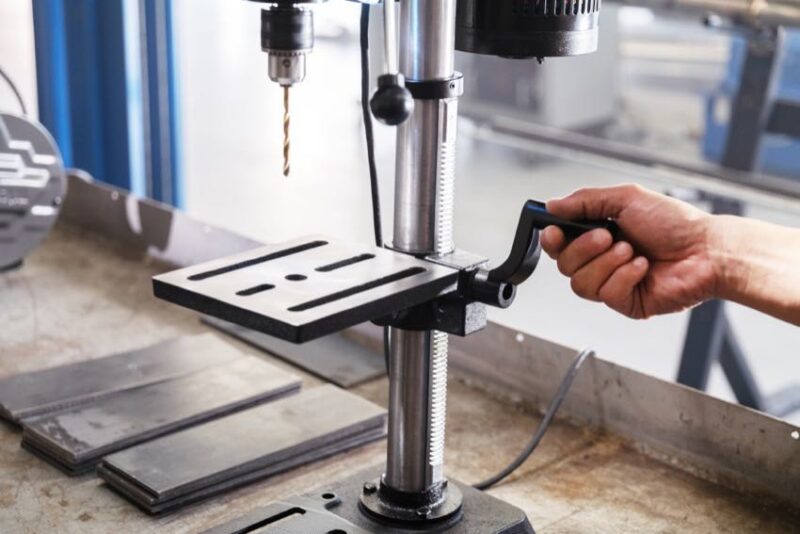
- Place the drill press on a stable, flat surface to prevent tipping.
- Secure the workpiece using clamps or a vise to stop movement.
- Adjust the table height and angle to match your drilling needs.
- Set the depth stop to control drilling depth and avoid damage.
- Check that all safety guards are in place before starting.
Credit: makerspaces.northeastern.edu
Personal Safety Gear
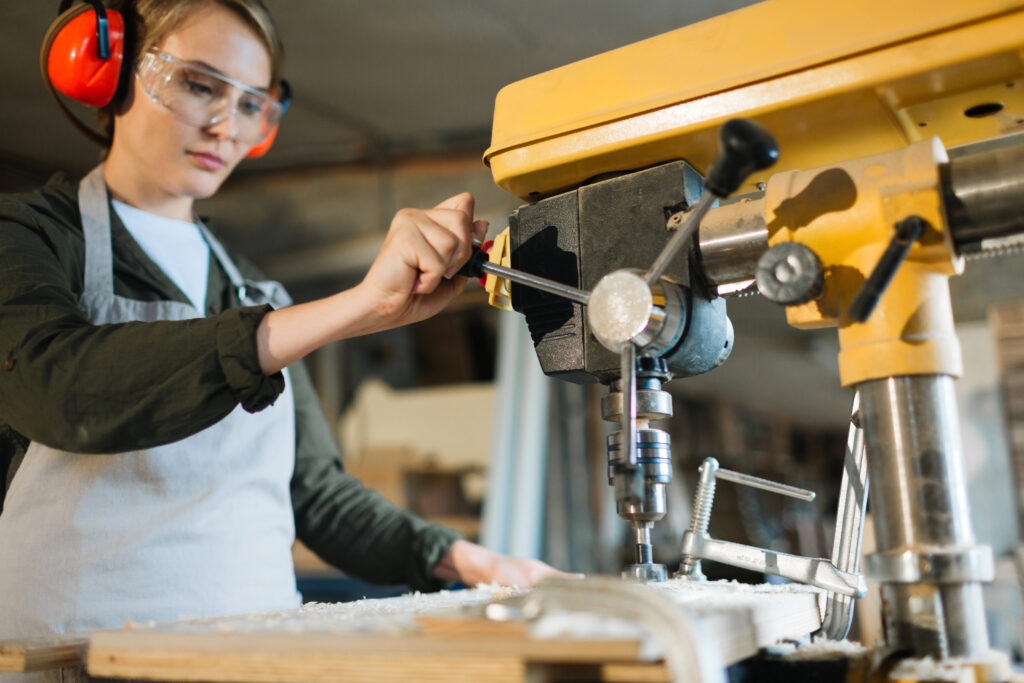
Using a drill press can be dangerous without the right safety gear. Wearing proper equipment protects your body from injuries. Safety gear helps you focus on your work with less risk.
Always wear personal safety gear before starting the drill press. This gear reduces the chance of accidents and keeps you safe during operation.
Eye And Ear Protection
Eye protection stops flying debris from hurting your eyes. Safety glasses or goggles are best for drill press work. Ear protection reduces noise that can damage hearing.
Use earplugs or earmuffs to protect your ears. Loud noise from the drill press can cause hearing loss over time. Always keep eye and ear protection on while drilling.
Proper Clothing And Gloves
Wear close-fitting clothes to avoid getting caught in the drill. Loose sleeves or jewelry can be dangerous. Long hair should be tied back.
Use gloves only if they do not risk getting pulled by the drill. Thin, snug gloves protect hands from sharp edges. Avoid bulky gloves that limit your grip.
Using Dust Masks
Drilling creates dust that can harm your lungs. Wearing a dust mask keeps dust out of your breathing system. Choose a mask that fits well and filters small particles.
Use dust masks especially when drilling materials like wood or metal. Replace masks if they become dirty or hard to breathe through.
Preparing Your Workspace
Using a drill press safely starts with a clean workspace. A tidy area helps you focus and prevents accidents.
Set up your workspace so you can work easily and safely. Good preparation is key to a safe drilling job.
Clearing The Area
Remove all tools and materials not needed for the drilling task. This keeps your workspace free from clutter.
Clear the floor around the drill press to avoid tripping hazards. Keep cords and debris out of the way.
- Put away unused tools
- Pick up scraps and waste
- Keep the floor dry and clear
- Store loose cords safely
Proper Lighting
Good lighting helps you see your work clearly. It reduces mistakes and improves safety.
Use bright, focused lights on the drill press area. Avoid shadows that can hide the drill bit or workpiece.
- Use overhead lighting or a work lamp
- Check lights before starting
- Replace dim bulbs promptly
- Position light to avoid glare
Securing The Workpiece
Hold your material firmly to prevent movement during drilling. Loose pieces can cause injury or damage.
Use clamps or a vise to secure the workpiece. Make sure it is tight before turning on the drill press.
- Place the workpiece flat on the table
- Use clamps to hold it steady
- Check that the piece cannot move
- Never hold small pieces by hand

Credit: woodhd.com
Operating The Drill Press
Using a drill press safely is important to avoid accidents. Knowing how to operate it properly helps you work better.
Always follow safety rules and use the right tools for your project. This guide explains key steps for safe operation.
Adjusting Speed And Depth
Set the drill press speed according to the material you are drilling. Hard materials need slower speeds.
Adjust the drill depth to avoid drilling too far. This protects your work surface and drill bit.
- Use the speed control to change RPMs
- Check the drill press manual for speed settings
- Set the depth stop to control drilling depth
- Test on scrap material before drilling your project
Using Clamps And Jigs
Secure your workpiece with clamps or jigs before drilling. This stops the material from moving.
Clamps and jigs keep your hands away from the drill bit. They also help make precise holes.
- Use clamps to hold wood or metal firmly
- Jigs guide the drill for accurate holes
- Never hold small pieces by hand while drilling
- Check that clamps do not block the drill path
Correct Drilling Techniques
Start drilling slowly to keep control. Increase speed only after the bit starts cutting.
Keep the drill bit straight and steady. Do not force the drill; let it cut at its own speed.
- Align the drill bit with the mark on your workpiece
- Use steady pressure; avoid pushing too hard
- Withdraw the bit occasionally to clear debris
- Turn off the drill press before making adjustments
Common Hazards To Avoid
Using a drill press can be dangerous if you ignore safety rules. Many accidents happen because of common hazards. Knowing these hazards helps you stay safe and work better.
This guide covers three main hazards: kickback and bit breakage, loose clothing and jewelry, and overheating and tool damage. Read each section carefully before using a drill press.
Kickback And Bit Breakage
Kickback happens when the drill bit suddenly stops or catches the material. This can throw the workpiece or cause the bit to break. Bit breakage can send sharp pieces flying.
- Secure the material firmly before drilling.
- Use the right drill bit for the material.
- Do not force the drill; let it cut at its own speed.
- Keep hands away from the spinning bit.
- Stop immediately if the drill binds or jerks.
Loose Clothing And Jewelry
Loose clothes and jewelry can catch in the drill press. This can pull you toward the machine or cause serious injury. Always wear tight-fitting clothes and remove accessories.
- Remove rings, bracelets, and necklaces before work.
- Roll up long sleeves or wear short sleeves.
- Tie back long hair to keep it out of the way.
- Wear safety goggles and gloves for added protection.
Overheating And Tool Damage
Overheating can damage the drill bit and the drill press. It can also make the drill bit dull or cause it to break. Watch for signs of heat and stop to cool the bit.
| Cause | Effect | Prevention |
| Drilling too fast | Bit overheats and dulls | Use slower speed for hard materials |
| No lubrication | Increased friction and heat | Use cutting oil or coolant |
| Excessive pressure | Tool damage and breakage | Apply steady, light pressure |
Maintenance And Inspection
Keeping your drill press in good shape helps it work safely and last longer. Regular maintenance and inspection find problems early.
Check the drill press often. Fix small issues before they become big problems. Clean it after each use to keep it ready.
Cleaning After Use
Remove dust, metal shavings, and oil from the drill press after each use. This stops buildup that can cause problems.
Use a brush or cloth to clean all parts. Avoid water that can cause rust. Keep the workspace tidy too.
- Turn off and unplug the machine before cleaning
- Brush off dust and debris from all surfaces
- Wipe with a dry cloth to remove oil and dirt
- Keep vents and moving parts clear
Checking For Wear And Tear
Look for worn or damaged parts regularly. Worn belts, loose bolts, and cracked handles can cause accidents.
Listen for strange noises. Check the drill bit and chuck for signs of damage. Replace parts that do not work well.
- Inspect belts for cracks or fraying
- Check bolts and screws for tightness
- Examine the drill chuck for damage
- Look for cracks in handles and guards
Lubrication And Calibration
Lubricate moving parts to reduce friction and wear. Use the right oil or grease as the manual suggests.
Calibrate the drill press to keep it accurate. Check the table and spindle alignment often. Adjust if needed.
- Apply lubricant to gears, spindles, and bearings
- Do not over-lubricate to avoid dirt buildup
- Use a square tool to check table alignment
- Adjust the spindle to run straight and true
Credit: www.protoolreviews.com
Frequently Asked Questions
How Do I Set Up A Drill Press Safely?
To set up a drill press safely, secure the workpiece with clamps or a vise. Adjust the table height and speed settings properly. Always wear safety goggles and keep loose clothing away from moving parts. Check the drill bit for tightness before starting.
What Personal Protective Equipment Is Essential For Drill Press Use?
Essential protective gear includes safety goggles to protect eyes from debris. Wear hearing protection if noise is high. Avoid loose clothing, tie back long hair, and use gloves only when appropriate to prevent entanglement.
How Can I Prevent Drill Bit Breakage?
Prevent drill bit breakage by using the correct bit for the material. Apply steady, moderate pressure and avoid forcing the bit. Ensure the drill speed matches the bit type and material hardness. Regularly inspect bits for wear or damage.
Why Is Clamping The Workpiece Important?
Clamping the workpiece stabilizes it, preventing movement during drilling. This reduces the risk of injury and ensures accurate holes. It also protects the drill bit from binding and breaking.
Conclusion
Safety with a drill press is essential. Always wear protective gear. Stay focused while operating the machine. Keep your workspace tidy and organized. Regularly inspect the drill press for any damage. Understand the machine’s functions before use. Follow the manufacturer’s instructions closely.
These steps ensure a safer working environment. Prioritize safety to prevent accidents. Practice makes perfect, so take your time. Remember, using tools safely protects you and others. Happy and safe drilling!