Choosing the right jigsaw blade can make all the difference in your project’s success. Whether you’re cutting wood, metal, or plastic, the blade you pick affects how smooth, fast, and precise your cuts will be.
But with so many types available, how do you know which one fits your needs best? You’ll discover the best jigsaw blade types that match different materials and tasks. By the end, you’ll feel confident selecting the perfect blade to get your job done easier and better.
Keep reading to unlock the secret to cleaner cuts and smoother work.
Credit: www.boschtools.com
Blade Materials
Choosing the right blade material is key for cutting tasks. Different materials suit various jobs and materials.
This guide covers three common jigsaw blade materials and their uses.
High Carbon Steel
High carbon steel blades are flexible and sharp. They work well with soft wood and plastic. These blades wear out faster on hard materials.
Bi-metal Blades
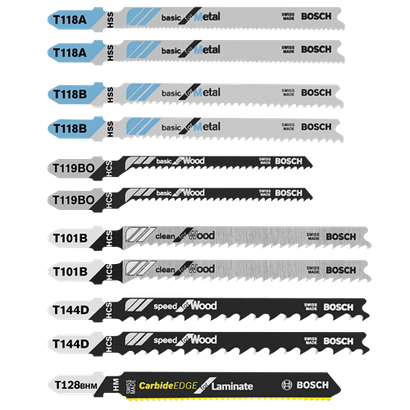
Bi-metal blades combine two metals to improve strength and durability. They can cut through wood, metal, and plastic easily.
- Flexible and tough
- Longer lasting than high carbon steel
- Good for mixed materials
- More expensive but cost-effective
Tungsten Carbide Tips
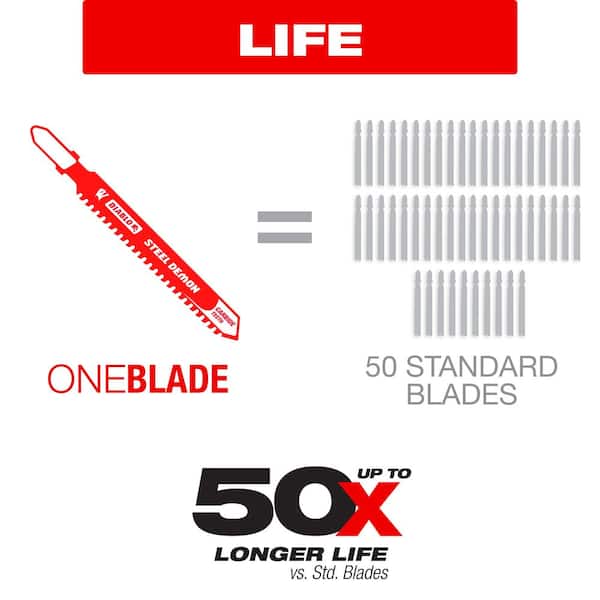
Tungsten carbide tips are very hard and resist wear. They cut through tough materials like tile and metal.
| Material | Strength | Best Use |
| High Carbon Steel | Flexible | Soft wood, plastic |
| Bi-Metal | Strong and durable | Wood, metal, plastic |
| Tungsten Carbide Tips | Very hard | Hard metal, tile |
Credit: www.homedepot.com
Tooth Design
Jigsaw blades come with different tooth designs. These designs affect how the blade cuts through materials. Choosing the right tooth design helps you get the best results.
Understanding tooth design can make your cutting work easier and cleaner. Let’s look at three common types of jigsaw blade teeth.
Fine Teeth For Smooth Cuts
Blades with fine teeth have many small teeth on the edge. They cut slowly but create smooth and clean edges. These blades work well on thin materials and delicate wood.
Coarse Teeth For Fast Cuts
Coarse teeth have fewer, larger teeth. They cut quickly and remove more material with each stroke. These blades are good for thick wood and soft materials. The cut is rougher but faster.
- Fewer teeth per inch (TPI)
- Faster cutting speed
- Rougher edge finish
- Best for soft or thick materials
Reverse Tooth Blades
Reverse tooth blades have teeth pointing downwards. This design helps reduce splintering on the top surface of the material. They are useful for cutting laminates and veneers.
| Feature | Benefit |
| Teeth point downwards | Less splintering on top side |
| Good for laminates | Cleaner finish on visible surfaces |
| Slower cutting speed | More control over cut quality |
Blade Shapes
Jigsaw blades come in different shapes for cutting various materials. Choosing the right shape helps you make cleaner and faster cuts.
This guide explains the common blade shapes and their uses. Knowing blade shapes makes your work easier and more precise.
Straight Blades
Straight blades are the most common jigsaw blades. They have a simple, straight shape and cut in a straight line.
These blades work well on wood, plastic, and thin metal sheets. They give smooth and accurate cuts.
- Ideal for straight cuts and simple shapes
- Suitable for general-purpose use
- Works best on soft materials
Scroll Blades
Scroll blades are narrow with a fine tip. They allow tight turns and curves in your cutting path.
Use scroll blades for detailed work on thin wood or plastic. They help you cut small shapes and patterns easily.
- Good for making sharp curves
- Perfect for intricate designs
- Not suited for thick or hard materials
Specialty Shapes
Specialty blades have unique shapes for specific tasks. These include blades for metal, ceramic, and laminate cutting.
They offer better performance on tough materials and unusual cuts. Choose a specialty blade for tasks that need extra precision.
- T-shank blades fit most modern jigsaws
- U-shank blades work with older models
- Wavy blades reduce splintering on wood
- Carbide grit blades cut ceramics and tiles

Credit: www.findbuytool.com
Blade Length And Thickness
Jigsaw blades come in different lengths and thicknesses. These features affect how well the blade cuts through materials.
Choosing the right blade length and thickness helps you get clean and accurate cuts.
Choosing The Right Length
Blade length determines how deep the jigsaw can cut. Longer blades cut thicker materials.
Short blades offer better control for thin materials and detailed cuts.
- Use short blades for thin wood or plastic
- Use medium blades for plywood and soft metals
- Use long blades for thick wood and metal sheets
Impact Of Thickness On Cutting
Blade thickness affects the cut’s smoothness and the blade’s strength. Thick blades are more stable but less flexible.
Thin blades bend easily and allow tight curves, but they wear out faster.
- Thin blades work well for curved cuts
- Thick blades are best for straight, precise cuts
- Choose thickness based on material hardness and cut shape
Material-specific Blades
Choosing the right jigsaw blade is key for clean cuts. Blades vary by material type. Using a blade made for your material helps the tool work better and last longer.
Below are common types of blades for wood, metal, and plastic. Each type suits the unique needs of these materials.
Wood Cutting Blades
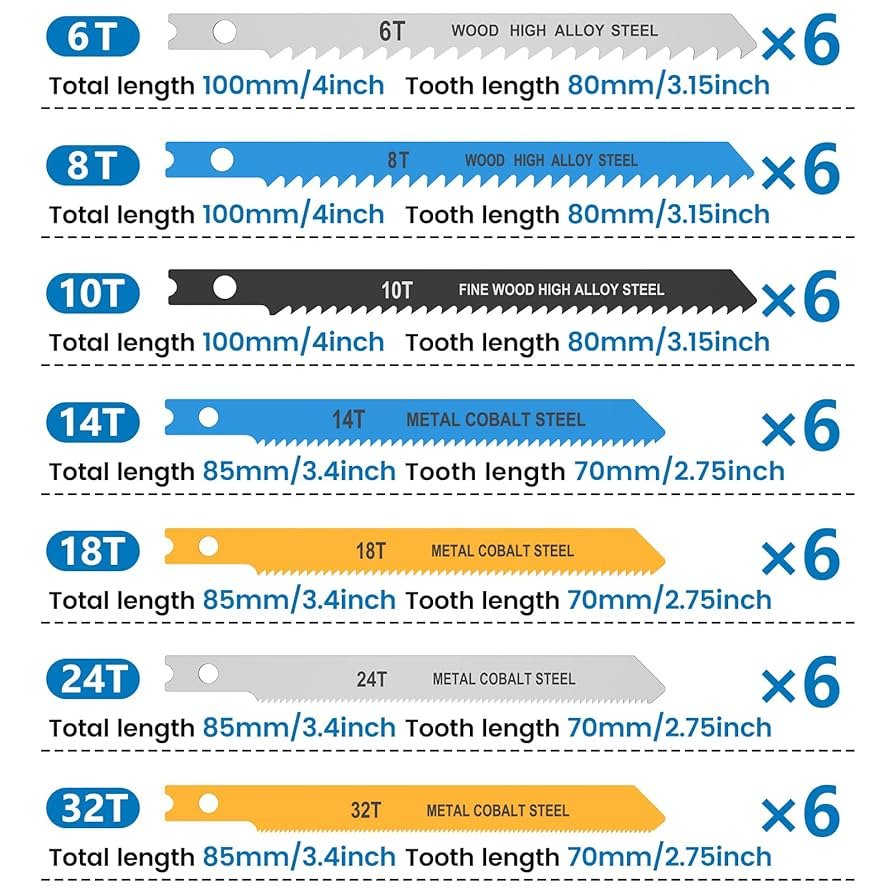
Wood blades have large, sharp teeth. They cut quickly through soft and hardwood. Some blades have more teeth per inch (TPI) for smooth cuts. Others have fewer teeth for fast, rough cuts.
- High TPI (10-24) for smooth, fine cuts
- Low TPI (6-10) for fast, rough cuts
- Ground teeth for clean cutting
- Bi-metal blades for durability
Metal Cutting Blades
Metal blades are made from strong steel. They have small teeth to cut thin metal sheets or pipes. Blades with more teeth give smoother cuts but cut slower.
| Blade Type | Teeth per Inch (TPI) | Best Use |
|---|---|---|
| High-Speed Steel (HSS) | 18-24 | Thin metal sheets |
| Bi-metal | 14-24 | Thick metal and pipes |
| Carbide-tipped | 10-18 | Hard metals and alloys |
Plastic And Composite Blades
Plastic blades have fine teeth to avoid cracking. Composite blades cut materials like fiberglass or laminate. They balance speed and smoothness.
Tips for choosing plastic and composite blades:
- Use blades with fine teeth (10-20 TPI)
- Choose blades made from bi-metal for strength
- Consider blades with a ground tooth design
- Cut slowly to avoid melting plastic
Blade Compatibility
Choosing the right jigsaw blade depends on its compatibility with your tool. Not all blades fit every jigsaw. Understanding blade types helps you pick the best blade for your projects.
Blade compatibility ensures safety and better cutting results. It also saves time and money by avoiding blade damage or poor cuts.
Universal Fit Blades
Universal fit blades work with many jigsaw brands. They have a common shank shape that fits most jigsaw holders. These blades are easy to find and replace.
Using universal blades is good for casual users or if you have different jigsaw brands. They offer flexibility and convenience.
- Usually T-shank or U-shank types
- Fits most modern jigsaws
- Good for general cutting tasks
- Available in many materials and tooth styles
Brand-specific Blades
Brand-specific blades are made for one jigsaw brand or model. They have unique shank designs that match the tool perfectly. These blades fit securely and reduce slipping.
These blades can offer better cutting precision and durability. They are best for professionals or those who use a single jigsaw brand.
- Custom shank shapes for certain brands
- May improve cutting accuracy
- Sometimes made with special materials
- Check your jigsaw manual to find the right blade
Tips For Precision Cuts
Making precise cuts with a jigsaw depends on many factors. The right blade and technique help you cut clean lines.
Using the best jigsaw blade types improves accuracy. Below are tips to get the best results.
Proper Blade Selection
Choose a blade based on the material you cut. Different blades suit wood, metal, or plastic.
Blade teeth size affects cut smoothness. Small teeth give fine cuts. Large teeth cut faster but rougher.
- Use fine-tooth blades for thin wood or plywood
- Use coarse-tooth blades for thick wood or soft materials
- Use metal-cutting blades with high tooth count for clean metal cuts
- Use blades with T-shank for better stability and less vibration
Maintaining Blade Sharpness
A sharp blade cuts more precisely and safely. Dull blades cause rough edges and can bind in the material.
Check blades regularly for wear and replace if teeth are damaged or dull. Clean blades after use to prevent buildup.
- Inspect teeth for chips or bends before each use
- Wipe blades clean to remove resin or dust
- Store blades in a dry place to avoid rust
- Replace blades after heavy use or when cuts become rough
Optimal Cutting Speed
Cutting too fast can cause mistakes and rough edges. Cutting too slow can burn the material or dull the blade.
Adjust speed based on the blade type and material thickness. Use slower speed for metals and harder materials.
- Start with a low speed to guide the cut
- Increase speed for softer materials like wood
- Keep steady and even pressure on the jigsaw
- Let the blade do the work, don’t force it
Frequently Asked Questions
What Are The Main Types Of Jigsaw Blades?
Jigsaw blades come in T-shank, U-shank, and bayonet types. T-shank blades are most common and offer better stability. U-shank blades fit older jigsaws. Bayonet blades are less common but used for specialty cuts.
Which Jigsaw Blade Is Best For Cutting Wood?
For wood, use a blade with large, sharp teeth spaced widely. A high TPI (teeth per inch) blade ensures smoother cuts. Bi-metal blades offer durability and work well on hardwood and softwood.
Can Jigsaw Blades Cut Metal Effectively?
Yes, bi-metal blades with fine teeth are ideal for cutting metal. They resist heat and wear, providing clean cuts in thin metal sheets and pipes. Choose blades labeled specifically for metal for best results.
How Do Blade Teeth Affect Jigsaw Cutting?
Blade teeth size and shape impact cut speed and smoothness. Larger, widely spaced teeth cut faster but rougher. Smaller, closely spaced teeth create smoother finishes but cut slower. Choose teeth based on your project needs.
Conclusion
Selecting the right jigsaw blade is crucial for your project success. Each blade type offers unique benefits. Wood blades excel in cutting wood smoothly. Metal blades are perfect for hard materials. Specialty blades handle intricate designs well. Always match the blade to the material.
It ensures precision and efficiency. Keep these tips in mind. Your projects will be easier and more precise. Experiment with different blades. Discover what works best for you. Happy cutting!