Are you sure your electrical breakers will protect your home or workplace when it matters most? Faulty breakers can lead to dangerous electrical failures, costly repairs, or even fires.
That’s why knowing how to test your breakers properly is crucial for your safety and peace of mind. In this guide, you’ll discover simple, step-by-step methods to check your electrical breakers yourself. By the time you finish reading, you’ll feel confident in ensuring your electrical system is working exactly as it should.
Keep reading to protect what matters most—your home, your devices, and your loved ones.
Credit: www.onesto-ep.com
Types Of Electrical Breakers
Electrical breakers protect circuits from damage caused by overloads or short circuits. They stop the flow of electricity when a fault happens. Different types of breakers serve different needs in homes and industries.
This guide explains the main types of electrical breakers. It also shows where each type is best used.
Circuit Breaker Varieties
There are several common types of circuit breakers. Each type uses a different method to detect faults and interrupt current flow.
- Miniature Circuit Breakers (MCB): Used for low voltage circuits. They protect household wiring.
- Molded Case Circuit Breakers (MCCB): Handle higher currents. Used in industrial and commercial settings.
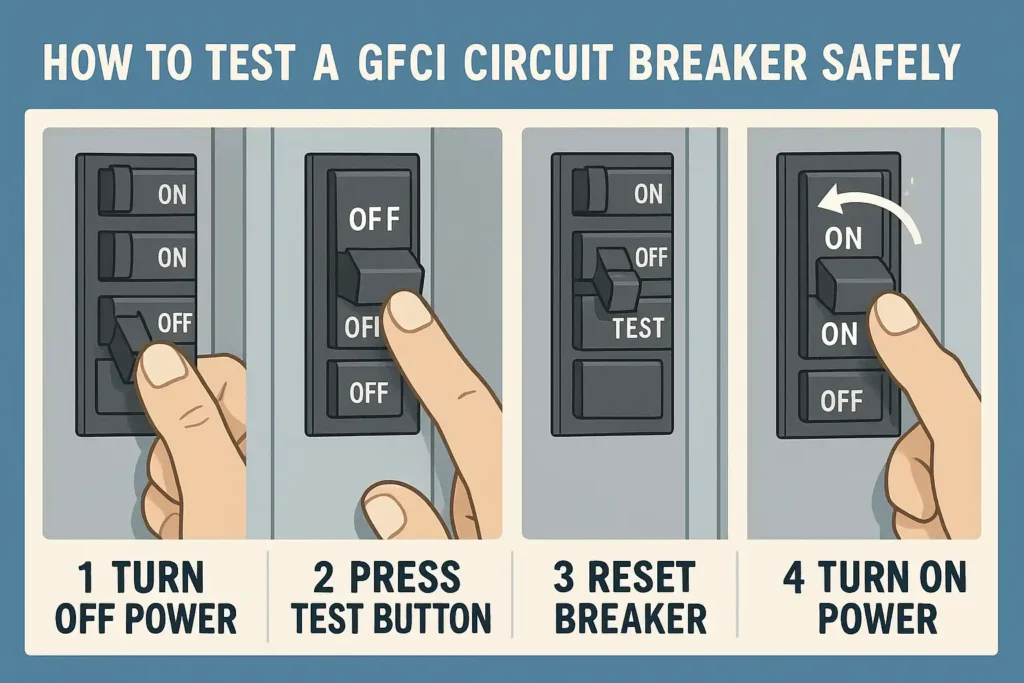
- Ground Fault Circuit Interrupters (GFCI): Detect small ground faults. Protect people from electric shock.
- Arc Fault Circuit Interrupters (AFCI): Detect dangerous electrical arcs. Prevent electrical fires.
- High Voltage Circuit Breakers: Used in power plants and substations. Manage very high voltage circuits.
Applications For Each Type
Each breaker type works best in certain places. Choosing the right breaker improves safety and system reliability.
- MCB: Used in homes and small buildings to protect lighting and appliance circuits.
- MCCB: Installed in factories and large buildings. They protect motors and heavy equipment.
- GFCI: Placed in wet areas like bathrooms, kitchens, and outdoor outlets to prevent shock.
- AFCI: Used in bedrooms and living areas. They stop fires caused by faulty wiring.
- High Voltage Breakers: Found in electrical grids. They protect transmission lines and transformers.
Safety Precautions
Testing electrical breakers is a task that needs careful attention. Safety should always be the top priority.
Following safety rules helps prevent accidents and protects everyone on site.
Personal Protective Equipment
Wearing the right protective gear is important when testing breakers. It reduces the risk of injury from electrical shocks or sparks.
Always use insulated gloves, safety glasses, and protective clothing. These items protect your hands, eyes, and skin.
- Insulated gloves prevent electric shock
- Safety glasses shield eyes from sparks
- Flame-resistant clothing protects against burns
- Hard hats guard against falling objects
- Rubber-soled boots reduce risk of grounding
Worksite Safety Measures
Keeping the worksite safe helps avoid accidents during breaker testing. Clear the area of unnecessary tools and materials.
Use warning signs and barriers to keep others away from the testing zone. Always test equipment in dry conditions.
- Remove clutter to prevent trips and falls
- Set up warning signs around the test area
- Use barriers to stop unauthorized entry
- Check for moisture before testing
- Ensure proper lighting for visibility
Tools And Equipment Needed
Testing an electrical breaker requires specific tools and equipment. These devices ensure the breaker functions safely and reliably. Using the right tools helps detect faults early.
This guide covers essential testing devices and calibration instruments. Knowing these tools helps technicians perform accurate breaker tests.
Testing Devices
Testing devices measure the performance and safety of electrical breakers. They check parameters like current, voltage, and trip time. Common testing devices include:
- Insulation resistance testers to check insulation quality
- Multimeters for measuring voltage and current
- Micro-ohmmeters to test contact resistance
- Primary injection testers to simulate fault currents
- Timing testers to measure breaker trip times
Calibration Instruments
Calibration instruments ensure testing devices give accurate results. They compare device readings to known standards. Calibration tools include:
| Instrument | Purpose | Example |
| Voltage Calibrator | Sets precise voltage levels | Standard voltage source |
| Current Calibrator | Provides exact current outputs | Precision current generator |
| Time Interval Calibrator | Checks timing accuracy | High-precision timer |

Credit: electricaltrader.com
Step-by-step Testing Process
Electrical breaker testing ensures safety and proper function. It helps prevent electrical faults and failures.
This guide explains the key steps to test breakers. Follow these steps carefully for accurate results.
Initial Inspection
Start by visually inspecting the breaker and panel. Look for signs of damage or wear.
Check for loose connections, corrosion, or discoloration. Make sure the breaker is clean and dry.
- Turn off power before inspection
- Look for cracks or burns on the breaker
- Check wiring for tightness and damage
- Inspect breaker mounting and panel condition
Performing Trip Tests
Trip tests check if the breaker trips at the correct current. This confirms its protective function.
Use a test set to apply current to the breaker. Record the trip time and current level.
- Connect the test equipment to the breaker
- Gradually increase current to the trip value
- Note the time it takes to trip
- Compare results with the breaker’s specifications
Measuring Contact Resistance
Contact resistance affects breaker performance and heat generation. Measure it to find problems.
Use a micro-ohmmeter to measure resistance across breaker contacts. Low resistance means good contact.
- Turn off and isolate the breaker
- Connect the micro-ohmmeter leads to breaker contacts
- Take multiple readings for accuracy
- Compare readings to manufacturer’s limits
Common Testing Challenges
Testing electrical breakers can be tricky. Many issues can affect the results.
Understanding common challenges helps to get accurate test data. It also saves time and effort.
Dealing With False Trips
False trips happen when a breaker trips without a real fault. They can cause confusion during tests.
False trips often occur due to test setup errors or electrical noise. It is important to check all connections.
- Verify the test device settings before starting
- Ensure all cables are securely connected
- Use proper grounding to reduce electrical noise
- Repeat tests to confirm if trips are consistent
Interpreting Test Results
Test results show how well a breaker works. Reading them correctly is key to safety.
Look for patterns in the data. Sudden changes can mean a problem with the breaker.
- Compare results with manufacturer standards
- Note any delays in breaker response time
- Watch for unusual current or voltage readings
- Document all findings for future reference
Maintaining Accuracy Over Time
Electrical breaker testing must stay accurate to ensure safety and reliability. Over time, test equipment can lose precision if not properly maintained.
This guide covers key practices to keep your breaker testing results consistent and trustworthy.
Regular Calibration
Calibration adjusts your testing tools to match known standards. It corrects any drift in the readings caused by wear or environmental factors.
- Schedule calibration at least once a year or as recommended by the manufacturer.
- Use certified calibration labs for precise adjustments.
- Check calibration before major testing projects to ensure accuracy.
- Keep equipment clean and store it properly to reduce errors.
Record Keeping Practices
Keeping detailed records helps track equipment condition and testing history. It allows quick identification of issues affecting accuracy.
| Date | Equipment ID | Calibration Status | Notes |
| 2024-02-15 | Breaker Tester 01 | Calibrated | No issues found |
| 2023-11-10 | Breaker Tester 02 | Calibration Due | Warning on display accuracy |
| 2024-04-05 | Breaker Tester 01 | Calibrated | Replaced worn sensor |
Troubleshooting Breaker Issues
Electrical breakers protect circuits from damage. They stop power when there is a fault. Testing breakers helps find problems before they cause harm.
Knowing how to troubleshoot breaker issues saves time and money. This guide explains how to spot faulty parts and decide on repair or replacement.
Identifying Faulty Components
Check breakers for common signs of failure. Look for damage, wear, or corrosion on parts. Testing helps confirm if a component is bad.
- Inspect the breaker switch for cracks or breaks.
- Test the breaker with a multimeter for continuity.
- Look at the terminals for rust or loose wires.
- Listen for unusual sounds when the breaker trips.
- Check if the breaker trips too often or not at all.
Repair Vs Replacement
Decide if the breaker needs fixing or replacing. Some parts can be repaired safely. Others require full replacement to keep circuits safe.
| Condition | Action | Reason |
|---|---|---|
| Minor wear or loose connection | Repair | Easy to fix without risk |
| Cracked casing or melted parts | Replace | Unsafe to repair, risk of failure |
| Frequent tripping without load issues | Replace | Internal mechanism likely faulty |
| Corroded terminals | Repair or Replace | Depends on extent of corrosion |

Credit: dadaoenergy.com
Frequently Asked Questions
What Is Electrical Breaker Testing?
Electrical breaker testing ensures circuit breakers function properly to protect electrical systems from overloads and faults. It involves inspecting, measuring, and verifying the breaker’s performance and safety features. Regular testing prevents failures, enhances safety, and complies with electrical codes and standards.
How Often Should Breakers Be Tested?
Breakers should be tested annually or as recommended by manufacturers and local electrical codes. Frequent testing ensures reliability and early fault detection. High-risk environments may require more frequent inspections to maintain safety and prevent electrical hazards.
What Tools Are Used For Breaker Testing?
Common tools include insulation testers, timing testers, and micro-ohmmeters. These devices measure insulation resistance, operating time, and contact resistance. Proper tools ensure accurate testing and reliable breaker performance verification.
Can Breaker Testing Prevent Electrical Fires?
Yes, breaker testing detects faults and malfunctions early. It ensures breakers trip correctly during overloads or short circuits. This reduces the risk of electrical fires and protects equipment and personnel.
Conclusion
Testing your electrical breaker ensures safety and efficiency. Regular checks prevent costly repairs. Identifying issues early saves time and money. Use the right tools for accurate results. Follow safety guidelines during testing. Proper maintenance extends your breaker’s lifespan. A reliable breaker protects your electrical system.
Consistent testing enhances performance and reliability. Stay informed about your breaker’s condition. This guide helps you understand the testing process. Keep it handy for future reference. Prioritize safety and regular maintenance. Your electrical system’s health depends on it. Stay proactive and avoid unexpected breakdowns.
Happy testing!