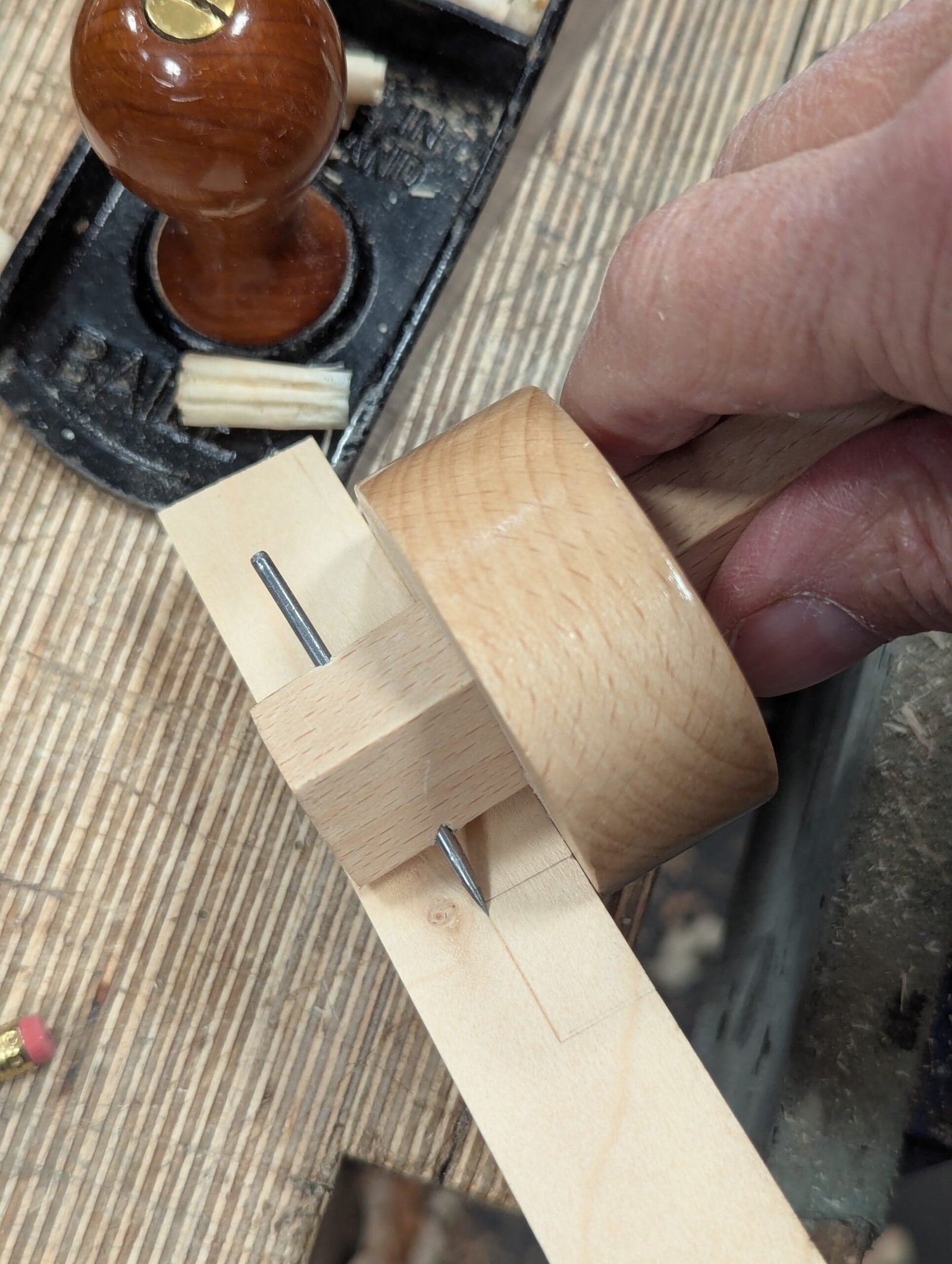
Are you struggling to get perfect angles on your wood joints? A bevel gauge could be the simple tool you need to take your woodworking to the next level.
This guide will show you exactly how to use a bevel gauge to measure and transfer angles with ease. By mastering this tool, you’ll save time, reduce mistakes, and create cleaner, stronger joints every time. Keep reading, and you’ll discover tips and tricks that even experienced woodworkers use to get flawless results.
Your next project is about to get a lot smoother!
Choosing The Right Bevel Gauge
A bevel gauge helps measure and transfer angles for wood joints. Picking the right one saves time and improves accuracy.
Different bevel gauges suit different tasks. This guide covers types, materials, and how to pick one for your woodworking.
Types Of Bevel Gauges
Bevel gauges come in various styles. Each type fits a certain need in woodworking.
- Sliding Bevel:Has an adjustable blade that locks at any angle.
- Fixed Bevel:Set at one angle only, often 45 or 90 degrees.
- Combination Bevel:Offers multiple angle settings for different cuts.
- Digital Bevel:Displays angle measurements on a screen for precision.
Materials And Build Quality
Good materials ensure your bevel gauge lasts and stays accurate. Look for solid build and rust resistance.
| Material | Advantages | Disadvantages |
|---|---|---|
| Steel | Durable, holds angles well | Can rust if not cared for |
| Brass | Rust-resistant, smooth adjustment | Heavier, can be pricey |
| Plastic | Lightweight, affordable | Less durable, may bend |
| Wood | Traditional look, easy to handle | Can warp or crack over time |
Selecting Based On Woodworking Needs
Choose a bevel gauge that matches your project and skill level. Consider how often you use it and the types of angles needed.
- If you work with many angles, a sliding or digital bevel is best.
- For simple projects, a fixed bevel may be enough.
- Pick a durable material if you use the tool daily.
- For occasional use, a plastic or wooden gauge can work.
- Check the locking mechanism to keep angles steady.

Credit: woodworkersinstitute.com
Setting Up Your Bevel Gauge
Setting up a bevel gauge correctly helps you measure angles for wood joints. This tool lets you copy and transfer angles easily.
Learn how to adjust the blade, use the locking mechanism, and check for accuracy. These steps make your work precise and reliable.
Adjusting The Blade Angle
Loosen the locking knob to move the blade freely. Place the blade at the angle you want to measure or mark. Make sure the blade lines up with your wood piece.
Once the blade matches the desired angle, hold it steady before locking. You can use the bevel gauge to trace the angle or check your cuts.
Locking Mechanism Tips
- Turn the locking knob gently to avoid damaging threads.
- Check that the blade does not move after locking.
- If the blade slips, tighten the knob more firmly but not too hard.
- Keep the locking parts clean from dust and wood chips.
- Test the lock by applying slight pressure before use.
Calibrating For Accuracy
To ensure your bevel gauge shows correct angles, check it against a known angle. Use a protractor or a square tool for comparison.
| Tool Used | Purpose | How to Use |
| Protractor | Measure exact angles | Align blade and read angle on protractor |
| Carpenter’s Square | Check 90-degree angles | Place blade against square to see if it matches |
| Reference Angle Block | Test common angles | Compare blade angle to block angle |
Using The Bevel Gauge With Wood Joints
A bevel gauge helps woodworkers measure and transfer angles. It is useful when making wood joints that need exact fits. This tool improves accuracy and saves time.
Using a bevel gauge correctly ensures your joints will align well. It works by locking the angle you need and transferring it to your wood pieces.
Measuring Angles On Wood Pieces
Place the bevel gauge on the edge of the wood piece to read the angle. Adjust the blade until it matches the slope or cut angle. Then tighten the locking screw to hold the angle.
- Hold the stock firmly against the wood edge
- Move the blade to align with the angle
- Lock the blade to keep the angle set
- Check the angle with a protractor if needed
Transferring Angles For Cuts
After measuring, transfer the angle to the wood piece you will cut. Use the bevel gauge to mark the cut line clearly. This helps you saw or plane the wood at the correct angle.
| Action | Tip |
| Set bevel gauge to angle | Double-check locking screw is tight |
| Place bevel gauge on new wood piece | Align blade with edge for clear marking |
| Draw cut line along blade | Use a sharp pencil for accuracy |
| Cut along marked line | Cut slowly to keep angle true |
Ensuring Consistent Joint Angles
Use the bevel gauge for each piece to keep joint angles the same. This avoids gaps and weak joints. Make sure to recheck the angle if you adjust your tool.
Tips for consistent angles:
- Always lock the bevel gauge firmly
- Mark angles clearly on each wood piece
- Compare angles between pieces before joining
- Use clamps to hold pieces when checking fit

Credit: paulsellers.com
Common Wood Joints And Angle Requirements
Wood joints connect two pieces of wood in furniture and structures. Each joint needs specific angles for strength and fit. A bevel gauge helps measure and set these angles correctly.
This guide explains angle needs for common joints and how to use a bevel gauge for them.
Mitre Joints
Mitre joints join two wood pieces at an angle, usually to make a corner. The most common angle is 45 degrees, forming a 90-degree corner. Using a bevel gauge helps set the exact angle for a tight fit.
Dovetail Joints
Dovetail joints lock wood pieces together with interlocking pins and tails. The angle of the tails is key to joint strength. Usually, the angle is between 7 and 14 degrees. A bevel gauge sets this angle to ensure the joint fits snugly.
- Tail angle: 7–14 degrees
- Pin angle: complementary to tail angle
- Use bevel gauge to transfer angles accurately
Box Joints
Box joints use square fingers that fit together. The angles are typically 90 degrees. The main challenge is spacing and alignment. A bevel gauge can help check if edges are square.
| Joint Type | Common Angle | Bevel Gauge Use |
|---|---|---|
| Mitre Joint | 45 degrees | Set cutting angle for corners |
| Dovetail Joint | 7–14 degrees | Measure tail angles for fit |
| Box Joint | 90 degrees | Check squareness of edges |
Tips For Mastering Precision
Using a bevel gauge correctly helps you get exact angles for wood joints. Precise angles improve the strength and look of your project.
This guide gives you simple tips to keep your bevel gauge in good shape, practice your skills, and fix common angle errors.
Maintaining Your Bevel Gauge
Keep your bevel gauge clean and free from dust or glue. Wipe it with a dry cloth after each use. Check that the locking mechanism works smoothly.
- Oil the pivot screw lightly to prevent rust.
- Store the tool in a dry place to avoid damage.
- Inspect the blade for any bends or chips before use.
- Tighten the locking knob firmly but not too tight to avoid wear.
Practice Techniques
Practice setting and transferring angles to improve your accuracy. Use scrap wood to test your bevel gauge before cutting your project pieces.
- Set the bevel gauge to a known angle, like 45 degrees.
- Mark the angle on a scrap piece of wood.
- Cut along the mark and check the fit against another piece.
- Adjust your bevel gauge if the angle is not exact.
- Repeat with different angles to build confidence.
Troubleshooting Angle Errors
| Problem | Possible Cause | Solution |
|---|---|---|
| Angle changes when moving bevel gauge | Loose locking knob | Tighten the knob firmly |
| Blade does not sit flat on wood | Bent or damaged blade | Replace or straighten the blade |
| Inaccurate angle markings | Dirty or worn tool | Clean the gauge and check for wear |
| Angle slips during marking | Poor grip on the wood | Hold the bevel gauge steady and apply gentle pressure |

Credit: www.youtube.com
Frequently Asked Questions
What Is A Bevel Gauge Used For In Woodworking?
A bevel gauge measures and transfers angles accurately. It helps create precise wood joints by marking exact angles for cutting.
How Do I Adjust A Bevel Gauge Properly?
Loosen the locking mechanism, set the blade to the desired angle, then tighten the lock to secure it firmly.
Can A Bevel Gauge Improve Wood Joint Quality?
Yes, it ensures accurate angle measurements, leading to tight-fitting joints and stronger, more professional woodwork results.
What Types Of Wood Joints Benefit From A Bevel Gauge?
Bevel gauges are ideal for miter, dovetail, lap, and chamfer joints, where precise angle alignment is critical.
Conclusion
Mastering the bevel gauge takes practice. It’s worth the effort. Your wood joints will improve. Accurate angles make a big difference. Always double-check your settings. Precision matters in woodworking. A well-used bevel gauge ensures tight joints. Keep your tool clean and calibrated.
This guide should help you get started. Experiment with different angles. Enjoy the process. Woodworking is both art and skill. Patience leads to better results. Stay committed to learning. Over time, your projects will reflect your dedication. Happy woodworking!