If you want clean, straight edges every time you use a hand saw, you’re in the right place. Cutting wood might seem simple, but getting a perfect straight line takes more than just swinging the saw.
With the right tips, you can save time, avoid frustration, and make your projects look professional. Keep reading, and you’ll discover easy tricks that make a big difference in your cutting accuracy. Your next project will thank you.
Choosing The Right Hand Saw
Using a hand saw correctly can help you cut straight edges with ease. Picking the right saw is the first step.
This guide covers types of hand saws and blade tips to help you choose well.
Types Of Hand Saws
Different hand saws serve different purposes. Knowing which type fits your task is key to straight cuts.
- Crosscut Saw:Designed to cut across wood grain. Good for clean cuts on boards.
- Rip Saw:Cuts along the grain. It removes wood fast but rougher than crosscut saws.
- Back Saw:Has a stiff edge for precise, straight cuts. Ideal for joinery and fine work.
- Japanese Saw:Cuts on the pull stroke. Offers smooth and accurate cuts with less effort.
Blade Selection Tips
Choosing the right blade affects how straight and smooth your cuts will be. Consider these factors.
| Blade Feature | Effect on Cut | Best Use |
| Teeth per inch (TPI) | More teeth give smoother cuts; fewer teeth cut faster. | High TPI for fine wood; low TPI for rough cuts. |
| Blade length | Longer blades cut wider boards; shorter blades offer control. | Use long blades for big cuts; short blades for detail work. |
| Blade thickness | Thicker blades resist bending but cut wider kerfs. | Thin blades for fine edges; thick blades for durability. |
Preparing Your Workspace
Getting your workspace ready is key for cutting straight edges with a hand saw. A clean and organized area helps you work safely and accurately.
Before you start, clear away clutter and make sure you have enough space to move freely. This will make your work easier and safer.
Securing The Material
Hold the wood firmly to stop it from moving while you saw. This keeps your cut straight and prevents accidents.
Use clamps or a vise to lock the material in place. Make sure the clamps do not get in the way of the saw blade.
- Place clamps near the cutting line
- Check that the wood is stable
- Adjust clamps if the material shifts
Ensuring Proper Lighting
Good lighting helps you see the cut line clearly. Poor light can cause mistakes and uneven edges.
Use bright, focused lights aimed at your work area. Natural light is great if you have it during the day.
- Position lights to avoid shadows
- Use adjustable lamps for best angle
- Keep your workspace well-lit all the time
Marking Straight Cutting Lines
Marking straight cutting lines is key for clean cuts with a hand saw. Clear lines guide your saw and help avoid mistakes.
Use simple tools and steady hands to draw lines that are easy to follow. This makes cutting faster and safer.
Using A Straightedge
A straightedge helps you draw perfect straight lines. It can be a ruler, a metal strip, or a carpenter’s square.
- Place the straightedge firmly on your wood.
- Hold it steady with one hand.
- Use a sharp pencil or marking knife to draw along the edge.
- Check the line to make sure it is visible and straight.
Best Marking Tools
Choosing the right tool makes marking easier. Some tools suit wood better than others.
| Marking Tool | Best Use | Notes |
| Carpenter’s pencil | General marking | Thick lead, easy to see |
| Marking knife | Fine, precise lines | Leaves a small groove |
| Fine-tip pen | Temporary marks | Use on smooth surfaces only |
| Chalk line | Long, straight lines | Good for rough lumber |
:max_bytes(150000):strip_icc()/p_straightcut-dc5519726caa400d964dee5742135216.jpg)
Credit: www.woodmagazine.com
Proper Sawing Technique
Using a hand saw to cut straight edges requires careful technique. Good habits help you make clean, accurate cuts.
Focus on how you hold the saw, start the cut, and keep a steady stroke to get the best results.
Correct Grip And Posture
Hold the saw handle firmly but not too tight. Your grip should feel comfortable and allow control.
Stand with your feet shoulder-width apart. Keep your body balanced and your arm aligned with the saw blade.
- Grip the handle with your dominant hand
- Keep your wrist straight and relaxed
- Stand facing the cut line squarely
- Use your whole arm, not just your wrist
Starting The Cut
Begin by placing the saw teeth on the wood edge where you want to cut. Hold the saw at a low angle.
Use short, light strokes to create a shallow groove. This groove guides the saw for a straight cut.
- Position the saw teeth on the cut line
- Start with gentle, short strokes
- Make sure the saw blade stays on the line
- Don’t apply too much pressure at the start
Maintaining A Steady Stroke
Use long, even strokes that move smoothly through the wood. Keep the saw blade aligned with the cut line.
Apply steady pressure on the forward stroke and ease off on the return stroke. This keeps the cut clean and straight.
- Push forward with steady, even strokes
- Keep the saw blade straight and true
- Relax your grip if you feel tension
- Watch the cut line and adjust as needed
Common Mistakes To Avoid
Using a hand saw to cut straight edges can be tricky. Many beginners make mistakes that cause uneven cuts. Avoiding these errors helps you get better results.
This guide covers two common mistakes: saw wandering and applying too much pressure. Learn how to spot and fix these issues.
Saw Wandering
Saw wandering happens when the blade moves off the cut line. This creates crooked edges and wastes wood. It often happens because the saw is not guided well.
- Keep your eyes on the cutting line at all times.
- Start the cut slowly to make a shallow groove.
- Use a straight edge or guide to help keep the saw on track.
- Hold the saw handle firmly but not too tight.
- Avoid twisting your wrist during the cut.
Applying Excessive Pressure
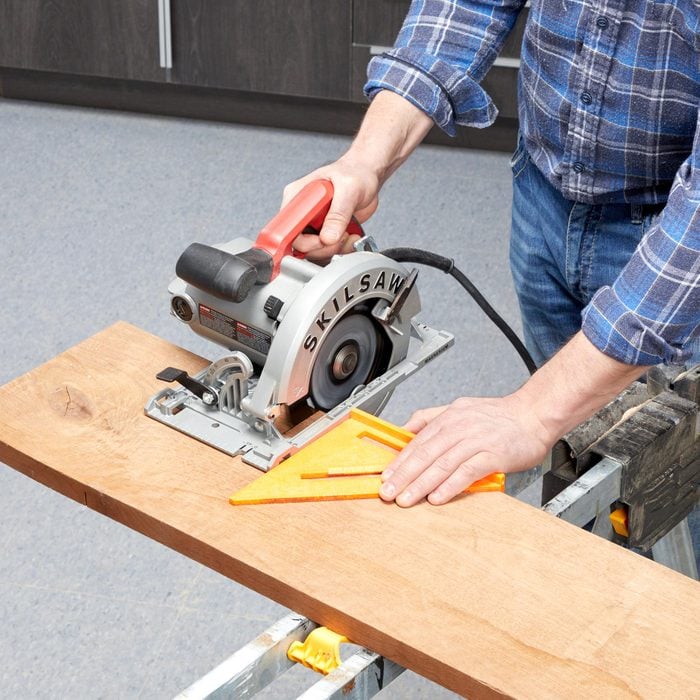
Pushing too hard on the saw blade causes rough cuts and blade bending. It also tires your arms quickly. Light, steady strokes work better than force.
| Pressure Level | Effect on Cut | Tip |
| Too Light | Slow progress, uneven cutting | Apply gentle but consistent pressure |
| Too Hard | Blade bends, rough edges, fatigue | Use smooth, controlled strokes |
| Just Right | Clean straight cuts, less effort | Balance pressure with blade speed |
Credit: www.familyhandyman.com
Finishing Touches
Using a hand saw to get straight edges takes care and patience. The finishing touches help make your cut smooth and precise.
These final steps improve the look and fit of your project. Focus on smoothing and checking your work carefully.
Smoothing Cut Edges
Sanding the edges after cutting removes rough spots and splinters. This makes the wood safer to handle and looks cleaner.
Use fine-grit sandpaper and sand along the grain for the best finish. Light pressure helps avoid uneven surfaces.
- Start with medium grit to smooth big rough areas
- Finish with fine grit for a soft, smooth edge
- Use a sanding block to keep edges even
- Wear a dust mask to protect your lungs
Checking For Accuracy
Check your cut edge to make sure it is straight and matches your measurements. Accurate cuts fit better in your project.
Use a square or straightedge to compare the edge. Mark any areas that need more trimming or sanding.
- Place a carpenter’s square along the edge
- Look for gaps between the tool and wood
- Use a pencil to mark uneven spots
- Make small adjustments with the saw or sandpaper
Maintenance For Optimal Performance
Keeping your hand saw in good shape helps you cut straight edges. Regular care makes the saw last longer and work better.
Simple maintenance steps improve your cutting accuracy and safety. Focus on sharpening and storing your saw correctly.
Blade Sharpening Tips
A sharp blade cuts smoothly and straight. Dull blades cause rough cuts and require more effort.
Use a fine file or sharpening tool to keep the teeth sharp. File each tooth evenly and in the same direction.
- Secure the saw in a clamp for stability
- File each tooth with smooth, even strokes
- Check the teeth angle matches the original shape
- Remove any rust before sharpening
- Wear safety glasses while sharpening
Proper Storage
Store your hand saw in a dry place to stop rust from forming. Moisture can damage the blade and handle.
Keep the saw covered or in a case to protect the teeth. Avoid placing heavy items on the saw to prevent bending.
- Hang the saw on a wall hook or pegboard
- Use a blade guard or sheath for protection
- Keep away from damp or humid areas
- Clean the saw before storage
- Apply light oil to the blade to stop rust
Credit: www.familyhandyman.com
Frequently Asked Questions
How Do I Choose The Right Hand Saw For Straight Edges?
Select a hand saw with fine, sharp teeth for clean, precise cuts. Choose a saw length that fits your project size. A back saw or a crosscut saw often works best for straight edges.
What Is The Best Technique For Cutting Straight Edges?
Use slow, steady strokes to maintain control. Start with a light guide cut to set the path. Keep the saw blade perpendicular to the wood for accuracy.
How Can I Prevent The Saw From Drifting Off The Line?
Mark your cut line clearly with a pencil or chalk. Use a guide or clamp a straight edge for support. Maintain consistent pressure and angle while sawing.
How Often Should I Sharpen My Hand Saw?
Sharpen your saw when cutting becomes difficult or teeth appear dull. Regular sharpening ensures smooth, straight cuts and prolongs the saw’s life. Use a saw file or seek professional sharpening.
Conclusion
Mastering hand saw skills takes practice and patience. Straight edges require focus and steady hands. Choose the right saw for your task. Keep the blade sharp for precise cuts. Secure your material firmly to prevent slips. Mark your line clearly before cutting.
Follow these tips, and you’ll improve your saw work. Practice often to build confidence. Remember, safety comes first. Wear protective gear and work in a clean area. With time, your skills will grow. Straight cuts will become second nature. Enjoy the satisfaction of a job well done.
Happy sawing!