Are you ready to turn your garden dreams into reality? Planting seeds in rows is a simple yet powerful technique that can transform your space into a thriving, organized garden.
Imagine walking through neat rows of vibrant plants, each one flourishing under your care. This guide is designed just for you, to help you master the art of row planting with ease. Whether you’re a seasoned gardener or just starting out, you’ll find clear and actionable steps to boost your success.
Dive in, and discover how a little structure can lead to a bounty of beauty and produce in your backyard.

Credit: migardener.com
Benefits Of Row Planting
Planting seeds in rows helps organize the garden. It makes growing plants easier and more effective.
Row planting allows better use of space and care for the plants. This method is popular for many gardeners.
Improved Plant Spacing
Planting seeds in rows helps keep a consistent distance between plants. Good spacing lets each plant get enough nutrients and sunlight.
Proper spacing stops plants from crowding. This reduces competition and helps plants grow strong and healthy.
Easier Maintenance
Rows make it simple to water, weed, and check plants. You can move easily between rows without stepping on plants.
Clear rows help gardeners spot problems fast. This saves time and keeps plants safe from pests and diseases.
Enhanced Air Circulation
Row planting improves airflow around each plant. Good air circulation helps stop mold and mildew from growing.
Plants with enough air dry faster after rain. This lowers the chance of plant diseases and keeps the garden healthy.
Selecting Seeds For Row Planting
Planting seeds in rows helps organize your garden and makes care easier. Choosing the right seeds is important for good growth.
Picking seeds that work well in rows can improve your harvest and reduce problems. Look at the seed type before you plant.
Choosing Suitable Varieties
Pick seed varieties that grow well in your area. Some plants do better in rows because of their size and shape.
Consider plants that fit your garden space and climate. Choose varieties known for good yields and easy care.
- Choose varieties adapted to your local climate
- Pick plants that fit the space of row planting
- Select varieties with good disease resistance
Considering Growth Habits
Look at how plants grow before planting seeds in rows. Some plants grow tall, while others spread wide.
Plants that grow upright work best in rows. Spreading plants may need more space or a different layout.
- Upright plants fit well in straight rows
- Vining or spreading plants may need more room
- Consider plant height to avoid shading
Seed Quality And Viability
Use fresh seeds with good quality for better growth. Old or damaged seeds may not sprout well in rows.
Check the seed packet for expiration dates. Test seed germination if you are unsure about viability.
- Buy seeds from trusted sources
- Check seed packets for freshness
- Perform a germination test if needed
Preparing The Soil
Planting seeds in rows needs good soil preparation. Healthy soil helps seeds grow strong plants.
Preparing soil means testing it, loosening it, and adding nutrients. This creates the best place for seeds.
Soil Testing And Amendment
Test soil to know its pH and nutrients. This helps to fix any problems before planting.
Use a soil test kit or send samples to a lab. Amend soil by adding lime or sulfur to change pH.
- Check soil pH for acidity or alkalinity
- Add lime to raise pH if soil is too acidic
- Add sulfur to lower pH if soil is too alkaline
- Adjust nutrient levels with fertilizers as needed
Loosening And Leveling Soil
Loosen soil to let roots grow easily. Firm soil stops roots from spreading well.
Use a garden fork or tiller to break soil clumps. Level the soil surface to plant seeds evenly.
- Break up hard soil clumps
- Remove rocks and weeds
- Rake soil to make it flat and smooth
- Keep soil loose but not too crumbly
Adding Fertilizers And Compost
Add fertilizers to give seeds extra nutrients. Compost improves soil texture and adds organic matter.
Mix compost and fertilizer into the soil before planting. This feeds plants as they grow.
- Use balanced fertilizer with nitrogen, phosphorus, and potassium
- Add 2-3 inches of compost on top
- Mix compost and fertilizer well into the soil
- Water soil after adding nutrients to help them settle
Marking And Measuring Rows
Planting seeds in straight rows helps your garden look neat and grow well. Measuring and marking rows correctly saves time and effort.
Use simple tools and methods to keep your rows even and straight. This guide explains how to do it step by step.
Tools For Accurate Row Spacing
You need some basic tools to mark rows evenly. These tools help you measure space and keep lines straight.
- Measuring tape or yardstick
- Garden hoe or stick for marking
- String or twine for straight lines
- Wooden stakes to hold string
- Chalk or marker for soil
Determining Row Distance
Row distance depends on the type of seeds you plant. Some plants need more space, others less.
| Plant Type | Recommended Row Distance |
| Carrots | 12 inches (30 cm) |
| Beans | 18 inches (45 cm) |
| Tomatoes | 24 inches (60 cm) |
| Lettuce | 10 inches (25 cm) |
| Peas | 18 inches (45 cm) |
Creating Straight Lines
Use string tied between stakes to mark straight rows. Pull the string tight and mark along it.
- Place a stake at the start point of your row.
- Place another stake where the row should end.
- Tie a string tightly between the two stakes.
- Use a hoe or stick to mark the soil along the string.
- Repeat for each row, spacing strings according to your measurements.
Planting Techniques
Planting seeds in rows helps organize your garden and makes care easier. Knowing proper techniques increases your chances of healthy plants.
This guide covers seed depth, spacing, and how to plant using tools or by hand.
Proper Seed Depth
Planting seeds at the right depth is vital. Too shallow, and seeds dry out or wash away. Too deep, and seedlings may not reach the surface.
Check the seed packet for the recommended depth. Usually, plant seeds about two to three times as deep as their size.
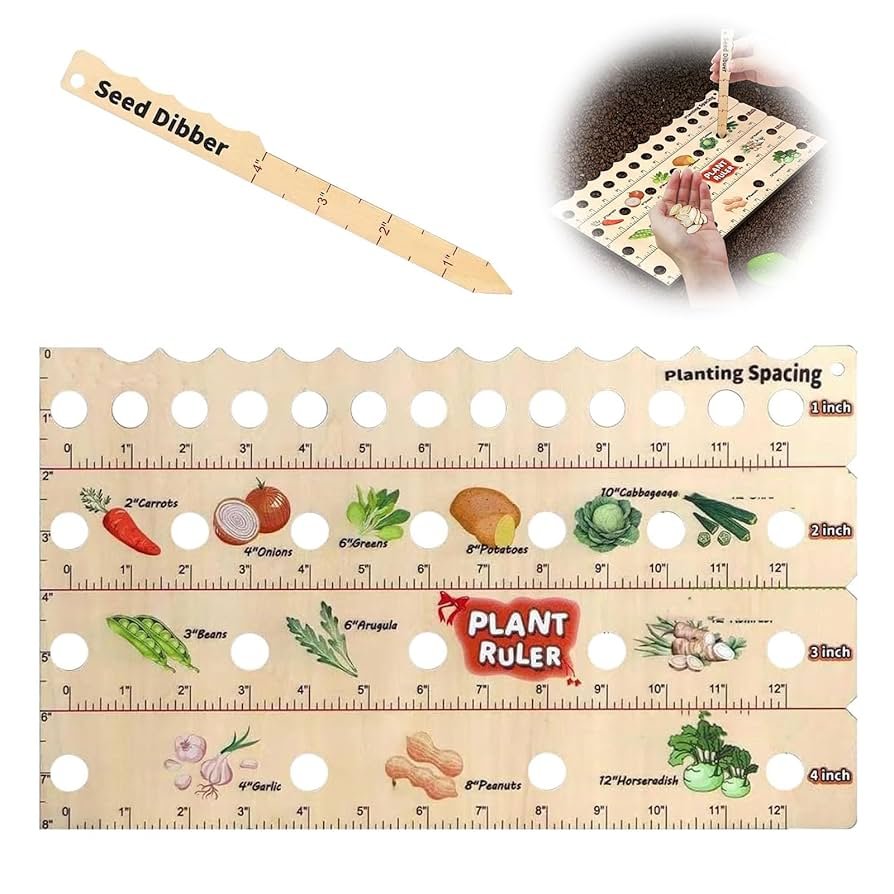
Seed Spacing Within Rows
Spacing seeds correctly gives plants enough room to grow. Crowded plants compete for water, light, and nutrients.
- Small seeds: space 1 to 2 inches apart
- Medium seeds: space 3 to 4 inches apart
- Large seeds: space 6 to 12 inches apart
| Seed Size | Recommended Spacing |
| Small | 1-2 inches |
| Medium | 3-4 inches |
| Large | 6-12 inches |
Using Seeders And Hand Planting
Seeders help plant seeds evenly and save time. Hand planting works well for small gardens or irregular spaces.
- Seeders create uniform rows and depth
- Hand planting allows control over spacing
- Always cover seeds gently with soil
- Water immediately after planting

Credit: www.amazon.ca
Watering And Mulching
Planting seeds in rows needs careful watering and mulching. These steps help seeds grow strong and healthy.
Good watering and mulching keep soil moist and protect young plants from stress.
Initial Watering Tips
Right after planting, water the seed rows gently. Use a fine spray to avoid washing seeds away.
- Water the soil evenly to moisten it about 1 inch deep.
- Do this soon after planting to help seeds start growing.
- Avoid overwatering, which can cause seeds to rot.
- Check the soil daily for dryness in warm weather.
Maintaining Moisture Levels
Keep the soil moist but not soggy as seeds sprout. Dry soil stops growth, while too much water harms roots.
| Moisture Level | Effect on Seeds |
| Too Dry | Seeds fail to germinate or grow slowly |
| Just Right | Seeds sprout quickly and roots develop well |
| Too Wet | Seeds may rot or develop fungal diseases |
Benefits Of Mulching
Mulching covers the soil surface and helps keep water in the ground longer.
- Reduces water evaporation so soil stays moist.
- Keeps soil temperature steady to protect seeds.
- Prevents weeds that compete with your seedlings.
- Helps stop soil erosion from rain and wind.
Managing Growth And Weeds
Planting seeds in rows helps organize your garden and makes care easier. Managing growth and weeds is important for healthy plants. Proper care gives your seedlings room to grow strong.
Controlling weeds prevents them from stealing water and nutrients. Managing plant growth ensures your garden stays productive and neat.
Thinning Seedlings
Thinning means removing some seedlings to give others more space. Crowded plants compete for light, water, and nutrients. Thin seedlings when they have 2–3 leaves.
- Use scissors to cut weak seedlings at soil level
- Leave the strongest seedlings spaced 2–4 inches apart
- Thin every few days if needed
- Water plants gently after thinning
Weed Control Methods
Weeds grow quickly and block sunlight from your plants. Removing them early helps your garden thrive. Use tools and natural ways to keep weeds down.
| Method | Description | Frequency |
| Hand Pulling | Pull weeds by hand, remove roots | Weekly |
| Mulching | Cover soil with straw or leaves to block weeds | Once after planting |
| Hoeing | Use a hoe to cut weed tops off | Every 1–2 weeks |
Supporting Plant Growth
Supporting plants helps them grow straight and strong. Some plants need extra help to stay upright or avoid damage from wind.
Here are ways to support your plants:
- Use stakes or small sticks to tie plants gently
- Place string along rows to keep plants upright
- Trim side shoots to focus energy on main growth
- Water regularly but avoid overwatering
Troubleshooting Common Issues
Planting seeds in rows is a simple way to grow a garden. Sometimes, problems happen that slow down growth. Knowing how to fix these problems helps your plants grow strong.
This guide shows how to handle three common issues: poor germination, pests and diseases, and weather changes. Follow these tips to improve your garden’s success.
Dealing With Poor Germination
Poor germination means seeds do not sprout well. This can happen for many reasons. Checking seed quality and soil conditions helps solve this problem.
- Use fresh seeds that are not expired.
- Plant seeds at the right depth, not too deep or shallow.
- Keep soil moist but not waterlogged.
- Make sure soil temperature suits the seed type.
- Loosen soil to let roots grow easily.
Pest And Disease Prevention
Pests and diseases can harm young plants. Watching your rows often helps catch problems early. Keeping plants healthy reduces risks.
| Type | Signs | Prevention Tips |
| Aphids | Sticky leaves, curled edges | Spray water, use insecticidal soap |
| Fungal Disease | Spots on leaves, mold growth | Avoid overhead watering, space plants |
| Cutworms | Cut stems near soil | Use collars around seedlings |
Adjusting For Weather Conditions
Weather affects seed growth. Heat, cold, and rain change how seeds sprout. Adjust planting and care to fit the weather.
- Cover seeds with mulch to keep soil warm in cold weather.
- Water seeds more during dry periods.
- Use shade cloth if sun is very strong.
- Delay planting if frost is expected.

Credit: www.amazon.ca
Frequently Asked Questions
How Do You Prepare Soil For Planting Seeds In Rows?
Prepare soil by loosening it with a garden fork or tiller. Remove weeds, rocks, and debris. Add compost or organic matter to enrich soil. Level the surface and create shallow furrows for seed rows.
What Is The Best Spacing Between Seed Rows?
Spacing depends on plant type but generally 12-18 inches is ideal. Proper spacing ensures good air circulation and sunlight exposure. It also allows plants to grow without overcrowding.
How Deep Should Seeds Be Planted In Rows?
Plant seeds at a depth twice their size, usually 1-2 inches. Check seed packet instructions for specific depth. Planting too deep or shallow can reduce germination success.
When Is The Best Time To Plant Seeds In Rows?
Plant seeds after the last frost date for your region. Soil temperature should be warm enough for seed germination. Early morning or late afternoon planting helps avoid heat stress.
Conclusion
Planting seeds in rows helps keep your garden neat and healthy. Straight rows make watering and weeding easier each day. Remember to space seeds properly for good growth and strong plants. Watch your garden often and care for young seedlings with patience.
With simple steps, your garden will grow well and give you fresh, tasty food. Start small, learn, and enjoy the process of gardening. Little by little, your skills will improve, and your garden will thrive. Keep planting and watching your garden flourish.