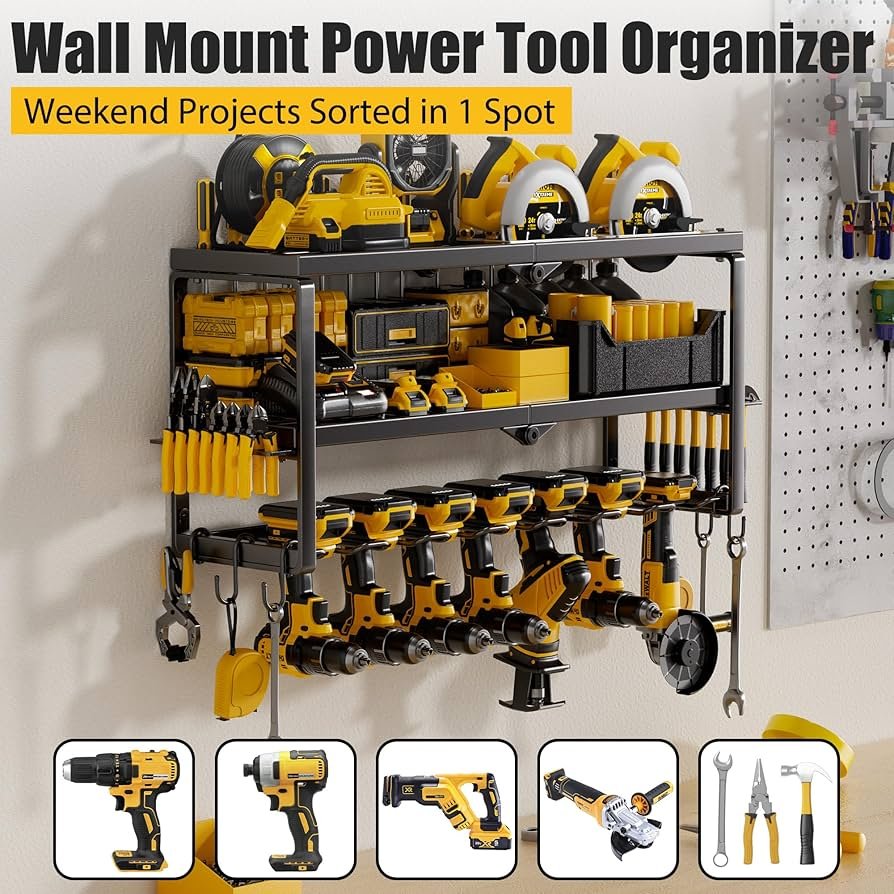
Are your power tools scattered around, making it hard to find what you need when you need it? Properly storing your tools on shelves can save you time, protect your equipment, and keep your workspace neat.
In this guide, you’ll discover simple, effective ways to organize your power tools so they’re easy to reach and stay in great shape. Ready to transform your storage and boost your productivity? Let’s dive in!

Credit: www.amazon.ca
Choosing The Right Shelves
Storing power tools properly keeps them safe and easy to find. Choosing the right shelves helps protect your tools from damage.
Select shelves that fit your space and can hold your tools’ weight. This guide explains what to look for.
Material Options
Shelf material affects strength and durability. Common materials include wood, metal, and plastic.
Wood shelves look nice but may warp under heavy loads. Metal shelves are strong and last long. Plastic shelves are lightweight but may not hold heavy tools well.
- Wood: good for light to medium tools
- Metal: best for heavy tools and durability
- Plastic: ideal for light tools and easy cleaning
Weight Capacity
Check the shelf’s weight capacity before buying. Power tools can be heavy, so shelves must support their weight safely.
Look for shelves rated for more weight than your tools need. This adds safety and prevents damage.
- Calculate total tool weight
- Choose shelves with higher capacity
- Distribute weight evenly across shelves
Shelf Size Considerations
Pick shelf size based on your tool sizes and storage space. Deeper shelves hold bigger tools but take more room.
Adjust shelf height to fit tall tools. Leave space between shelves for easy access and air circulation.
- Measure your largest tools
- Choose shelf depth and width accordingly
- Allow space for tool handles and cords
Organizing Power Tools Efficiently
Storing power tools on shelves keeps your workspace neat. It also helps you find tools quickly.
Good organization saves time and protects your tools from damage. Use smart methods to arrange tools on shelves.
Grouping By Tool Type
Group power tools by type to keep similar items together. This makes it easier to pick the right tool fast.
For example, place drills on one shelf and saws on another. Keep smaller tools like sanders in a separate area.
- Drills and drivers
- Saws and cutting tools
- Sanders and polishers
- Grinders and rotary tools
Using Containers And Bins
Use containers and bins to store small parts and accessories. This stops them from getting lost or mixed up.
Clear bins help you see what is inside without opening them. Stackable containers save shelf space and keep things tidy.
- Clear plastic bins for screws and bits
- Stackable containers for cords and chargers
- Small boxes for drill bits and blades
Labeling For Easy Access
Label shelves, containers, and bins to find tools quickly. Labels help you remember where each item belongs.
Use large, clear labels with simple words. This reduces time spent searching and keeps your area organized.
- Label shelves by tool type
- Mark containers with contents
- Use waterproof labels for durability
Maximizing Space On Shelves
Storing power tools properly helps keep your workspace neat. Using shelves efficiently saves room and protects your tools.
There are smart ways to organize tools on shelves. This guide covers key techniques to make the most of your shelf space.
Vertical Storage Techniques
Using vertical space on shelves lets you store more tools. Hang tools or use tall containers to keep items off the shelf floor.
- Install pegboards or hooks on the shelf sides
- Use vertical dividers for drills and saws
- Stack toolboxes vertically with sturdy supports
- Store long tools upright in bins or tubes
Adjustable Shelving Systems
Adjustable shelves let you change heights to fit different tool sizes. This flexibility prevents wasted vertical space.
| Shelf Height | Tools Stored |
| 6 inches | Small hand tools, drill bits |
| 12 inches | Drills, sanders, battery packs |
| 18 inches | Circular saws, grinders |
| 24+ inches | Large power tools, toolboxes |
Utilizing Shelf Edges And Undersides
Shelf edges and undersides offer extra space for small tools and accessories. Use them to keep things within reach.
- Attach magnetic strips under shelves for metal tools
- Add small hooks on shelf edges for cords and straps
- Use clip-on baskets under shelves for screws and nails
- Place label holders on edges for easy identification
Safety Tips For Storing Power Tools
Storing power tools properly helps prevent accidents and damage. Safe storage keeps your tools ready to use and protects everyone in your home.
Follow these safety tips to organize your tools on shelves. Focus on securing heavy items, protecting electrical parts, and childproofing your storage areas.
Securing Heavy Items
Heavy power tools can cause injuries if they fall. Secure them well to avoid accidents and damage.
- Place heavy tools on lower shelves to reduce fall risk.
- Use brackets or straps to hold tools firmly in place.
- Check shelf weight limits and avoid overloading.
- Keep tools stable by using non-slip mats or liners.
- Store tools with sharp edges facing inward to avoid cuts.
Protecting Electrical Components
Electrical parts can get damaged by dust, moisture, or rough handling. Protect these parts to keep your tools working well.
| Component | Protection Tip |
|---|---|
| Power cords | Coil loosely and hang or place in bins to avoid tangles. |
| Batteries | Store in a dry area away from heat and direct sunlight. |
| Switches and buttons | Cover with plastic wrap or store in closed containers to keep dust out. |
| Tool motors | Keep tools in cases or on shelves with padding to prevent impacts. |
Childproofing Storage Areas
Keep power tools out of reach from children. A safe storage area helps avoid accidents and injuries.
- Store tools in locked cabinets or rooms.
- Use childproof latches on shelves and drawers.
- Label storage areas clearly to warn about dangers.
- Do not leave tools unattended or unsecured.
- Educate children about the risks of power tools.
Maintenance And Care On Shelves
Keeping power tools on shelves helps organize your workspace. Proper care prevents damage and keeps tools ready to use.
Good maintenance extends the life of power tools and saves money. Follow simple steps to keep tools clean and safe.
Cleaning Stored Tools
Clean tools before putting them on shelves. Dirt and dust can cause problems over time.
Use a dry cloth or soft brush to remove dust. For sticky dirt, use a damp cloth and dry tools well.
- Remove dust and debris
- Wipe off grease and oil spots
- Dry tools completely before storage
Regular Inspection Routines
Check your tools on shelves often. Look for damage, wear, or parts that need fixing.
Set a schedule to inspect tools every month. Early checks catch problems before they get worse.
- Look for cracks or broken parts
- Check power cords and plugs
- Test tools to see if they work well
Preventing Rust And Damage
Keep power tools dry to stop rust. Use shelves in dry places away from moisture.
Apply light oil or rust protectant on metal parts. Use protective covers for extra safety.
- Store tools in a dry, ventilated area
- Use oil to protect metal surfaces
- Cover tools to avoid dust and moisture

Credit: www.ramblingrenovators.ca

Credit: www.ramblingrenovators.ca
Frequently Asked Questions
How Do I Organize Power Tools On Shelves?
Organize power tools by size and frequency of use. Place frequently used tools at eye level. Use labeled bins for smaller accessories. Group similar tools together for easy access. Ensure shelves are sturdy and can handle the weight. Regularly update your organization system to maintain efficiency.
What Is The Best Shelf Type For Power Tools?
Heavy-duty metal or wooden shelves work best for power tools. They provide the necessary strength and durability. Adjustable shelves offer flexibility for different tool sizes. Ensure shelves are secured to the wall for safety. Consider adding hooks or pegboards for additional storage options.
How Can I Prevent Power Tool Damage On Shelves?
Use padded liners or mats on shelves to prevent scratches. Store tools in their cases when possible. Avoid stacking heavy tools on top of each other. Ensure tools are clean and dry before storage. Regularly inspect shelves for any signs of wear or instability.
Can I Store Power Tools In A Garage?
Yes, a garage is suitable for storing power tools. Ensure the garage is dry and well-ventilated. Use sturdy shelves and secure them properly. Consider using a dehumidifier to prevent rust. Keep tools away from direct sunlight to avoid heat damage.
Conclusion
Storing power tools on shelves keeps your workspace neat and safe. You save time by finding tools quickly when needed. Shelves help protect tools from damage and dust. Organizing tools this way makes your projects smoother and faster. Choose sturdy shelves and arrange tools by size or use.
Clean and check tools before storing to keep them working well. A good storage system helps you stay ready for any task. Simple steps lead to a tidy, efficient workshop every day.