Ever felt frustrated with uneven cuts in your DIY projects? You’re not alone.
Achieving precision can often feel like a daunting task. But what if I told you there’s a tool that can make all the difference? Enter the combination square—a versatile tool that could become your new best friend in woodworking and metalworking.
Imagine the satisfaction of creating perfectly straight and accurate cuts every single time. With this guide, you’ll discover exactly how to harness the power of a combination square to elevate your cutting skills. Ready to transform your projects from mediocre to magnificent? Let’s dive in and unlock the secrets of this essential tool.

Credit: paulsellers.com
Basics Of A Combination Square
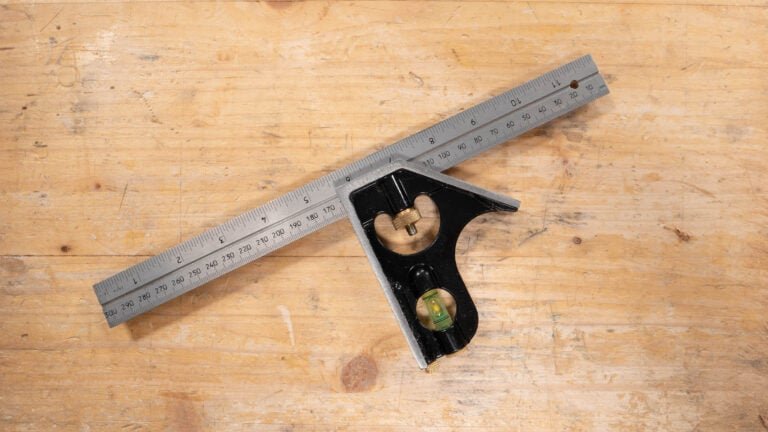
A combination square is a tool used in woodworking and metalworking. It helps measure and mark straight and angled lines.
This tool combines several features in one, making it useful for many tasks like measuring depths and checking angles.
Components And Features
A combination square has several parts that work together. Each part helps with different measuring tasks.
- Blade:A metal ruler marked with measurements.
- Head:The part that slides along the blade and locks in place.
- Bubble Level:A small vial with liquid to check if surfaces are level.
- Scriber:A small sharp point for marking materials.
The head can be adjusted to measure 90 degrees and 45 degrees angles. It locks tightly to keep measurements accurate.
Types Of Combination Squares
There are different types of combination squares to suit various needs. Each type may have special features.
- Standard Combination Square:The most common type with a blade, head, level, and scriber.
- Engineer’s Combination Square:Made with finer graduations for precise metalwork.
- Carpenter’s Combination Square:Usually has a longer blade for larger wood projects.
- Adjustable Combination Square:Allows easy blade length changes for different measurements.
Choosing the right type depends on your project and the material you work with.

Credit: www.wikihow.com
Preparing For Accurate Cuts
Using a combination square helps you make straight and precise cuts. Proper preparation is key to getting good results.
Two main steps improve your accuracy: choosing the right blade and setting the square correctly.
Selecting The Right Blade
Pick a blade that fits your cutting task. The blade type affects the smoothness and precision of the cut.
- Use a fine-toothed blade for smooth cuts on wood or plastic.
- Choose a coarse blade for fast cuts on thick materials.
- Pick a blade designed for metal if you cut metal sheets.
- Make sure the blade is sharp and not damaged.
- Check that the blade fits securely in your saw or tool.
Setting The Square Correctly
Adjust the combination square so it guides your cut line perfectly. This step prevents mistakes and uneven cuts.
| Setting Task | How to Do It |
| Lock the ruler | Slide ruler to the needed length and tighten the lock. |
| Check the 90-degree angle | Place the square against the edge and confirm the blade is perpendicular. |
| Mark the cut line | Use the pencil edge on the ruler to draw a clear line. |
| Test the setup | Make a trial cut on scrap wood to check accuracy. |
Marking And Measuring Techniques
Using a combination square helps you mark and measure with accuracy. It is a tool designed for many tasks in woodworking and metalworking.
This guide focuses on how to use the combination square for marking straight lines and measuring angles correctly.
Achieving Straight Lines
To draw straight lines, place the combination square’s ruler firmly against the edge of your workpiece. The head of the square should sit flush to keep the ruler steady.
- Hold the ruler tight against the edge to avoid movement.
- Use a sharp pencil or marking knife for clear lines.
- Draw the line along the ruler’s edge without lifting the tool.
- Check that the square’s head remains flat and steady during marking.
Measuring Angles Precisely
The combination square can measure common angles like 45 and 90 degrees. Adjust the ruler to the required angle and lock it in place.
| Angle | How to Set | Use |
| 90° (Right Angle) | Align ruler perpendicular to the head | Mark square corners and edges |
| 45° (Mitre Angle) | Place ruler on the angled side of the head | Mark mitre cuts and bevels |

Credit: www.reddit.com
Using The Square For Different Cuts
A combination square helps you make many types of cuts. It ensures your lines are straight and at the right angle.
This guide shows how to use the square for crosscuts, rip cuts, bevel cuts, and miter cuts.
Crosscuts And Rip Cuts
Crosscuts cut across the wood grain. Use the square to mark a straight line at 90 degrees. Place the ruler of the square along the wood edge to draw the line.
Rip cuts cut along the wood grain. Use the square the same way to mark a straight line. This helps you keep the cut straight and even.
- Set the square’s ruler flush against the wood edge.
- Slide the head until it touches the wood surface.
- Draw a line along the ruler at 90 degrees.
- Cut along the marked line for a clean edge.
Bevel And Miter Cuts
Bevel cuts are angled cuts made on the edge of the wood. Adjust the square’s head to the desired angle, usually between 0 and 45 degrees. Mark the line along the ruler.
Miter cuts join two pieces of wood at an angle. Set the square’s head to the angle needed, often 45 degrees. Use the ruler to draw the cut line accurately.
- Loosen the square’s head to set the angle.
- Adjust to the needed angle (e.g., 45 degrees).
- Tighten the head to lock the angle in place.
- Draw the cut line along the ruler edge.
Common Mistakes To Avoid
Using a combination square helps make accurate cuts. Avoiding mistakes saves time and materials.
Here are common mistakes to watch for when using a combination square for cutting.
Misalignment Issues
Misalignment happens when the square is not set correctly on the material. This causes uneven or crooked cuts.
Make sure the blade and stock of the combination square touch the edges firmly. Check that the ruler is tight and does not slip.
- Place the stock flush against the edge of the workpiece
- Hold the ruler firmly without moving it while marking
- Double-check the square is at a true 90-degree angle
- Replace or fix any worn parts that cause looseness
Incorrect Measurements
Incorrect measurements happen if you read the ruler wrong or do not lock the slider. This leads to cuts that are too long or short.
Always lock the ruler in place before marking. Read the scale carefully and measure twice to avoid errors.
- Use the right side of the ruler for inside measurements
- Check if your combination square uses metric or imperial units
- Measure from the same edge of the material every time
- Confirm measurements before cutting
Maintenance And Care Tips
Proper care keeps your combination square accurate and durable. Regular maintenance helps avoid rust and wear.
Clean and store the tool correctly after each use. This preserves its precision and extends its life.
Cleaning The Tool
Remove dust and debris from the ruler and head after use. Use a soft cloth or brush to clean tight spots.
- Wipe metal parts with a dry cloth to prevent moisture.
- Use a mild oil to lubricate moving parts lightly.
- Avoid harsh chemicals that can damage the finish.
- Dry the tool thoroughly before storing it.
Storage Recommendations
Store the combination square in a dry, cool place. Avoid damp areas to prevent rust and corrosion.
| Storage Tip | Reason |
| Keep in a toolbox or case | Protects from dust and damage |
| Store flat or hanging | Prevents bending or warping |
| Use silica gel packs | Absorbs moisture to reduce rust |
| Check regularly for rust spots | Allows early cleaning and care |
Frequently Asked Questions
What Is A Combination Square Used For In Cutting?
A combination square helps mark precise lines and measure angles during cutting. It ensures straight, accurate cuts. It also checks the squareness of edges, improving cutting accuracy and project quality.
How Do You Set A Combination Square For Cutting?
Loosen the locking nut, slide the ruler to the desired measurement, then tighten the nut. Ensure the blade is firmly fixed before marking or cutting.
Can A Combination Square Measure Angles For Cutting?
Yes, it measures 90° and 45° angles. This helps create accurate cuts and joints, essential for woodworking and metalworking projects.
How To Maintain A Combination Square For Accuracy?
Keep the ruler clean and dry. Regularly check the locking mechanism and blade for damage. Store it in a protective case to maintain precision.
Conclusion
Using a combination square helps you cut with more accuracy. It guides your saw or knife along straight lines. Always check the measurements twice before cutting. Keep the tool clean and well-maintained for best results. Practice with scrap wood to build confidence.
This simple tool saves time and reduces mistakes. Take your time, and cuts will improve. You’ll find projects easier and more enjoyable. A combination square is a helpful tool for any woodworker.