Are you tired of drilling holes in wood only to find them crooked, uneven, or just not quite right? Whether you’re working on a DIY project or a professional build, making precise holes is key to a clean, strong finish.
The good news? With the right techniques and tools, you can master the skill and save yourself time, frustration, and wasted materials. Keep reading to discover simple, effective tips that will help you drill perfect wood holes every single time.
Your next project is about to get a whole lot easier.

Credit: www.youtube.com
Choosing The Right Drill And Bits
Drilling precise holes in wood needs the right tools. The drill and bits you pick affect the hole’s accuracy.
Using the correct drill and bit helps avoid mistakes and saves time. Let’s look at how to choose them.
Types Of Drills For Wood
Different drills work better for wood projects. Cordless drills are easy to use and move around.
Hammer drills are too powerful and can damage wood. Drill presses give very straight holes but take space.
- Cordless Drill: Lightweight and portable
- Drill Press: Precise and steady
- Hammer Drill: Not ideal for wood
Selecting Drill Bit Materials
Drill bits come in different materials. High-speed steel (HSS) bits are common and work well on wood.
Carbide-tipped bits last longer but cost more. Brad point bits have sharp tips that keep the hole clean and exact.
- High-Speed Steel (HSS): Good for soft and hard wood
- Carbide-Tipped: Durable and long-lasting
- Brad Point: Sharp tip for clean holes
Bit Sizes For Precision
Choosing the right bit size is key. Small bits make tiny holes for screws or nails.
Large bits create bigger holes for bolts or dowels. Always measure twice before picking a bit size.
| Bit Size | Use |
|---|---|
| 1/16″ – 1/8″ | Small holes for screws |
| 3/16″ – 1/4″ | Medium holes for anchors |
| 5/16″ and larger | Large holes for bolts or dowels |
:max_bytes(150000):strip_icc()/JS_1864-2008bd548fb548db8f5729d54b71976b.jpg)
Credit: www.woodmagazine.com
Preparing The Wood Surface
Drilling precise holes in wood starts with good surface preparation. The wood must be clean and smooth to avoid drill slipping.
Taking time to prepare helps you make accurate holes that fit your project needs.
Marking Drill Points Accurately
Mark the exact spots where you want to drill. Use a pencil or a fine-tip marker for clear marks.
- Measure twice before marking
- Use a ruler or tape measure for straight lines
- Mark light dots that can be seen but erased later
- Double-check the points to ensure accuracy
Using Center Punches
A center punch makes a small dent at the drill point. This dent guides the drill bit and stops it from slipping.
| Center Punch Type | Use Case |
|---|---|
| Manual Punch | Best for soft wood and small projects |
| Automatic Punch | Good for harder wood and repeated marks |
| Hammer and Punch | Use with care to avoid wood damage |
Clamping And Stabilizing Wood
Keep the wood steady to drill straight holes. Clamping prevents movement and improves safety.
- Use clamps that fit the wood size
- Place clamps away from drill points
- Check that the wood does not shift when pressed
- Use a workbench or flat surface for support
Drilling Techniques For Accuracy
Drilling precise holes in wood requires careful techniques. Small errors can cause big problems in your project.
Using the right methods improves accuracy and keeps your work neat. Focus on alignment, speed, and preparation.
Maintaining Drill Alignment
Keeping the drill straight is key to accurate holes. Tilted drills cause uneven or angled holes.
- Hold the drill firmly with both hands.
- Use a drill guide or clamp to keep the drill steady.
- Check the drill angle by eye or with a square tool.
- Start drilling slowly to keep alignment before increasing speed.
Controlling Drill Speed
Drill speed affects hole quality. Too fast can burn wood or break the bit. Too slow wastes time.
| Wood Type | Recommended Speed (RPM) |
|---|---|
| Softwood | 1500-2000 |
| Hardwood | 800-1200 |
| Plywood | 1000-1500 |
Adjust speed based on wood type and drill bit size. Use lower speed for larger bits and harder wood.
Using Pilot Holes
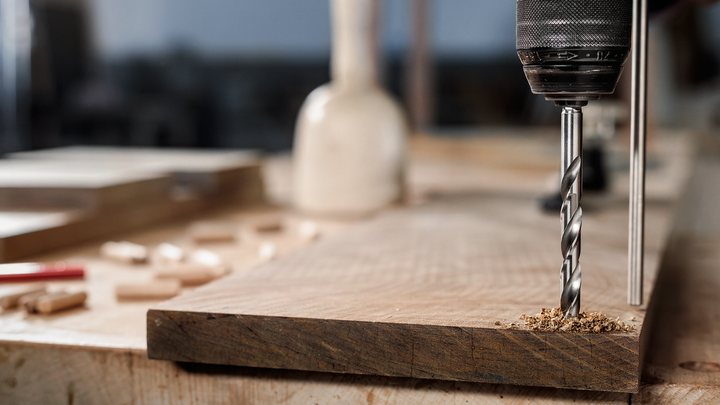
Pilot holes guide the drill and reduce wood splitting. They make drilling easier and more precise.
- Mark the drill spot clearly on the wood.
- Use a small drill bit to make a shallow pilot hole.
- Drill the final hole using the proper bit size.
- Check the hole depth and clean any debris.
Credit: www.bosch-pt.com.au
Preventing Common Drilling Mistakes
Drilling precise holes in wood can be tricky. Many people face common problems that affect their work quality.
Knowing how to avoid these mistakes will save time and improve your project results.
Avoiding Wood Splintering
Wood splintering happens when the drill bit tears the wood fibers. It creates rough edges around the hole.
To avoid splintering, place a piece of scrap wood under the workpiece. This supports the wood fibers and stops them from breaking.
- Use a sharp drill bit to cut cleanly
- Drill slowly and steadily without pushing too hard
- Try scoring the hole outline with a utility knife before drilling
Managing Drill Bit Slippage
Drill bit slippage happens when the bit slips off the mark. It causes holes to be in the wrong place.
To control slippage, use a center punch or nail to make a small dent where you want the hole. This guides the drill bit.
- Hold the drill steady and straight
- Start drilling at low speed to gain control
- Keep firm pressure but do not force the drill
Dealing With Tear-out
Tear-out is when wood fibers pull away at the hole exit, leaving a rough surface. It often happens on the back side.
To reduce tear-out, drill halfway through from one side. Then flip the wood and finish drilling from the other side.
- Use a backing board under the wood
- Choose drill bits designed for clean cuts, like brad-point bits
- Keep the drill speed moderate to avoid splintering
Advanced Tips For Flawless Holes
Drilling precise holes in wood needs care and the right tools. Small errors can ruin your project. These tips help you drill clean and exact holes every time.
Use guides and special bits to keep your drill steady. Clean and finish holes well for a professional look. Read on to learn advanced tips.
Using Drill Guides And Jigs
Drill guides and jigs hold your drill steady. They stop the bit from slipping or tilting. This helps make holes straight and in the right spot.
- Clamp a drill guide to the wood for stable drilling.
- Use a jig for repetitive hole drilling to keep size and position uniform.
- Adjust guides to match the drill bit size to avoid wobble.
- Check the guide angle before drilling to ensure straight holes.
Countersinking And Counterboring
Countersinking and counterboring help screws sit flush or below the surface. This improves appearance and prevents wood splitting.
| Technique | Use For | Result |
| Countersinking | Flat-head screws | Screw head sits flush with surface |
| Counterboring | Socket-head or cap screws | Screw head sits below surface for plugs |
Use the right countersink bit size. Drill slowly to avoid tear-out around the hole edge.
Cleaning And Finishing Holes
Cleaning holes removes splinters and dust. Finishing protects wood and improves look. Both steps are important for quality results.
- Use a small brush or compressed air to clear wood dust.
- Sand the hole edges gently with fine sandpaper.
- Apply a wood finish or sealant to protect the hole surface.
- Fill counterbored holes with wood plugs for a smooth finish.
Frequently Asked Questions
How Do I Choose The Right Drill Bit For Wood?
Select a drill bit based on wood type and hole size. Use twist bits for softwood, spade bits for larger holes, and brad-point bits for precision. Sharp bits ensure clean holes and prevent wood splintering.
What Speed Should I Use To Drill Wood Holes?
Use a slow to medium drill speed for wood. High speeds can cause burning or splintering. Adjust speed depending on wood hardness and drill bit size for clean, precise holes.
How Can I Prevent Wood From Splitting When Drilling?
Use a sharp drill bit and drill slowly near edges. Place a scrap wood piece under the workpiece to support the hole. Pre-drilling a small pilot hole also reduces splitting risk.
What Tools Help Ensure Precise Wood Hole Placement?
Use a center punch or awl to mark drilling points. A drill press provides stability and accuracy. Clamps keep wood steady, preventing movement during drilling for exact hole placement.
Conclusion
Drilling precise wood holes is easy with the right steps. Use the proper tools. Measure carefully before you start. Secure the wood firmly in place. Start with a smaller drill bit. Gradually move to the size you need. Keep your drill steady for clean holes.
Practice improves your skills over time. With patience and attention, you achieve perfect results. Enjoy your woodworking projects.