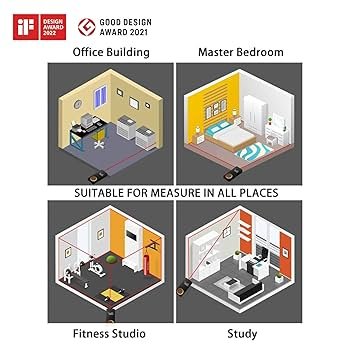
Are you tired of the trial-and-error method when arranging your furniture? Do you wish there was an easier way to ensure everything fits perfectly in your space?
You’re in luck! A laser distance measurer could be your new best friend. This handy tool promises precision and simplicity, making it a game-changer for your furniture layout challenges. Imagine transforming your room layout with confidence, knowing every inch is measured accurately.
Intrigued? Stay with us as we delve into the simple steps and smart tricks to make the most out of your laser distance measurer. Discover how this tool can save you time, effort, and even money by getting your furniture placement spot-on the first time. Let’s unlock the potential of your living space together!
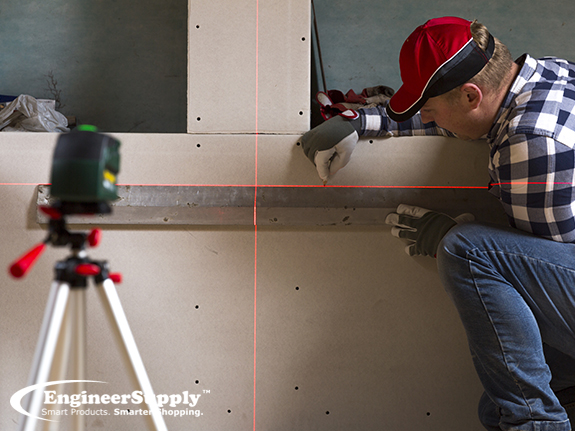
Credit: www.engineersupply.com
Choosing The Right Laser Distance Measurer
Using a laser distance measurer can help you plan furniture layouts with ease. Picking the right tool makes measuring faster and more accurate.
There are many models available. Knowing what features you need helps you choose the best one for your furniture projects.
Key Features To Look For
Look for a laser distance measurer that is easy to use and fits your measuring needs. Accuracy and range are important.
Some features to consider are memory storage, a clear display, and multiple measuring modes.
- Accuracy within a few millimeters
- Range suitable for your room size (up to 100 feet or more)
- Easy-to-read digital display
- Memory to save measurements
- Multiple measuring modes (length, area, volume)
- Compact and lightweight design
- Durable build for home use
Top Models For Furniture Layout
Some laser distance measurers are better suited for furniture layout. They offer good range and simple features.
Here are some popular models that work well for home projects and furniture planning.
| Model | Max Range | Accuracy | Special Features |
|---|---|---|---|
| Model A | 100 feet | ±1/16 inch | Area and volume calculation |
| Model B | 165 feet | ±1/8 inch | Backlit display, memory storage |
| Model C | 80 feet | ±1/16 inch | Compact design, simple buttons |
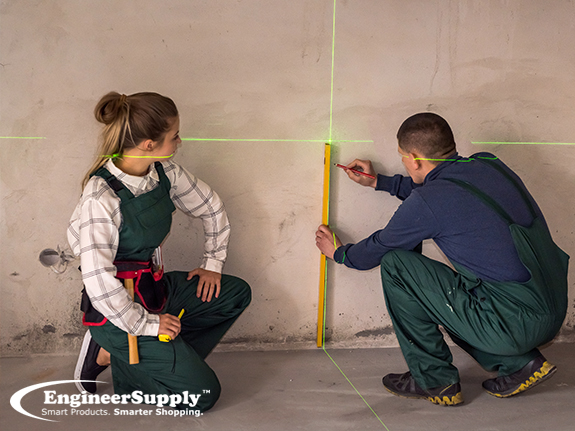
Credit: www.engineersupply.com
Preparing Your Space
Using a laser distance measurer helps you arrange furniture with accuracy. Getting your space ready is key for good results.
Clear areas and mark points before measuring. This saves time and prevents errors.
Clearing Obstacles
Remove any items blocking walls or floor space. This helps the laser reach the target clearly.
Make sure the floor is clean and free of clutter. This prevents tripping and keeps measurements safe.
- Move boxes, rugs, and small furniture out of the way
- Clear windows and doorways for better access
- Check for hanging cords or decorations that may block the laser
Marking Reference Points
Mark key points on walls or floors where you want to measure. These points guide your layout planning.
Use painter’s tape or sticky notes to mark spots. Labels help you remember exact positions.
- Mark corners of the room and furniture areas
- Label doorways and window edges
- Note power outlets or vents that affect furniture placement
Basic Measurement Techniques
A laser distance measurer helps you get accurate room and furniture sizes. It saves time and reduces errors.
Using it correctly is important for good furniture layout. Learn basic ways to measure with this tool.
Measuring Room Dimensions
Stand at one end of the room and point the laser at the opposite wall. Press the button to get the length.
Repeat for width and height if needed. Write down each measurement clearly for planning.
- Hold the device steady for accurate reading
- Aim at flat surfaces for better results
- Measure twice to confirm accuracy
Capturing Door And Window Sizes
Measure the width by pointing the laser from one side of the door or window to the other. Note the number.
Measure the height from the floor to the top frame. Use these sizes to plan furniture placement and clearances.
- Record width and height separately
- Measure frames, not just openings
- Check measurements twice for accuracy
Advanced Tips For Accurate Layouts
Using a laser distance measurer can help you plan furniture layouts with precision. This tool saves time and reduces errors compared to tape measures.
Here are advanced tips to improve your measurement accuracy and create better furniture arrangements.
Using Multiple Measurements
Taking several measurements from different points helps you check for accuracy. This method reduces mistakes caused by uneven walls or obstacles.
Measure distances for length, width, and height at various spots. Compare results to find the most reliable numbers for your layout.
- Measure room length from corner to corner
- Check width at multiple points along the walls
- Record ceiling height in several areas
- Measure door and window spaces separately
Leveraging Built-in Calculations
Many laser distance measurers have built-in functions for area, volume, and indirect measurements. Use these to speed up your layout process.
These calculations help you quickly estimate floor space and clearances. This makes it easier to fit furniture without guesswork.
- Calculate room area to know usable floor space
- Use volume mode for room capacity measurements
- Apply Pythagorean function for hard-to-reach corners
- Store multiple measurements for comparison
Translating Measurements To Furniture Placement
Using a laser distance measurer helps you get precise room dimensions. This makes furniture layout easier and more accurate.
After measuring, you can move from numbers to a clear plan for where each piece fits best.
Creating Scaled Floor Plans
Draw your room on paper or use a digital tool. Make sure to scale it so one inch or centimeter equals a set number of feet or meters.
- Start with the walls and mark doors and windows.
- Use your laser measurer to add exact wall lengths.
- Sketch fixed features like radiators or built-in shelves.
- Label each measurement clearly on the plan.
- Check your scale to keep all parts proportional.
Adjusting For Furniture Dimensions
Measure your furniture with the laser device. Record the width, depth, and height of each piece.
| Furniture | Width (inches) | Depth (inches) | Height (inches) |
|---|---|---|---|
| Sofa | 84 | 35 | 32 |
| Dining Table | 60 | 36 | 30 |
| Bed | 80 | 60 | 25 |
Place these measurements on your floor plan to see how much space each item will take. Leave space for walking paths and doors.
Common Mistakes To Avoid
Using a laser distance measurer can speed up furniture layout tasks. Many people make errors that cause wrong measurements. Avoiding these mistakes helps get accurate results.
This guide covers common errors in two areas. Learn how to read the device correctly and consider environmental factors.
Misreading The Device
One big mistake is misreading the numbers on the laser measurer. This happens when you rush or do not understand the display symbols. It leads to wrong furniture placement.
- Check if the device shows metric or imperial units.
- Look for the right mode, such as distance or area measurement.
- Do not ignore the decimal point or extra digits.
- Hold the device steady until the reading locks.
- Refer to the manual for unfamiliar symbols.
Ignoring Environmental Factors
Environmental conditions affect laser accuracy. Ignoring these causes errors in room and furniture measurements.
| Environmental Factor | Effect on Measurement | Tip to Avoid Error |
|---|---|---|
| Bright sunlight | Laser beam may be hard to see | Use shade or measure in low light |
| Reflective surfaces | Beam may bounce, giving wrong distance | Aim at non-reflective spots or use a target plate |
| Obstacles in path | Blocks laser, stops measurement | Clear the path before measuring |
| Uneven surfaces | Device angle affects reading | Keep device level and steady |
Maintaining Your Laser Distance Measurer
Taking care of your laser distance measurer helps it last longer. Proper maintenance keeps measurements accurate. Clean and store it carefully after each use.
Check batteries often and replace them when needed. Good care prevents damage and saves you money on repairs.
Cleaning And Storage Tips
Keep the device clean by wiping it with a soft, dry cloth. Avoid using water or harsh chemicals that can damage the lens or screen.
Store the laser distance measurer in a protective case. Keep it in a dry place away from extreme temperatures and direct sunlight.
- Use a soft cloth to clean the lens gently
- Do not spray liquids directly on the device
- Store in a hard case after each use
- Keep away from dust, heat, and moisture
Battery Care And Replacement
Check battery levels before starting your project. Replace batteries as soon as the device shows low power to keep measurements accurate.
Use the correct battery type recommended by the manufacturer. Remove batteries if you do not plan to use the device for a long time to avoid leaks.
- Test battery charge regularly
- Replace batteries immediately when low
- Use the right battery type only
- Remove batteries for long storage periods
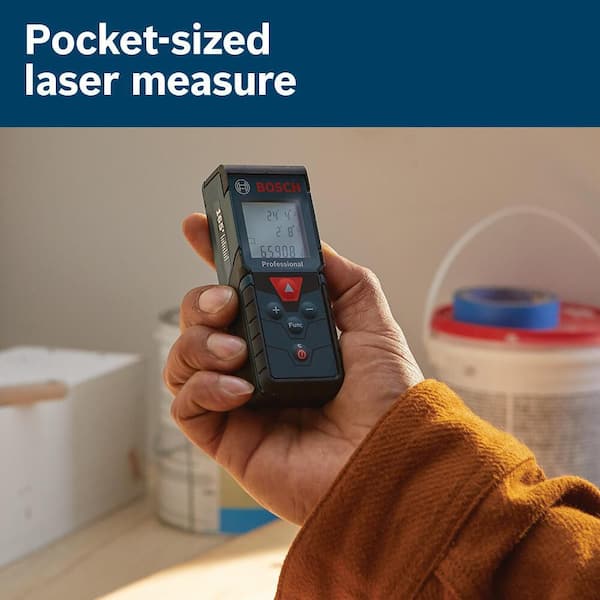
Credit: www.homedepot.com
Frequently Asked Questions
What Is A Laser Distance Measurer?
A laser distance measurer uses laser technology to measure distances quickly and accurately. It helps in precise furniture layout by providing exact room dimensions.
How Do I Measure Room Dimensions Accurately?
Point the laser device at the opposite wall or surface. Hold it steady and press the measure button. The device will display the exact distance.
Can I Use A Laser Measurer For Small Spaces?
Yes, laser distance measurers work well in tight spaces. They provide accurate measurements even in small rooms or corners for proper furniture placement.
How To Calculate Furniture Fit Using Laser Measurements?
Measure the room’s length, width, and height with the laser tool. Compare these measurements with your furniture dimensions to ensure a perfect fit.
Conclusion
Using a laser distance measurer makes furniture layout easy and precise. It saves time and reduces errors. You can measure rooms and furniture quickly without guesswork. The tool helps you plan your space better and avoid buying wrong-sized items. Try measuring corners, walls, and doorways for the best fit.
Practice a few times to get comfortable using it. This simple device improves your home setup with less stress. Give it a go and see the difference in your furniture arrangement.