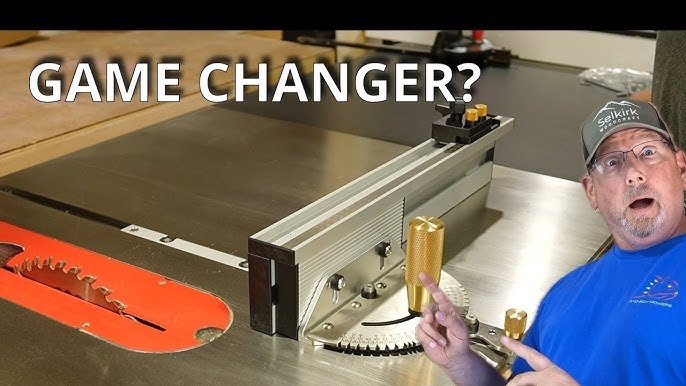
If you want to make precise angled cuts on your woodworking projects, mastering how to use a miter gauge is key. You might already have one sitting on your table saw, but are you getting the most out of it?
Understanding how to adjust and guide your miter gauge can save you time, improve your accuracy, and give your work a professional finish. Keep reading, and you’ll learn simple, step-by-step tips to use your miter gauge like a pro—no confusion, no guesswork.
Your next project is about to get a whole lot sharper.
Choosing The Right Miter Gauge
A miter gauge helps you make accurate angled cuts on a table saw. Picking the right one makes your work easier and safer.
There are different types of miter gauges. You should also know what features to check before buying one.
Types Of Miter Gauges
Miter gauges come in several types. Each type fits different needs and tools.
- Standard Miter Gauges:Basic models that slide in the table groove. They are simple and affordable.
- Adjustable Miter Gauges:Allow you to set various angles easily for precise cuts.
- Digital Miter Gauges:Have digital readouts for exact angle measurements.
- Crosscut Sleds:Not a traditional miter gauge but offer better support for angled cuts.
Key Features To Look For
| Feature | Why It Matters |
|---|---|
| Build Material | Steel or aluminum is durable and stable for better accuracy. |
| Angle Range | Wide range lets you cut different angles without extra tools. |
| Adjustability | Easy adjustments save time and improve precision. |
| Locking Mechanism | Strong locks keep the gauge in place for safe cuts. |
| Compatibility | Fits your table saw groove size for smooth movement. |
Setting Up Your Miter Gauge
A miter gauge helps you make angled cuts safely and accurately. Setting it up correctly is important for good results. Follow these steps to prepare your miter gauge for use.
This guide covers attaching the miter gauge to the table saw and calibrating its angle settings.
Attaching To The Table Saw
Attach the miter gauge to the table saw’s miter slot. Make sure it slides smoothly but fits snugly. This keeps your cuts straight and stable.
- Locate the miter slot on your table saw.
- Align the miter gauge’s bar with the slot.
- Slide the gauge into the slot until it fits securely.
- Check for any wobble or looseness.
- Tighten the locking knob if your gauge has one.
Calibrating Angle Settings
Calibrate the miter gauge to ensure accurate angle cuts. Use a square or protractor to check and adjust the gauge’s angle scale.
| Tool Needed | Purpose | How to Use |
| Combination Square | Check 90° angle | Place square against blade and gauge fence |
| Protractor | Set specific angles | Align protractor with gauge and set desired angle |
| Screwdriver or Wrench | Adjust angle scale | Loosen screws, move scale, then tighten |
After adjusting, test the gauge by making a cut on scrap wood. Measure the angle to confirm accuracy. Repeat the process if needed.
Basic Techniques For Accurate Cuts
Using a miter gauge helps make precise angle cuts on your wood pieces. Proper handling improves safety and results.
This guide covers simple methods to align your workpiece and control the cutting speed for better accuracy.
Aligning The Workpiece
Correctly positioning the workpiece ensures straight and angled cuts are exact. Check that the piece fits snugly against the miter gauge fence.
- Place the workpiece flat against the fence.
- Clamp the piece if your miter gauge has a clamp feature.
- Double-check the angle setting on the gauge before cutting.
- Keep the workpiece steady to avoid movement during the cut.
Controlling The Cut Speed
Cutting too fast or too slow affects the cut quality. Find a steady speed to keep control and avoid rough edges.
| Cut Speed | Effect on Cut |
| Too Fast | May cause splintering or inaccurate angles |
| Steady Speed | Produces smooth, clean cuts |
| Too Slow | Can burn the wood or wear the blade |
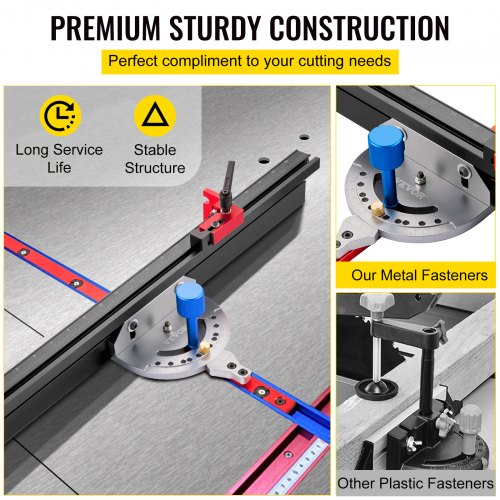
Credit: www.vevor.com
Advanced Cutting Methods
Using a miter gauge allows you to make precise and angled cuts on your wood pieces. Advanced techniques improve your cutting accuracy and save time.
These methods help you handle complex shapes and make repeated cuts easier. Learning these will enhance your woodworking skills.
Making Compound Cuts
Compound cuts combine two angles, usually tilt and miter, in one cut. This is useful for projects like crown molding or angled frames.
To make compound cuts, adjust the miter gauge to the desired angle. Then tilt the saw blade to the needed bevel angle. Both settings work together for the final cut.
- Set the miter gauge angle first
- Tilt the saw blade to the bevel angle
- Secure the workpiece firmly
- Make slow, steady cuts
- Check the cut fit before final assembly
Using Stop Blocks For Repetition
Stop blocks help you make many cuts of the same length quickly. They attach to your miter gauge or table saw fence to stop the workpiece at the right spot.
Using stop blocks ensures each piece is the exact same size. This reduces errors and speeds up your work.
- Attach a block to the miter gauge or fence
- Measure and position the block for the desired length
- Tighten the block securely
- Slide the workpiece against the block for each cut
- Keep checking the block position for accuracy
Maintenance Tips For Longevity
Keeping your miter gauge in good shape helps it last longer. Regular care keeps it accurate and safe to use.
Simple maintenance steps prevent problems and improve performance. Focus on cleaning, lubrication, and checking parts.
Cleaning And Lubrication
Clean your miter gauge after each use to remove dust and debris. This prevents buildup that can cause wear.
- Use a soft cloth to wipe down all surfaces.
- Remove sawdust from moving parts with a brush.
- Apply light machine oil to metal slides and hinges.
- Do not over-lubricate, which can attract dirt.
- Wipe off excess oil to keep parts clean.
Checking For Wear And Damage
Inspect your miter gauge regularly for signs of wear or damage. Fix small problems early to avoid bigger issues.
| Part | What to Check | Action if Damaged |
| Guide Bar | Check for bends or rust | Straighten or replace |
| Locking Mechanism | Test for tight hold | Tighten or repair |
| Angle Scale | Look for clear markings | Clean or replace scale |
| Handle | Check for cracks or looseness | Tighten screws or replace handle |

Credit: www.amazon.com
Common Mistakes And How To Avoid Them
Using a miter gauge correctly is key for safe and accurate cuts. Many users face common problems that affect their work and safety.
This guide points out frequent mistakes and shows how to avoid them for better results.
Misalignment Issues
Misalignment causes uneven cuts and can damage your project. Check the miter gauge angle before cutting.
- Always calibrate the miter gauge using a reliable square.
- Secure the workpiece firmly to avoid movement during the cut.
- Adjust the fence so it sits flush against the table slot.
- Test cuts on scrap wood to confirm alignment.
- Do not force the workpiece; move it smoothly through the blade.
Safety Precautions
Ignoring safety rules can cause serious injuries. Follow these precautions every time you use the miter gauge.
| Safety Tip | Reason |
| Wear eye protection | Protects against flying debris |
| Use push sticks | Keeps hands away from the blade |
| Keep blade guard in place | Reduces risk of contact with blade |
| Disconnect power before adjustments | Prevents accidental startup |
| Stand to the side of the blade | Avoids kickback injuries |

Credit: www.mcfeelys.com
Frequently Asked Questions
What Is A Miter Gauge Used For?
A miter gauge helps make precise angled cuts on wood or other materials. It guides the workpiece at specific angles, usually on a table saw. This tool ensures accuracy and repeatability in cutting, improving project quality and safety.
How Do You Set A Miter Gauge Angle?
To set the angle, loosen the gauge’s locking knob, adjust the protractor to the desired degree, and then tighten the knob. Always double-check the angle with a square or angle finder before making cuts for accuracy.
Can A Miter Gauge Be Used With Other Tools?
Yes, a miter gauge can be used with table saws, band saws, and router tables. It provides stable, angled support to guide your workpiece during cutting or shaping, enhancing precision and control.
How Do You Maintain A Miter Gauge?
Keep your miter gauge clean and free from sawdust. Lubricate moving parts occasionally and check for wear or damage. Proper maintenance ensures smooth operation and extends the tool’s lifespan.
Conclusion
Mastering the miter gauge enhances your woodworking skills. It ensures precise cuts. Proper alignment is key. Always double-check your settings before cutting. Practice makes perfect. So, keep experimenting with different angles. Safety should be your priority. Wear protective gear and stay focused.
Mistakes can happen, but learning from them is crucial. With patience, your proficiency will grow. Soon, you’ll create projects with confidence. Remember, each project is a step forward. Keep refining your technique. Enjoy the process, and let creativity guide you.
Happy woodworking!