
Mulching around your trees is one of the simplest ways to boost their health and beauty. But are you sure you’re doing it right?
The way you mulch can make a big difference—either helping your tree thrive or causing hidden problems. You’ll discover easy, practical tips that protect your tree’s roots, save water, and keep pests away. Keep reading to learn how to mulch like a pro and give your trees the care they truly deserve.
Benefits Of Mulching Trees
Mulching around trees helps keep them healthy and strong. It supports tree growth by protecting the roots and soil.
This simple practice offers many benefits, including better soil moisture, weed control, temperature regulation, and added nutrients.
Improving Soil Moisture
Mulch helps the soil hold water longer. It stops water from evaporating quickly, especially in hot weather. This keeps tree roots moist and helps trees grow well.
Weed Control
Mulch blocks sunlight from reaching weed seeds. This stops many weeds from growing near trees. Fewer weeds mean less competition for water and nutrients.
- Reduces weed growth naturally
- Makes tree care easier
- Protects young tree roots
Temperature Regulation
Mulch acts like a blanket for the soil. It keeps the soil cooler in summer and warmer in winter. This protects tree roots from extreme temperatures.
| Season | Mulch Effect |
| Summer | Keeps soil cool and moist |
| Winter | Insulates soil and prevents freezing |
Nutrient Supply
As mulch breaks down, it adds nutrients to the soil. These nutrients feed the tree roots and improve soil health. Organic mulches are best for this.
Common organic mulches include:
- Wood chips
- Shredded leaves
- Compost
Credit: www.russelltreeexperts.com
Choosing The Right Mulch
Mulching around trees helps keep soil moist and protects roots. Choosing the right mulch improves tree health.
Selecting the best mulch type depends on your tree and garden needs. Let’s explore the options.
Organic Vs. Inorganic Mulch
Organic mulch comes from natural materials that break down over time. Inorganic mulch is made from synthetic or non-living materials.
Organic mulches improve soil as they decay. Inorganic mulches last longer but do not add nutrients.
- Organic mulch examples: wood chips, leaves, straw
- Inorganic mulch examples: rubber, plastic, gravel
- Organic mulches help soil life grow
- Inorganic mulches reduce weeds effectively
Popular Mulch Materials
Many mulches fit different climates and trees. Choose one that suits your garden style and tree type.
- Wood chips: common, slow to decay, good for moisture
- Bark mulch: decorative, controls weeds, lasts long
- Leaves: cheap, enrich soil quickly, easy to find
- Straw: light, good for vegetable trees, breaks down fast
- Rubber mulch: durable, good for playgrounds, no nutrients
- Gravel: controls weeds, long-lasting, not good for moisture
Factors To Consider
Think about tree type, soil needs, and climate before choosing mulch. Each factor affects mulch performance.
- Tree type: some trees prefer acidic or neutral mulch
- Soil moisture: organic mulch holds water better
- Climate: dry areas may need mulch that retains moisture
- Maintenance: organic mulch needs replacement more often
- Cost: some mulches are cheaper and easier to find
- Appearance: pick mulch that fits your garden look
Proper Mulching Techniques
Mulching around trees helps keep the soil moist and protects roots. Using the right techniques makes your tree healthier.
Follow these tips to apply mulch the right way and avoid hurting your tree.
Correct Mulch Depth
Apply mulch at the right depth to let air and water reach the roots. Too much mulch can cause problems.
Keep mulch about 2 to 4 inches deep. This is enough to protect the soil without blocking air.
- Use 2 to 4 inches of mulch depth
- Less than 2 inches may dry out soil
- More than 4 inches can trap moisture and cause rot
Mulch Placement Tips
Place mulch in a wide ring around the tree but keep it away from the trunk. This helps prevent damage and disease.
Spread mulch at least 6 inches from the tree trunk. Extend mulch out to cover the root zone if possible.
- Keep mulch 6 inches away from the trunk
- Spread mulch wide, covering roots
- Use mulch to keep weeds away from the tree
Avoiding Common Mistakes
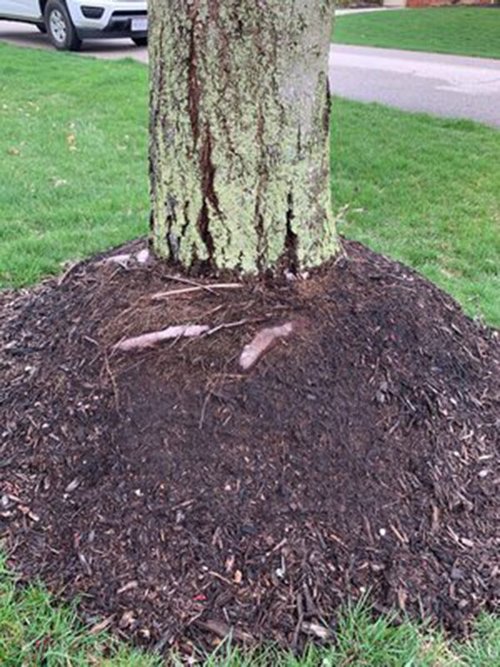
Some mulch mistakes can harm trees. Avoid piling mulch against the trunk or using too much mulch.
Do not use fresh wood chips that can steal nitrogen from soil. Also, remove old mulch before adding new.
- Do not pile mulch against the trunk
- Avoid mulch layers thicker than 4 inches
- Use aged or shredded mulch, not fresh chips
- Remove old mulch before adding new mulch

Credit: www.russelltreeexperts.com
Timing And Maintenance
Mulching around trees helps keep soil moist and temperature steady. It also stops weeds from growing near the tree roots.
Good timing and care make mulch work best. Use the right methods to protect tree health and growth.
Best Time To Mulch
Apply mulch in early spring or late fall. These times help trees keep moisture and stay safe from cold or heat.
Avoid mulching in summer because it can trap heat and harm roots. Fresh mulch in spring supports new growth.
Mulch Refreshing
Refresh mulch every year to keep it effective. Old mulch breaks down and loses benefits over time.
- Remove old mulch if it is thick or moldy
- Add a new 2 to 4 inch layer of fresh mulch
- Keep mulch 3 to 6 inches away from the tree trunk
- Spread mulch evenly to avoid water pooling
Monitoring Tree Health
Check trees often to see if mulch is helping. Look for signs of too much moisture or pests.
| Sign | What to Do |
| Yellow leaves | Reduce mulch thickness |
| Soft or rotting bark | Pull mulch away from trunk |
| Insects or fungus | Inspect and treat affected areas |
| Dry soil | Water tree and add mulch carefully |
Dealing With Problems
Mulching helps trees grow strong and healthy. Sometimes, problems happen if mulch is not used right. Knowing how to spot and fix these problems keeps trees safe.
This guide shows signs of overmulching, how to stop pests and diseases, and when to remove mulch from trees.
Signs Of Overmulching
Too much mulch can harm trees. It stops air and water from reaching the roots. The bark may stay wet and start to rot.
Look for these signs to know if mulch is too thick:
- Tree leaves turn yellow or brown
- Soft or wet bark near the mulch
- Roots growing above the soil
- Insects or fungus near the tree base
Pest And Disease Prevention
Mulch can hide pests and diseases. Keep mulch away from the tree trunk to stop this. Pests like insects and rodents may live in thick mulch.
Follow these tips to prevent problems:
- Leave a gap between mulch and tree trunk
- Use fresh, clean mulch only
- Check mulch regularly for pests or mold
- Replace old mulch every year
When To Remove Mulch
Remove mulch if it causes problems. Too much wet mulch can make roots sick. Old mulch may stop water from reaching roots.
Take away mulch in these cases:
- Mulch is piled high against the tree trunk
- There is mold or fungus growing in the mulch
- The tree shows signs of poor health
- Mulch is older than one year and compacted

Credit: aspen-treeandturf.com
Frequently Asked Questions
What Is The Best Mulch For Trees?
The best mulch for trees is organic mulch like wood chips or shredded bark. These retain moisture, regulate soil temperature, and improve soil health.
How Thick Should Mulch Be Around Trees?
Apply mulch 2 to 4 inches thick around trees. Avoid piling mulch against the trunk to prevent rot and pest problems.
When Is The Best Time To Mulch Trees?
The ideal time to mulch trees is in spring or fall. This helps retain moisture and protects roots from temperature extremes.
How Far Should Mulch Extend From The Tree Trunk?
Mulch should extend 2 to 3 feet from the tree trunk or cover the entire root zone. This promotes healthy root growth and moisture retention.
Conclusion
Mulching around trees offers many benefits. It retains soil moisture. Suppresses weeds naturally. Protects tree roots from temperature swings. Using the right mulch improves tree health. Keep mulch away from the trunk to prevent rot. Opt for natural materials like bark or wood chips.
Maintain a mulch layer of 2-4 inches. Refresh mulch annually for best results. Proper mulching can enhance tree growth. Ensure your trees thrive with these simple tips. Happy gardening!
