Do you find yourself overwhelmed every time you open a jigsaw puzzle box? Pieces scattered everywhere, struggling to find the right spot—sound familiar?
Organizing your jigsaw puzzles doesn’t have to be a frustrating task. With the right tips, you can turn chaos into order and make your puzzling sessions more enjoyable and stress-free. Keep reading, and discover simple, effective ways to keep your jigsaw pieces neat, easy to find, and ready for your next challenge.
Your puzzles—and your peace of mind—will thank you.
Choosing The Right Storage Containers
Choosing the right containers helps keep your jigsaw pieces safe and easy to find. Good storage saves time and keeps your workspace neat.
Look for containers that fit your puzzle size and that you can carry easily. Labeling containers also makes sorting faster and less stressful.
Types Of Containers
Many container types work well for jigsaw puzzles. Plastic bins, zippered bags, and divided boxes are popular choices. Each type has benefits depending on your needs.
- Plastic bins:Durable and stackable, good for large puzzles.
- Zippered bags:Great for small puzzles or parts.
- Divided boxes:Keep pieces sorted by color or shape.
Size And Portability
Choose container sizes that match your puzzle’s piece count. Small puzzles need small containers; large puzzles need bigger ones. Portability matters if you move your puzzle often.
| Container Type | Best For | Portability |
| Plastic bin | Large puzzles | Low |
| Zippered bag | Small puzzles | High |
| Divided box | Sorting pieces | Medium |
Labeling For Easy Access
Label your containers clearly to find puzzles fast. Use simple labels with puzzle name, piece count, or image type. Label both sides if containers are stacked.
- Write puzzle name on a sticker.
- Include piece count for quick sorting.
- Use waterproof markers for durability.
- Label lids and sides if possible.

Credit: tucocoo.com
Sorting Puzzle Pieces Efficiently
Sorting puzzle pieces helps you finish puzzles faster. It makes the process less messy and more fun. Organizing pieces before you start saves time and effort.
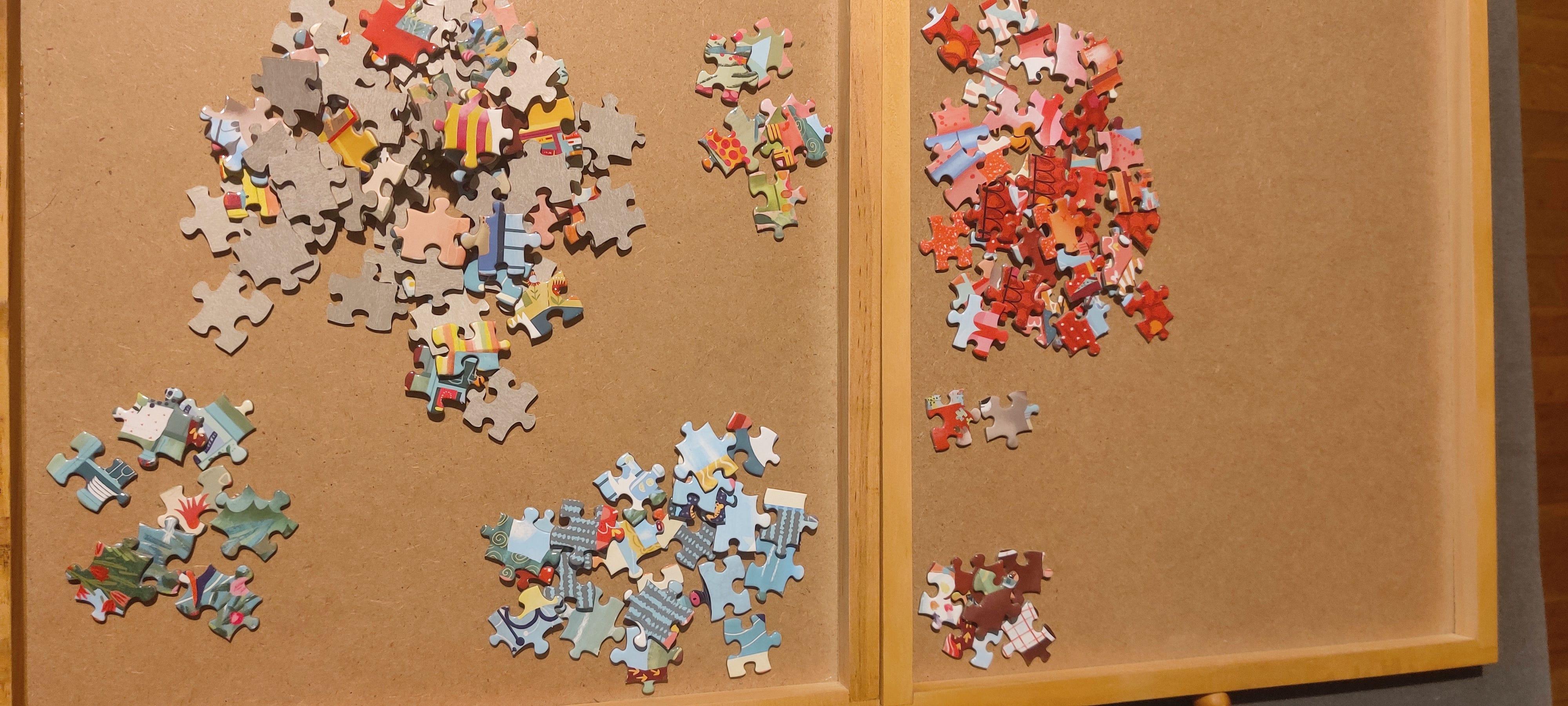
Use simple methods to sort pieces by their look and shape. This way, you find the right pieces easily. Try different ways to see what works best for you.
Sorting By Color And Pattern
Look at the colors and patterns on each piece. Group pieces with the same colors or similar shapes. This helps you find pieces that belong to the same area of the puzzle.
- Sort pieces with bright colors together
- Group dark or dull colored pieces separately
- Put similar patterns in their own piles
- Use reference picture to match colors and patterns
Using Trays And Sorting Mats
Use trays or sorting mats to keep pieces organized. They stop pieces from mixing up again. You can use different trays for colors or shapes.
| Tool | Purpose |
| Tray | Keep pieces separate and easy to move |
| Sorting mat | Sort pieces by size, color, or edge type |
| Small containers | Hold tiny or special pieces safely |
Separating Edge Pieces
Edge pieces form the puzzle’s border. Finding them first helps build the frame. Separate these pieces from the middle ones.
- Look for flat sides on pieces
- Put all edge pieces in one pile
- Keep them easy to reach during assembly
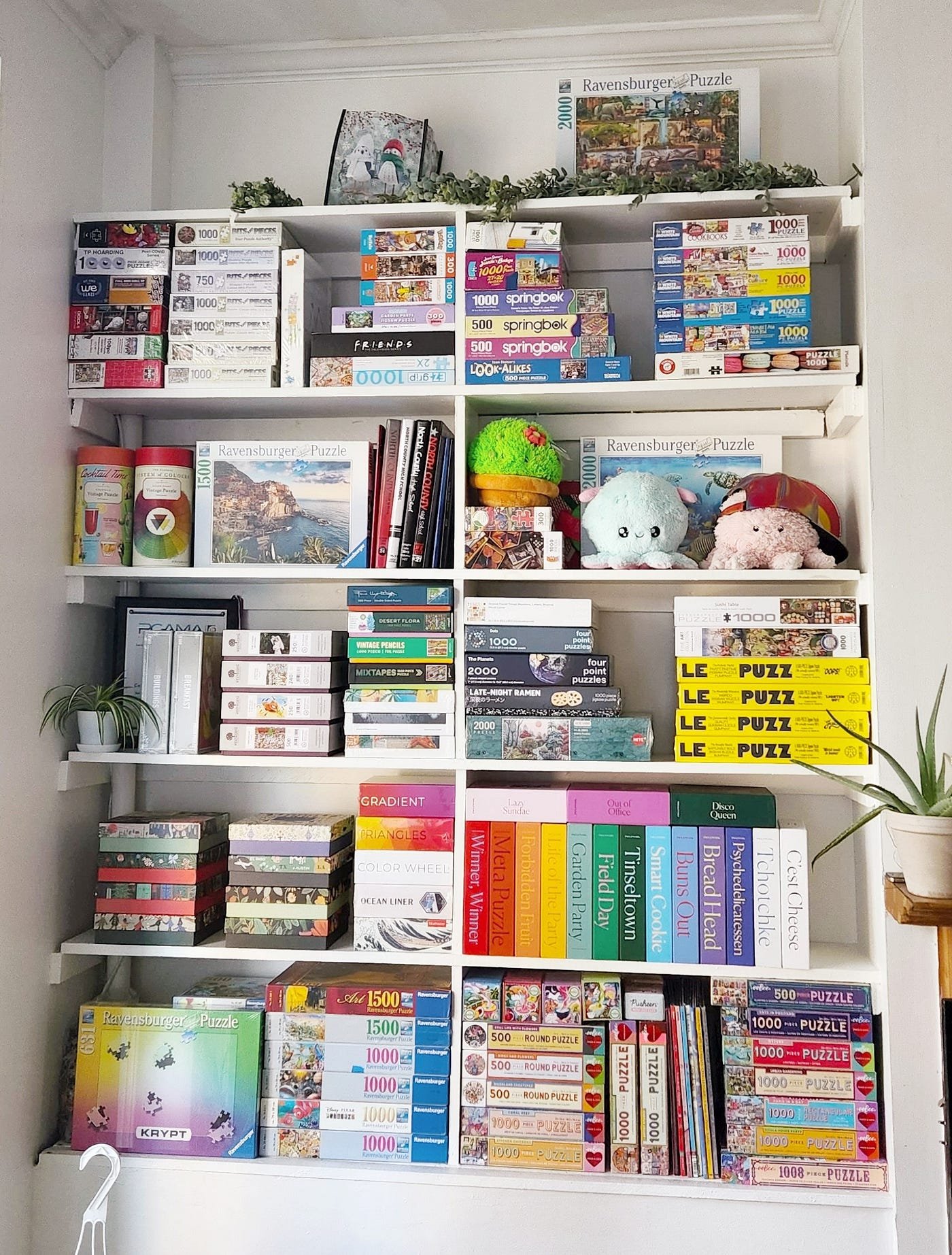
Maximizing Space With Vertical Storage
Organizing jigsaw puzzles can take up a lot of space. Using vertical storage helps save room. It keeps puzzles neat and easy to find.
Vertical storage uses height instead of floor space. It is perfect for small rooms or crowded areas. Here are some good ways to organize puzzles vertically.
Stackable Storage Solutions
Stackable boxes or containers help keep puzzles in one place. You can stack them high to use vertical space well. Clear boxes show the puzzle image easily.
Choose sturdy containers that fit each other. Label the boxes with puzzle details. This way, you find puzzles without opening every box.
- Use clear, stackable plastic boxes
- Label boxes with puzzle name and piece count
- Stack boxes by puzzle size for stability
- Keep the heaviest boxes at the bottom
Wall-mounted Organizers
Wall-mounted shelves or racks keep puzzles off the floor. They use empty wall space to store puzzles vertically. This method saves floor area for other uses.
Choose shelves that fit your puzzle boxes. Open shelves make it easy to grab puzzles. Hooks or baskets can hold puzzle bags or small pieces.
- Install sturdy shelves on free wall space
- Use baskets or bins on shelves for loose pieces
- Label shelves or bins for quick access
- Place frequently used puzzles at eye level
Utilizing Shelf Dividers
Shelf dividers keep puzzle boxes upright and tidy. They stop boxes from falling over on shelves. This makes it easy to see and remove puzzles.
Dividers can be made of wood, plastic, or metal. Use adjustable dividers to fit different puzzle sizes. This helps keep shelves neat and organized.
- Place dividers on shelves to separate puzzle boxes
- Use adjustable dividers for different box widths
- Label each section for puzzle type or size
- Keep puzzles standing upright for easy access

Credit: www.thepuzzlecenter.com
Protecting In-progress Jigsaws
Working on a jigsaw puzzle takes time and patience. Protecting your puzzle while you build keeps pieces safe and clean.
There are simple ways to store and cover your puzzle. This helps you avoid losing pieces or damaging your work.
Puzzle Mats And Roll-up Storage
Puzzle mats let you move or store your puzzle easily. You can roll the mat up without breaking the puzzle apart.
These mats are soft and protect pieces from dust and dirt. They also save space when you need to put your puzzle away.
- Place your puzzle on the mat
- Roll the mat gently with the puzzle inside
- Secure the roll with attached straps or bands
- Store the roll in a safe, dry place
Using Puzzle Boards
Puzzle boards provide a flat, sturdy surface to work on. They keep pieces in place and make it easier to move your puzzle.
Boards often have raised edges to stop pieces from sliding off. You can slide the board under furniture or between shelves for storage.
- Choose a board size that fits your puzzle
- Work on the puzzle directly on the board
- Use the edges to keep pieces secure
- Move the board carefully to avoid shaking pieces
Covering And Securing Pieces
Cover your puzzle with a cloth or plastic sheet to protect from dust. Use weights or clips to keep the cover in place.
Securing loose pieces stops them from getting lost. Small containers or trays work well to hold extra pieces safely.
- Use a lightweight cloth or plastic cover
- Place small weights or clips on the cover corners
- Store loose pieces in labeled containers
- Keep the puzzle area clean and free of pets or children
Maintaining Puzzle Condition
Keeping your jigsaw puzzles in good shape makes them last longer. Proper care protects pieces from damage.
Organizing puzzles well helps maintain their quality and makes them easy to use again.
Avoiding Sunlight And Moisture
Sunlight can fade puzzle colors and weaken the cardboard. Moisture can cause pieces to warp or stick together.
Store puzzles in a dry place away from windows or damp areas. Use airtight containers or sealed bags to protect them.
- Keep puzzles out of direct sunlight
- Store in a cool, dry environment
- Avoid basements or bathrooms for storage
- Use sealed containers to block moisture
Cleaning And Care Tips
Dust and dirt can stick to puzzle pieces and damage them over time. Clean puzzles gently to keep them neat.
Use a soft brush or cloth to remove dust. Avoid using water or cleaning liquids that can ruin the pieces.
- Brush pieces gently with a soft cloth
- Do not soak pieces in water
- Clean storage boxes regularly
- Check pieces for damage before storing
Safe Handling Practices
Handle puzzle pieces with care to avoid bending or breaking them. Rough handling can cause permanent damage.
Keep puzzles on flat surfaces while working. Avoid stacking heavy objects on stored puzzles to prevent warping.
- Handle pieces gently and with clean hands
- Work on a flat, stable surface
- Do not bend or force pieces
- Store puzzles flat or upright without heavy weight
Creative Hacks For Puzzle Storage
Jigsaw puzzles can take up a lot of space and get messy quickly. Finding smart ways to store them keeps your area neat. It also makes it easy to find and use puzzles again.
Try using simple items you already have at home. Use clever DIY ideas or special bags to keep pieces safe and sorted. Below are some creative tips to help you organize your puzzles.
Repurposing Household Items
Look around your home for items you can reuse to store puzzles. Shoe boxes, old cookie tins, or plastic containers work well. These items keep pieces together and protect them from dust.
- Use shoe boxes to separate puzzles by size or theme.
- Store puzzle pieces in clean cookie tins to keep them fresh.
- Stack plastic containers to save space on shelves.
- Wrap puzzles in cloth bags or pillowcases for easy transport.
Diy Storage Ideas
Create your own puzzle storage using simple materials. Cardboard dividers or wooden trays can help sort pieces by color or edge. Label containers so you know what puzzle is inside without opening them.
| DIY Storage Item | Materials Needed | Purpose |
|---|---|---|
| Cardboard divider box | Cardboard sheets, tape, scissors | Sort puzzle pieces by sections |
| Wooden tray with compartments | Wood, nails, paint | Organize puzzle pieces by color |
| Labeled file folders | Folders, marker, stickers | Keep puzzle instructions and small parts |
Using Zip Bags And Envelopes
Zip bags and envelopes are perfect for storing puzzle pieces safely. Use small bags for groups of pieces or envelopes for puzzle pictures and instructions. This keeps everything in one place.
- Put edge pieces in one zip bag to start puzzles quickly.
- Use clear bags to see pieces without opening.
- Label each bag or envelope with the puzzle name or number of pieces.
- Store all bags in a larger box or bin to avoid loss.
Credit: krystalcarpintieri.medium.com
Frequently Asked Questions
How Do I Start Organizing Jigsaws?
Begin by sorting pieces into groups by color or pattern. Use containers or bags for each group. Having a dedicated space to work on your jigsaw is also helpful. This method will save time and make the assembly process more enjoyable and efficient.
What Tools Help In Jigsaw Organization?
Consider using sorting trays or puzzle boards to keep pieces organized. Stackable trays prevent pieces from scattering. Puzzle boards with covers can protect your progress. These tools help maintain order and make it easy to pause and resume your project without losing track.
How To Store Completed Jigsaw Puzzles?
Store completed jigsaws by gluing them together and framing them. Alternatively, disassemble them and place them in resealable bags. Label the bags with the puzzle’s image or name. This ensures easy access and protects your puzzle pieces from damage or loss.
Can Organizing Jigsaws Improve Puzzle-solving Skills?
Yes, organizing can significantly enhance puzzle-solving skills. Sorting pieces helps identify patterns and edges faster. This practice improves spatial awareness and problem-solving abilities. The more organized you are, the more efficient and enjoyable your jigsaw experience becomes.
Conclusion
Organizing jigsaws makes puzzle time more fun and less messy. Sort pieces by color or edge to find them fast. Use containers or bags to keep parts safe and neat. Keep your workspace clean and well-lit for better focus. These simple tips help you enjoy puzzles without stress.
Try them out and see how easy it is to stay organized. Puzzles become more relaxing when everything has its place. Keep your jigsaw collection ready for your next challenge.