
If you want clean, straight cuts with your circular saw, you’re in the right place. Straight cuts can be tricky, even for experienced users, but with the right tips, you can make your work look sharp and professional every time.
Imagine finishing your project faster, with less frustration and no wasted materials. You’ll discover simple, effective tricks that will improve your accuracy and boost your confidence when using a circular saw. Keep reading, and you’ll be cutting like a pro in no time.
Choosing The Right Blade
Using the right blade on your circular saw makes a big difference. It helps you cut straight and clean. Picking the correct blade depends on the wood type and the cut you want.
Understanding blade types and keeping them in good shape will improve your cutting results. This guide covers blade types for straight cuts and simple maintenance tips.
Blade Types For Straight Cuts
Blades vary by the number of teeth and material. Each type is made for specific tasks. For straight cuts, choose a blade that gives smooth edges without tearing the wood.
- Rip Blades:Have fewer teeth, around 24 to 30. They cut along the wood grain fast and rough.
- Crosscut Blades:Have more teeth, around 60 to 80. They cut across the grain smoothly.
- Combination Blades:Have 40 to 50 teeth. They work for both rip and crosscuts but are not perfect for either.
- Fine-Tooth Blades:Have 80 or more teeth. Use for very clean, smooth cuts on plywood or laminates.
Blade Maintenance Tips
| Maintenance Task | Why It Matters | How Often |
|---|---|---|
| Clean the blade | Removes pitch and resin for better cutting | After every few uses |
| Check for dull teeth | Dull teeth cause rough cuts and burn marks | Before each use |
| Sharpen blade | Restores cutting power and accuracy | When you notice poor cuts or slow progress |
| Inspect blade for damage | Prevents accidents and poor performance | Before each use |
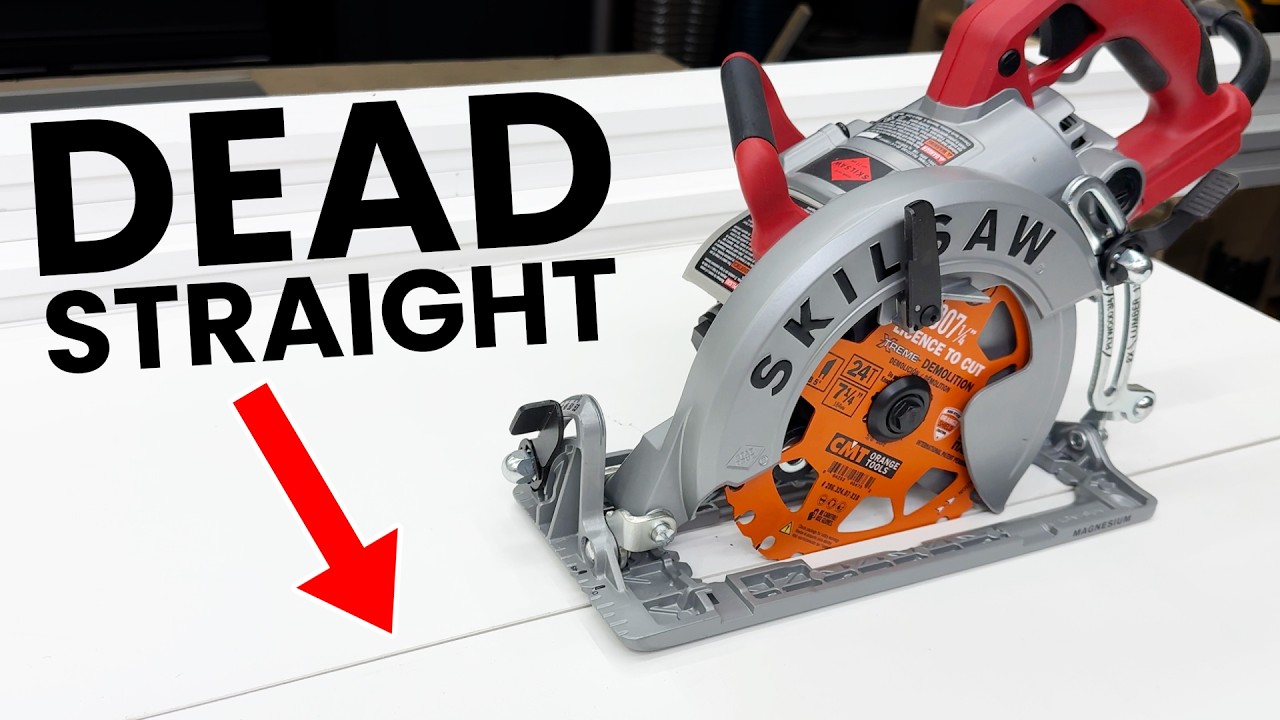
Credit: www.youtube.com
Preparing Your Workpiece
Preparing your workpiece is key to making straight cuts with a circular saw. Taking time now helps avoid mistakes later.
Focus on securing the material and marking clear cut lines. These steps make your cuts safer and more accurate.
Securing The Material
Hold your workpiece steady before cutting. Moving wood can cause crooked cuts or kickback.
- Place the wood on a flat, stable surface.
- Use clamps to fix the wood firmly in place.
- Ensure no parts of the wood hang unsupported.
- Check that clamps do not block the saw path.
- Double-check stability by trying to move the wood gently.
Marking Accurate Cut Lines
Clear, precise lines guide your saw and improve cut quality. Use proper tools for best results.
| Tool | Purpose |
| Pencil | Draw visible, thin cut lines |
| Carpenter’s Square | Mark straight, right-angle lines |
| Measuring Tape | Measure exact cut length |
| Chalk Line | Snap long straight lines on large boards |
Setting Up The Saw
Setting up your circular saw correctly helps you make straight cuts. It makes your work safer and easier.
Take time to adjust the saw before cutting. This step improves accuracy and control.
Adjusting Depth And Angle
Set the blade depth so it just passes through the wood. Too deep cuts waste energy and can cause kickback.
Adjust the angle of the blade to match your cut needs. Most straight cuts use a 90-degree angle.
- Unlock the depth lever or knob on the saw.
- Lower or raise the blade to be about 1/4 inch below the wood.
- Tighten the lever to secure the blade depth.
- Use the bevel adjustment to set the angle, usually 0 degrees for straight cuts.
Aligning The Guide Fence
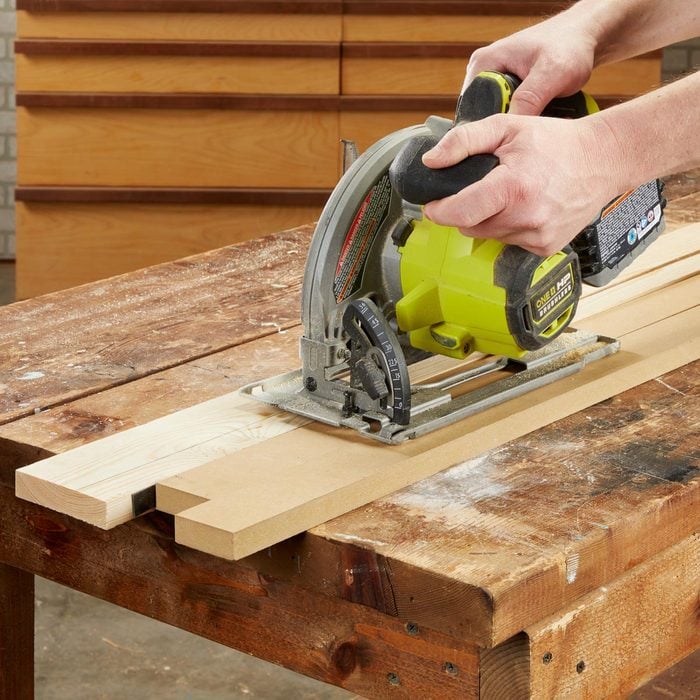
The guide fence helps keep your saw straight along the cut line. Align it carefully before cutting.
Use a straight edge or a clamp-on guide fence for better results. Check the alignment twice to avoid mistakes.
- Place the saw base flat on the wood.
- Align the guide fence with your cutting line.
- Clamp the guide fence firmly to prevent movement.
- Double-check the fence is straight and secure.

Credit: www.familyhandyman.com
Cutting Techniques
Using a circular saw for straight cuts takes practice and care. Good cutting techniques help you make clean, accurate cuts every time.
This guide covers key tips on starting the cut, keeping a steady pace, and supporting long cuts for the best results.
Starting The Cut Cleanly
Begin your cut by aligning the saw blade with the cut line. Make sure the saw is off before placing it on the material.
Start the saw and let the blade reach full speed before moving forward. This reduces splintering and keeps the cut smooth.
Maintaining A Steady Pace
Cut at a steady, moderate speed. Going too fast can cause rough edges. Moving too slow can burn the wood or wear the blade.
- Hold the saw firmly with both hands
- Keep your eyes on the cut line
- Use the saw’s guide or edge to stay straight
- Keep your arms relaxed but steady
- Let the blade do the cutting, don’t force it
Using Support For Long Cuts
Long boards can bend or shift during cutting. Support the material to keep it stable and level.
| Support Type | When to Use | Benefits |
|---|---|---|
| Sawhorses | Cutting long boards | Prevents bending and keeps wood steady |
| Clamps | Small or narrow pieces | Keeps wood from moving side to side |
| Work Table | Medium length cuts | Provides flat surface for accurate cutting |
Common Mistakes To Avoid
Using a circular saw for straight cuts needs care and attention. Avoiding common mistakes helps you get clean and safe cuts every time.
Knowing what to watch out for lets you work faster and with less risk. Here are some key errors to avoid when cutting with a circular saw.
Avoiding Blade Drift
Blade drift happens when the saw blade moves away from your guide line. This makes your cut crooked and wastes material.
To avoid blade drift, keep the saw base flat and steady. Do not force the saw; let the blade cut at its own speed.
- Use a straight edge or guide to follow
- Check the blade is sharp and clean
- Keep a firm grip on the saw
- Cut slowly and steadily
Preventing Kickback
Kickback happens when the saw suddenly jerks back toward you. It can cause injury and damage the wood.
To prevent kickback, always hold the saw firmly with both hands. Stand to the side of the saw blade, not behind it.
- Keep the blade sharp and not bent
- Do not twist the saw while cutting
- Make sure the material is supported well
- Keep the blade guard working properly
Handling Warped Materials
Warped wood bends or twists, making it hard to cut straight. It can cause the saw to bind or jump.
Support warped boards firmly before cutting. Use clamps or weights to keep them flat and steady.
- Check the board for warps before cutting
- Use a straight edge to guide the cut
- Cut slowly to avoid binding
- Support both sides of the board well
Safety Tips
Using a circular saw can be dangerous without the right safety steps. Follow these tips to protect yourself while cutting straight lines.
Good safety habits help prevent accidents and injuries. Always prepare before turning on your saw.
Protective Gear Essentials
Wear protective gear every time you use a circular saw. This gear shields you from dust, noise, and flying debris.
Key gear includes eye protection, ear protection, and gloves. These keep you safe during each cut.
- Safety glasses or goggles to protect your eyes
- Earplugs or earmuffs to reduce noise
- Cut-resistant gloves for hand safety
- Dust mask to avoid breathing sawdust
Safe Handling Practices
Hold the saw firmly with both hands. Keep your body balanced and clear of the blade path.
Check the saw and blade before use. Make sure the blade is sharp and the safety guard moves freely.
- Secure the material before cutting to prevent movement
- Keep your fingers away from the blade at all times
- Start the saw before touching the wood
- Cut slowly and steadily, do not force the saw
- Turn off the saw and wait for the blade to stop before setting it down
Credit: www.familyhandyman.com
Frequently Asked Questions
How Do I Ensure Straight Cuts With A Circular Saw?
To ensure straight cuts, use a guide or a straight edge. Secure it parallel to your cutting line. Keep the saw base against the guide while cutting. Double-check blade alignment with the cutting line. Practicing on scrap wood can also help improve accuracy and confidence.
What Blade Type Is Best For Straight Cuts?
For straight cuts, use a carbide-tipped blade with more teeth. A 40-tooth blade is ideal for clean, precise cuts. Ensure the blade is sharp and free of damage. A sharp, appropriate blade minimizes tear-out and ensures smooth, straight cuts on different materials.
How Can I Maintain A Steady Hand?
Maintain a steady hand by using a firm grip on the saw. Keep your body stable and aligned with the saw. Focus on following the guide or line. Avoid rushing the cut. Practice regularly to improve your control and consistency for better results.
Do I Need A Guide Rail For Straight Cuts?
Using a guide rail ensures straighter cuts, especially for long pieces. It keeps the saw aligned with your cutting line. A guide rail provides a stable path for the saw, reducing deviations. Investing in a quality guide rail enhances precision and boosts your cutting confidence.
Conclusion
Using a circular saw for straight cuts takes practice and care. Always measure twice and mark your line clearly. Keep your saw steady and follow the guide carefully. Wear safety gear to protect your eyes and hands. Clean your blade often to keep cuts smooth.
With patience, your cuts will become more accurate and clean. Enjoy your woodworking projects with confidence and safety.
