Are you tired of struggling with heavy loads in your garden or on a construction site? Imagine making those exhausting tasks easier and more efficient.
Welcome to your ultimate guide on using a wheelbarrow for heavy loads. This tool might just be the game-changer you’ve been looking for. In this guide, you’ll discover how to maximize its potential, save your energy, and make your projects more enjoyable.
Get ready to transform your workload into a smooth and manageable process. Keep reading to unlock the secrets that could make your tasks a breeze.
Credit: www.vevor.com
Choosing The Right Wheelbarrow
Using a wheelbarrow for heavy loads makes work easier and faster. Picking the right one helps you carry weight safely.
Different wheelbarrows suit different tasks. Learn about types, materials, and wheels to find the best fit.
Types Of Wheelbarrows
Wheelbarrows come in several types. Each type works better for certain jobs and loads.
- Single-wheel wheelbarrows offer good maneuverability in tight spaces.
- Two-wheel wheelbarrows provide better balance with heavy loads.
- Flat-free wheelbarrows need less maintenance and avoid flat tires.
Material And Durability
The material of a wheelbarrow affects its strength and how long it lasts. Choose one that fits your load weight.
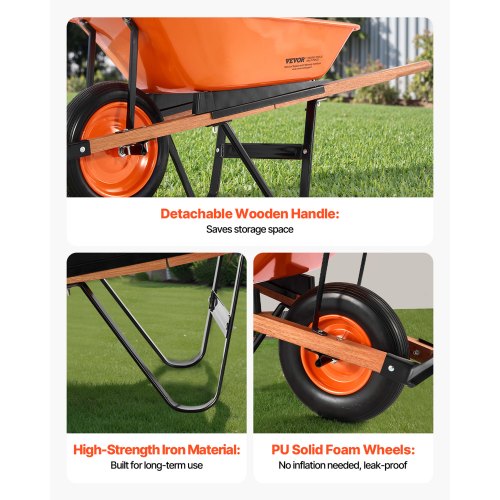
Steel wheelbarrows are strong and hold heavy items well. Plastic ones are lighter and resist rust but may break under heavy weight.
- Steel: durable and strong but heavier
- Plastic: lightweight and rustproof
- Polyurethane: resists cracks and dents
Wheel Options And Terrain
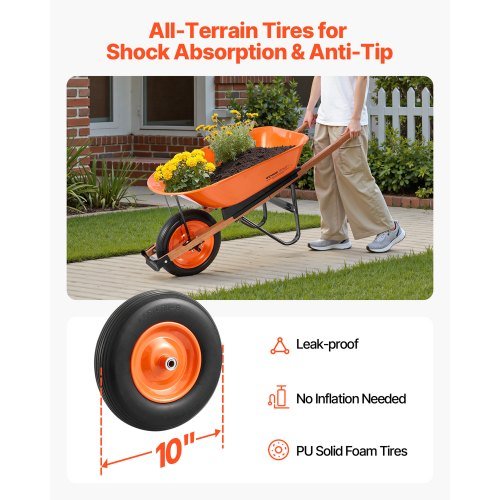
Wheel type matters for moving heavy loads on different surfaces. Pick wheels that match your terrain.
Pneumatic tires work well on rough or uneven ground. Solid rubber tires need less care but do not absorb shocks as well.
- Pneumatic tires: air-filled, soft ride on dirt and grass
- Solid rubber tires: no flats, good on hard surfaces
- Polyurethane wheels: durable and smooth on concrete
Preparing For Heavy Loads
Using a wheelbarrow for heavy loads needs good preparation. This helps move materials safely and easily.
Preparing the wheelbarrow and load reduces risks of injury and damage. Follow key steps before starting.
Assessing The Load Weight
Check how heavy the load is before lifting it. Too much weight can make the wheelbarrow hard to control.
Estimate the weight by lifting a small part or using a scale. Know your wheelbarrow’s weight limit.
- Do not exceed the wheelbarrow’s max weight
- Divide very heavy loads into smaller parts
- Ask for help if the load feels too heavy
Balancing The Load
Place the load evenly in the wheelbarrow to keep balance. Uneven weight can tip it over.
Put heavier items closest to the wheel. This reduces strain on your arms and helps control.
- Center the load over the wheel
- Spread the weight from side to side
- Keep the load low for better stability
Securing Materials
Secure loose materials so they do not fall while moving. Use straps or ropes if needed.
Cover the load with a tarp for dust or small debris. This keeps the load together and safe.
- Tie down loose items firmly
- Use a tarp for light or dusty loads
- Check the load often during transport
Proper Lifting And Handling
Using a wheelbarrow for heavy loads needs care. Lifting and handling it the right way keeps you safe. Poor technique can cause injuries and make the work harder.
This guide explains how to lift and carry heavy loads with a wheelbarrow. Follow these tips to protect your back and muscles.
Safe Lifting Techniques
Start by bending your knees and keeping your back straight. Avoid bending from the waist. Use your leg muscles to lift the wheelbarrow.
Lift slowly and steadily. Do not twist your body while lifting. Keep the load close to your body for better balance.
- Bend knees, not your back
- Hold the wheelbarrow handles firmly
- Lift with your legs
- Keep the load close to your body
- Avoid twisting while lifting
Grip And Posture Tips
Hold the handles with a firm and comfortable grip. Place your hands evenly on both handles. This helps control the wheelbarrow better.
Stand with feet shoulder-width apart. Keep your back straight and shoulders relaxed. This posture improves balance and reduces strain on your body.
- Use both hands to grip handles
- Keep feet shoulder-width apart
- Stand tall with straight back
- Relax your shoulders
- Look ahead, not down
Avoiding Strain And Injury
Do not overload the wheelbarrow. Heavy loads increase the risk of falling or hurting yourself. Take breaks if you feel tired.
Use your legs to push the wheelbarrow, not your back. If the load is too heavy, ask for help. Always move slowly and carefully to avoid accidents.
- Do not carry too much weight
- Push with legs, not back
- Take regular breaks
- Ask for help if needed
- Move slowly and carefully
Navigating Different Terrains
Using a wheelbarrow for heavy loads can be tricky on different types of ground. Each terrain needs a careful approach to avoid spills or accidents.
Knowing how to handle uneven surfaces, slopes, and soft ground makes your work easier and safer. This guide explains how to manage these terrains well.
Handling Uneven Surfaces
Uneven surfaces can make pushing a wheelbarrow hard. Watch for rocks, holes, or bumps that could tip it over.
Keep your wheelbarrow steady by moving slowly and using both hands to balance the load. Look ahead to pick the smoothest path.
- Check the path before you start
- Keep the load centered and balanced
- Move slowly over rough spots
- Use your legs to absorb bumps
Managing Slopes And Inclines
Going uphill or downhill with a heavy load takes extra care. Push uphill with steady pressure and keep your body low for balance.
When going downhill, control the wheelbarrow by holding the handles firmly. Walk slowly to avoid losing control.
- Lean forward when pushing uphill
- Use your legs, not just your arms
- Hold handles tight going downhill
- Walk at a slow, steady pace
Dealing With Mud And Gravel
Mud and gravel can make wheels slip or sink. Use a wheelbarrow with wide, sturdy tires to improve grip.
Keep your speed slow and steady. If the wheel starts to sink, lift the handles slightly to help move forward.
- Choose wide tires for better traction
- Move slowly to avoid slipping
- Lift handles gently if stuck
- Clear the path of large stones or thick mud
Maintenance For Longevity
Taking care of your wheelbarrow helps it last longer. Regular maintenance keeps it strong and safe to use. This guide covers simple steps to maintain your wheelbarrow.
Cleaning, checking tires, and proper storage are key parts of good upkeep. Follow these tips to keep your wheelbarrow in top shape for heavy loads.
Cleaning After Use
After using the wheelbarrow, remove dirt and debris. Clean the tray and handles with water and a brush. Dry all parts to prevent rust and damage.
- Remove soil and mud from the tray
- Use a stiff brush for stuck debris
- Rinse with water and dry with a cloth
- Check for any cracks or damage
Checking Tires And Wheels
Inspect tires and wheels before each use. Look for wear, cracks, or low air pressure. Properly inflated tires make moving heavy loads easier and safer.
| Check Item | What to Look For | Action |
|---|---|---|
| Tire Pressure | Low or flat tire | Inflate to recommended pressure |
| Wheel Bearings | Noise or stiffness | Lubricate or replace |
| Wheel Condition | Cracks or damage | Repair or replace wheel |
Storing Properly
Store your wheelbarrow in a dry, covered area. Keep it off the ground to avoid moisture damage. Covering it protects from rain and sun.
Here are tips for proper storage:
- Keep the wheelbarrow under a roof or tarp
- Hang it on a wall using hooks to save space
- Store with the tray facing down to avoid water pooling
- Check and clean before storing for long periods

Credit: www.vevor.com
Troubleshooting Common Issues
Wheelbarrows are useful for carrying heavy loads. Sometimes, problems can slow down your work. Fixing these common issues will keep your wheelbarrow working well.
Below are tips on how to fix flat tires, repair frame damage, and adjust wheel alignment. Follow these steps to maintain your wheelbarrow.
Fixing A Flat Tire
A flat tire stops your wheelbarrow from moving smoothly. You can fix it by finding the cause and repairing it carefully.
- Remove the wheel from the wheelbarrow.
- Take out the inner tube from the tire.
- Look for holes or sharp objects stuck in the tire.
- Patch the hole or replace the inner tube if needed.
- Put the tube back inside the tire and mount the wheel.
- Inflate the tire to the right pressure.
Repairing Frame Damage
The frame supports the load and keeps the wheelbarrow steady. Damage can cause wobbling or bending. Fix small issues early to avoid bigger problems.
| Damage Type | Cause | How to Repair |
|---|---|---|
| Bent Frame | Overloading or dropping | Use a hammer to bend it back carefully |
| Cracks | Metal fatigue or rust | Weld cracks or replace the damaged part |
| Loose Bolts | Vibration during use | Tighten all bolts and check regularly |
Adjusting Wheel Alignment
Wrong wheel alignment makes pushing hard and causes uneven wear. Adjust the wheel to keep your wheelbarrow balanced and easy to move.
- Check if the wheel sits straight between the handles.
- Loosen the axle nuts slightly to adjust the wheel position.
- Move the wheel until it aligns with the frame center.
- Tighten the axle nuts securely.
- Test the wheelbarrow by pushing it on a flat surface.

Credit: www.amazon.com
Frequently Asked Questions
How Do I Safely Load Heavy Materials In A Wheelbarrow?
Distribute weight evenly to maintain balance. Place heavier items close to the wheel. Avoid overloading to prevent tipping or strain.
What Type Of Wheelbarrow Is Best For Heavy Loads?
Choose a heavy-duty wheelbarrow with a reinforced frame and pneumatic tires. Steel trays offer better durability than plastic for heavy materials.
How Can I Reduce Strain When Using A Wheelbarrow?
Bend your knees and keep your back straight while lifting. Use handles firmly and push slowly to maintain control and reduce fatigue.
What Maintenance Is Needed For Wheelbarrows Carrying Heavy Loads?
Regularly check tire pressure and lubricate moving parts. Tighten bolts and inspect the tray for cracks to ensure safety and longevity.
Conclusion
Using a wheelbarrow for heavy loads can save time and effort. Always check the load weight before lifting. Keep your back straight and use your legs to push. Balance the load well to avoid tipping. Take small steps and move slowly for control.
Regularly inspect the wheelbarrow for any damage or wear. Practice makes handling heavy loads easier and safer. With care, your wheelbarrow will be a helpful tool in your work. Stay safe and work smart.