
Have you ever looked at a beautifully carved wooden piece and wondered how those delicate patterns come to life? Imagine turning a simple block of wood into a work of art with your own hands.
Carving intricate patterns in wood might seem challenging, but with the right techniques and tools, you can create stunning designs that impress everyone. You’ll discover step-by-step methods that make complex carving easier than you think. Get ready to unlock your creativity and bring your wood projects to the next level!
Choosing The Right Wood
Carving intricate patterns in wood needs the right material. The wood must be soft enough to carve but strong to hold details.
Picking the right wood affects the final look and ease of carving. Some woods work better for fine details and smooth cuts.
Best Wood Types For Carving
Softwoods and hardwoods both have uses in carving. Softwoods are easier to carve but may not hold detail well. Hardwoods are tougher but allow sharp, lasting patterns.
- Basswood: Soft, light, easy to carve, ideal for beginners.
- Butternut: Soft with a nice grain, good for detailed work.
- Cherry: Hard, smooth grain, great for fine patterns.
- Walnut: Dark, strong, holds sharp details well.
- Mahogany: Dense wood, smooth finish, good for complex designs.
Wood Grain And Texture Effects
Wood grain affects how the carving looks and feels. Fine grain allows precise details. Coarse grain can add natural texture but may be harder to carve.
Different grains may change how tools move through the wood. Always carve along the grain for cleaner cuts and fewer splits.
- Straight grain: Smooth and predictable carving.
- Interlocked grain: Can cause tearing, needs careful cutting.
- Coarse grain: Adds texture but may reduce detail sharpness.
- Fine grain: Best for delicate, intricate patterns.
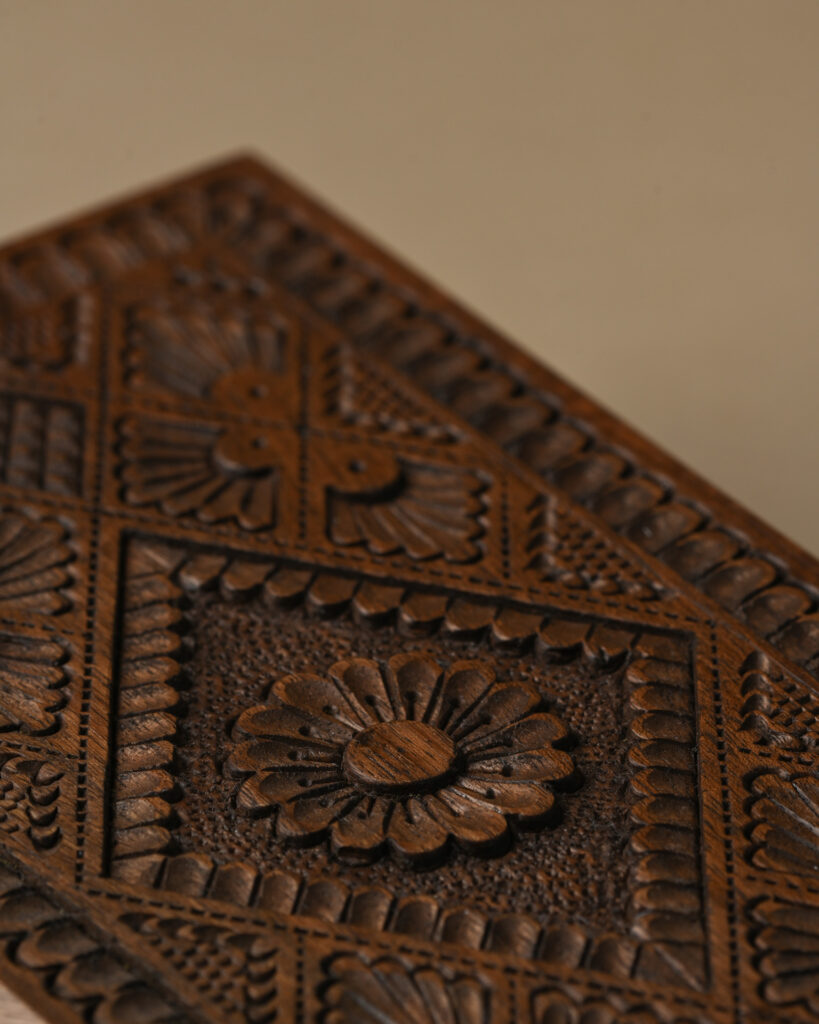
Credit: waga.ba
Essential Carving Tools
Carving intricate patterns in wood needs the right tools. Using good tools helps you work with detail and control.
This guide covers the main tools you need for hand and power carving. It also shares tips to keep your tools sharp and safe.
Hand Tools Every Carver Needs
Hand tools give you control for fine details. They let you shape wood with care and precision.
- Gouges: Curved blades for scooping wood.
- Chisels: Flat blades for straight cuts.
- Veiners: Small U-shaped tools for fine lines.
- V-tools: V-shaped blades for sharp grooves.
- Mallet: Wooden hammer to tap chisels safely.
- Sharpening stones: Keep blades sharp and smooth.
Power Tools For Detailed Work
Power tools speed up carving and help with tiny details. They make tough jobs easier and faster.
- Rotary tools: Small handheld drills with carving bits.
- Detail sanders: Smooth small areas quickly.
- Mini routers: Cut precise patterns and edges.
- Electric carving knives: Cut through wood with ease.
Tool Maintenance Tips
Keeping tools sharp and clean helps you carve better. Dull tools make work hard and unsafe.
- Sharpen blades regularly using stones or files.
- Clean tools after each use to remove wood dust.
- Oil metal parts to stop rust from forming.
- Store tools in a dry place with covers or cases.
- Check handles for cracks or loose parts often.
Preparing Your Workspace
Carving intricate patterns in wood needs a clean and organized workspace. Proper preparation helps you focus on your design.
Setting up your area correctly keeps tools in reach and improves your carving accuracy.
Setting Up For Precision
Choose a sturdy table or workbench that does not wobble. This keeps your wood steady while carving.
Arrange your carving tools neatly. Keep them within easy reach to avoid distractions.
- Use clamps to hold the wood firmly in place
- Keep your carving knives sharp for clean cuts
- Organize tools by size or type for quick access
- Clear away clutter to avoid accidents
Lighting And Safety Measures
Good lighting helps you see fine details in your wood. Use bright, natural light if possible.
Wear safety gear like goggles and gloves. Protect your eyes and hands from wood chips and sharp tools.
- Place a desk lamp or adjustable light close to your work
- Use LED lights to avoid eye strain
- Keep first aid supplies nearby
- Wear a dust mask to avoid inhaling wood dust

Credit: stockcake.com
Designing Intricate Patterns
Carving intricate patterns in wood starts with a clear design. A good design guides your carving tools and shapes your work.
Taking time to plan and create your pattern helps prevent mistakes. It also makes the carving process smoother and more enjoyable.
Sketching And Transferring Designs
Begin by sketching your pattern on paper. Use simple shapes and lines to outline your design clearly.
After sketching, transfer the design onto the wood. You can use carbon paper or draw directly with a pencil.
- Place carbon paper between sketch and wood, then trace the design
- Draw freehand on wood if you are confident
- Use a light pencil to avoid hard-to-remove marks
Using Templates And Stencils
Templates and stencils help create consistent and detailed patterns. They save time and improve accuracy.
You can buy ready-made stencils or make your own from stiff paper or plastic sheets.
- Secure the stencil on the wood with tape or clamps
- Trace the pattern edges carefully with a pencil
- Remove the stencil to reveal a clear outline for carving
Carving Techniques For Detail
Carving intricate patterns in wood requires patience and precise skills. Using the right techniques helps bring out fine details.
Different tools and methods create unique textures and depth in your wood carvings. Learning these can improve your detailed work.
Relief Carving Basics
Relief carving means carving figures that stand out from a flat background. It creates a 3D look on a wood surface.
Start by drawing your design on the wood. Remove the background wood to make the design pop up.
- Use a mallet and chisels for removing large areas
- Work from the background to the details
- Keep the base level flat for contrast
Chip Carving Tips
Chip carving uses small cuts to remove tiny chips of wood. This method creates sharp, geometric patterns.
Use a sharp knife or chisel for clean cuts. Cut shallow chips to avoid breaking the wood.
- Mark your pattern clearly on the wood
- Make precise angled cuts
- Work slowly to keep edges sharp
Using V-tools And Gouges
V-tools have a V-shaped blade that cuts fine lines and grooves. Gouges have curved blades to scoop wood smoothly.
Use V-tools for outlining and adding texture. Gouges help create rounded shapes and smooth curves.
- Hold tools firmly and carve with controlled pressure
- Choose tool size based on the detail needed
- Keep blades sharp for clean cuts
Avoiding Common Mistakes
Carving intricate patterns in wood needs focus and care. Small mistakes can ruin your work.
Knowing how to avoid common errors helps make your carving neat and safe.
Preventing Wood Splitting
Wood can split if you carve too deeply or push too hard. Splitting ruins the pattern.
Use sharp tools and carve along the wood grain to reduce splitting. Take light cuts.
- Choose wood with tight grain for detailed work
- Keep tools sharp to cut cleanly
- Make shallow cuts to avoid cracking
- Carve in the direction of the grain
Managing Tool Slips
Tools can slip if you rush or hold them incorrectly. Slips cause mistakes and injuries.
Hold your tools firmly and work slowly. Keep your hands behind the cutting edge.
- Use clamps to hold the wood steady
- Keep your workspace clean and free of clutter
- Wear safety gloves to protect your hands
- Focus on each cut, do not rush
Correcting Errors Mid-carve
If you make a mistake, do not panic. Small errors can often be fixed.
Smooth rough spots with sandpaper. Adjust your pattern to hide small slips.
- Use fine sandpaper to soften unwanted cuts
- Carve new lines to blend errors into the design
- Fill small gaps with wood filler if needed
- Practice patience; corrections take time
Finishing And Preserving Carvings
Finishing your wood carving is key to showing its beauty. It also helps protect the work for a long time. Proper care keeps the details clear and sharp.
Use the right tools and materials to finish your carving. Each step adds strength and shine to the wood. Let’s explore how to make your carving last.
Sanding For Smoothness
Sanding removes rough spots and tool marks. It creates an even surface ready for finishing. Start with coarse sandpaper and move to finer grits.
- Begin with 80-grit sandpaper to smooth deep cuts.
- Use 120-grit for moderate smoothing.
- Finish with 220-grit for a soft, smooth feel.
- Sand along the grain to avoid scratches.
- Clean dust off with a soft brush or cloth.
Applying Stains And Sealers
Stains add color and highlight the wood grain. Sealers protect the wood from moisture and dirt. Choose products that suit your wood type.
| Type | Purpose | Application Tips |
| Oil-based Stain | Deep color and rich finish | Apply with cloth; wipe excess after 5 minutes |
| Water-based Stain | Fast drying and easy cleanup | Brush on evenly; avoid pooling |
| Polyurethane Sealer | Strong protective coat | Use thin layers; sand lightly between coats |
| Lacquer | Glossy and fast drying | Spray or brush in well-ventilated area |
Protecting Against Wear
Protect your carving from damage by handling it carefully. Use finishes that resist scratches and water. Store carvings away from direct sunlight and humidity.
- Apply wax or paste polish for extra surface protection.
- Keep carvings on soft cloth or padded shelves.
- Clean dust gently with a soft brush regularly.
- Avoid placing carvings where they can fall or be knocked.
- Reapply finish every few years to keep protection strong.
Advanced Carving Tips
Carving intricate patterns in wood takes skill and patience. Advanced techniques help bring your designs to life.
This guide covers layering, mixing materials, and using paint and gold leaf for detail.
Layering And Depth Techniques
Creating layers adds depth and interest to your wood carvings. Start by carving the background first.
- Outline the main shapes lightly on the wood surface.
- Carve deeper into the background to push it back visually.
- Build up the foreground by carving shallower layers.
- Use different carving tools for varied textures.
- Sand each layer gently to smooth transitions.
Incorporating Mixed Materials
Adding other materials can enhance your wood carving’s look and feel. Metals, stones, and resin work well.
| Material | Use | Tips |
|---|---|---|
| Metal | Inlays or accents | Use thin sheets or wires for detail |
| Stone | Embedded gems or small tiles | Secure with strong glue or resin |
| Resin | Fill small gaps or create smooth surfaces | Mix color or glitter for effect |
Enhancing With Paint And Gold Leaf
Paint and gold leaf highlight details and add richness. Use thin layers to avoid hiding carving lines.
- Seal wood before painting to protect it.
- Apply paint in light coats to keep texture visible.
- Use gold leaf on raised areas for shine.
- Fix gold leaf with a special adhesive called size.
- Finish with a clear varnish to protect your work.

Credit: www.schaaftools.com
Frequently Asked Questions
What Tools Are Best For Carving Intricate Wood Patterns?
The best tools include carving knives, gouges, V-tools, and chisels. Sharp tools ensure clean cuts and precise details. Power tools like rotary tools can speed up the process but require practice for accuracy. Always choose tools based on your pattern complexity and wood type.
How Do I Prepare Wood Before Carving Patterns?
Start by selecting a smooth, softwood like basswood or pine. Sand the surface to remove rough spots. Secure the wood firmly to prevent movement. Transfer your pattern clearly using a pencil or stencil. Proper preparation ensures easier and cleaner carving.
What Techniques Help Create Detailed Wood Carvings?
Use controlled, shallow cuts to build details gradually. Employ different gouge sizes for varied textures. Practice layering cuts to add depth. Work slowly and maintain consistent pressure. Proper technique improves precision and reduces mistakes in intricate designs.
How Can I Avoid Common Wood Carving Mistakes?
Avoid applying too much pressure to prevent wood splitting. Keep tools sharp for smooth cuts. Work in a well-lit area to see details clearly. Practice on scrap wood before starting your main piece. Taking breaks helps maintain focus and accuracy.
Conclusion
Carving intricate patterns in wood takes practice and patience. Start with simple designs and work your way up. Use the right tools and keep them sharp. Take your time to avoid mistakes and enjoy the process. Each piece you carve will improve your skills.
Remember, careful planning helps create beautiful results. Keep experimenting with new shapes and styles. Wood carving brings both challenge and joy. Your creativity can shine through every cut. Stay focused and have fun crafting your unique wooden art.
