
If you’ve ever struggled to cut plywood cleanly and accurately, you’re not alone. Using a table saw can make the job faster and give you smooth, precise edges every time.
But if you’re unsure about how to handle the saw safely or get the best results, this guide is for you. By following simple steps and insider tips, you’ll gain the confidence to tackle your plywood projects like a pro.
Keep reading, and soon you’ll be cutting with ease and accuracy—no more frustration or wasted material.

Credit: www.findbuytool.com
Choosing The Right Blade
Using the right blade is key to cutting plywood smoothly. It helps prevent splinters and keeps the cut clean.
Picking the correct blade depends on the blade type, size, teeth count, and material. These factors affect the cut quality.
Blade Types For Plywood
Plywood needs blades designed for fine cuts. There are different blade types made for various materials.
Combination blades and plywood blades are good choices. They reduce splintering and give smooth edges.
- Combination Blades:Good for general use on plywood and wood.
- Plywood Blades:Have more teeth for finer cuts and less tear-out.
- Fine-Tooth Blades:Best for very smooth cuts on thin plywood sheets.
Blade Size And Teeth Count
Blade size affects the depth of the cut. Most table saws use 10 or 12-inch blades for plywood.
Teeth count changes the smoothness of the cut. More teeth mean smoother edges but slower cuts.
- 24 to 40 teeth: Faster cuts with rougher edges
- 60 to 80 teeth: Balanced speed and smoothness
- 80 to 100+ teeth: Very smooth but slower cutting
Carbide Vs Steel Blades
Blade material affects how long the blade stays sharp and cuts well. Carbide and steel are common options.
Carbide blades last longer and cut cleaner. Steel blades are cheaper but dull faster.
- Carbide Blades:Stay sharp longer and handle plywood well.
- Steel Blades:Cost less but need frequent sharpening.
Credit: www.familyhandyman.com
Preparing The Table Saw
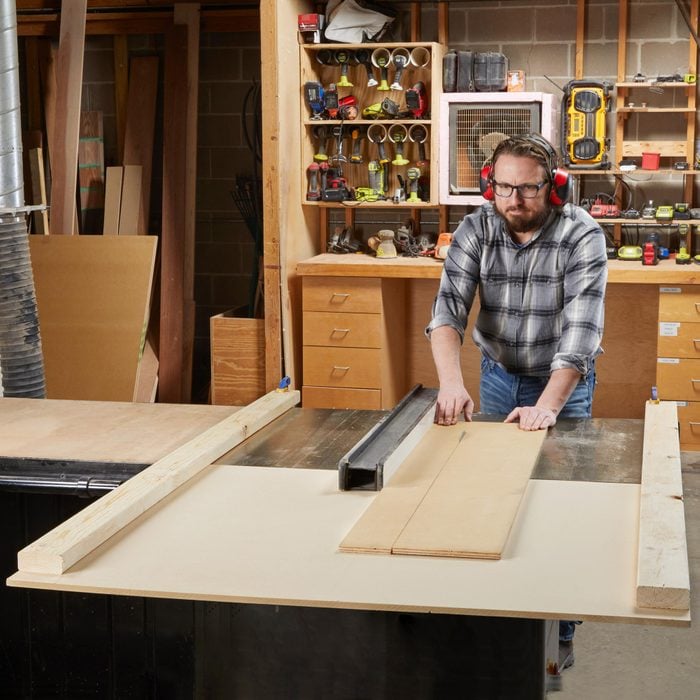
Before cutting plywood, you must prepare your table saw. Proper setup helps you make clean and safe cuts. It also protects you from accidents.
Focus on adjusting the blade height, setting the fence, and checking safety features. These steps get your saw ready for plywood cutting.
Setting The Blade Height
Set the blade height so it just clears the plywood thickness. The blade should be about 1/8 inch above the wood surface. This reduces tear-out and improves safety.
Too high or too low blade height can cause poor cuts. Adjust the height using the wheel or lever on your saw.
Adjusting The Fence
The fence guides your plywood for straight cuts. Adjust the fence to the width you want to cut. Lock it firmly in place so it does not move during cutting.
- Measure the distance from the blade to the fence
- Use a tape measure or ruler for accuracy
- Make sure the fence is parallel to the blade
- Lock the fence securely
Ensuring Safety Features Are Active
Check all safety features before cutting plywood. Confirm the blade guard is in place and the riving knife is aligned. These parts reduce kickback and injuries.
Also, make sure the anti-kickback pawls work well. Test the power switch and emergency stop button. Always wear safety glasses and hearing protection.
Measuring And Marking Plywood
Cutting plywood accurately needs careful measuring and marking. This process helps make clean and precise cuts on your plywood sheet.
Using the right tools and techniques will keep your work safe and efficient. Below are key steps to measure and mark plywood properly.
Using A Tape Measure
Use a tape measure to get exact dimensions on your plywood. Pull the tape tight to avoid any slack or bending. Measure twice to confirm the length before marking.
Hold the tape measure firmly against the edge of the plywood. Note the measurement at the point where you want to cut. This will guide your cutting line.
Marking Straight Lines
Draw clear and straight lines to follow with your saw. Use a carpenter’s square or a straight edge to guide your pencil. Avoid freehand drawing to keep lines straight.
- Place the straight edge along the measured points.
- Hold it steady to prevent slipping.
- Draw a light pencil line along the edge.
- Darken the line if needed for better visibility.
Clamping The Plywood Securely
Clamping keeps plywood stable while you cut. This reduces movement and helps make precise cuts. Use clamps that fit your workbench and plywood size well.
| Clamping Tips | Reason |
|---|---|
| Place clamps near the cut line | Prevents plywood from shifting during cutting |
| Use enough clamps to hold all edges | Keeps the sheet flat and steady |
| Check clamps are tight but not too tight | Avoids damaging the plywood |
| Clear the saw path before clamping | Ensures safe and uninterrupted cutting |
Cutting Techniques
Using a table saw for plywood cutting needs care and skill. Good cutting techniques help make clean and safe cuts.
This guide covers how to make rip cuts, crosscuts, and the use of a zero-clearance insert.
Making Rip Cuts
Rip cuts go along the length of the plywood. Use the table saw fence to guide the wood straight.
Keep the plywood flat on the table and push it slowly. This helps avoid splinters and keeps the cut straight.
- Set the fence to the desired width
- Use a push stick for safety
- Keep steady pressure against the fence
- Feed the plywood smoothly without stopping
Making Crosscuts
Crosscuts cut across the grain of the plywood. Use a miter gauge to hold the wood at a right angle.
Hold the plywood firmly and push it past the blade in one slow motion. This helps reduce tear-out on the edges.
- Set the miter gauge at 90 degrees
- Support the plywood on both sides
- Push the wood steadily through the blade
- Do not force the cut or move too fast
Using A Zero-clearance Insert
A zero-clearance insert fits around the blade to reduce gaps. It helps prevent tear-out and supports the plywood.
Install the insert before cutting. It keeps small pieces from falling and improves cut quality.
- Remove the standard throat plate
- Place the zero-clearance insert in the table
- Align the insert opening with the blade
- Secure the insert to avoid movement
Reducing Tear-out And Splintering
Cutting plywood with a table saw can cause tear-out and splintering on the edges. These rough edges make your project look unprofessional. Using simple techniques can help you get clean cuts every time.
By preparing the plywood and cutting carefully, you protect the surface from damage. These tips focus on keeping the wood smooth and neat along the cut line.
Using Masking Tape On Cut Line
Apply masking tape along the cut line before you saw. The tape holds the wood fibers in place and reduces splintering.
Press the tape firmly so it sticks well. Cut right through the tape with your table saw blade.
- Mark the cut line on the plywood.
- Place masking tape over the line.
- Press tape down to avoid bubbles.
- Cut through the tape and wood.
- Remove tape after the cut.
Scoring The Cut Line
Scoring means making a shallow cut along the cut line before the full cut. This helps stop tear-out by cutting the fibers first.
Use a utility knife or a scoring blade to score the plywood surface. Then make your main cut with the table saw.
- Draw the cut line clearly.
- Use a sharp blade to score the line lightly.
- Score both sides of the plywood if possible.
- Cut slowly with the table saw.
Cutting With The Good Side Down
Place the plywood so the good side faces down on the table saw. The saw blade cuts upward and can cause tear-out on the top side.
By putting the good side down, the rough cut will be on the back. You can sand or finish the front side later.
- Identify the good side of the plywood.
- Place the good side facing down on the saw table.
- Hold the plywood firmly and push slowly.
- Check the cut edge for smoothness.
Safety Tips For Table Saw Use
Using a table saw to cut plywood requires care and attention. Safety helps prevent injuries and accidents. Always follow key safety tips before starting your work.
Focus on wearing the right gear, keeping your work area clean, and placing your hands correctly. These steps keep you safe and your cuts precise.
Wearing Protective Gear
Protective gear is important when using a table saw. It lowers the risk of injury from flying debris and sharp blades. Always wear safety glasses and hearing protection.
- Wear safety goggles to protect your eyes
- Use earplugs or earmuffs to protect your hearing
- Wear a dust mask to avoid breathing sawdust
- Avoid loose clothing and tie back long hair
Maintaining A Clean Work Area
A clean work area helps you focus and avoid accidents. Sawdust and scraps can cause slipping or block your view of the blade. Clear your workspace often.
| Task | Why It Matters |
| Remove sawdust regularly | Prevents slipping and fire hazards |
| Keep tools organized | Avoids tripping over scattered tools |
| Clear off scrap wood | Ensures clear cutting lines and blade visibility |
Proper Hand Placement
Keep your hands safe by placing them correctly. Avoid pushing the plywood close to the blade with your hands. Use push sticks or push blocks for better control.
- Keep hands at least 6 inches from the blade
- Use push sticks to guide small or narrow pieces
- Do not reach over or behind the blade while it is running
- Always hold the plywood firmly against the fence
Maintaining Your Table Saw
Keeping your table saw in good shape is important for safe and accurate cuts. Regular maintenance helps the saw work better and last longer.
This guide covers cleaning, checking alignment, and lubricating parts to keep your table saw ready for plywood cutting.
Cleaning The Blade And Table
Dirt and resin can build up on the blade and table. Cleaning them keeps the saw running smoothly and cuts precise.
- Unplug the saw before cleaning.
- Use a brush to remove dust and debris from the blade.
- Apply a blade cleaner to remove resin and pitch.
- Wipe the table surface with a damp cloth.
- Dry the table to prevent rust.
Checking Blade Alignment
Blade alignment affects cut accuracy. Misaligned blades cause rough cuts and can be dangerous.
| Check Point | How to Check | What to Do |
| Blade Parallel to Miter Slot | Use a combination square to measure gap | Adjust the blade tilt or fence |
| Blade Height | Raise blade to full height and measure | Adjust height mechanism if needed |
| Blade Tightness | Check if blade wobbles | Tighten arbor nut |
Lubricating Moving Parts
Lubrication reduces wear and keeps parts moving smoothly. Use the right oil on gears and bearings.
- Apply lubricant to the arbor and gears.
- Use a dry lubricant on the table surface to avoid dust build-up.
- Do not over-lubricate to prevent attracting dirt.
- Follow the saw manufacturer’s instructions for lubrication points.

Credit: www.findbuytool.com
Troubleshooting Common Issues
Using a table saw to cut plywood can sometimes cause problems. Knowing how to fix these issues helps you work safely and accurately.
This guide covers three common problems: blade binding, inaccurate cuts, and excessive vibration. Each section explains causes and solutions.
Blade Binding
Blade binding happens when the saw blade gets stuck inside the plywood. This can stop your cut and damage the wood or blade.
- Check the blade for sharpness and clean any pitch buildup.
- Use a sharp blade designed for cutting plywood.
- Adjust the blade height to just above the thickness of the plywood.
- Make sure the fence is aligned straight and parallel to the blade.
- Feed the plywood at a steady, moderate speed to avoid pinching the blade.
Inaccurate Cuts
Inaccurate cuts can ruin your project. They occur when the plywood is not held steady or the saw is not set correctly.
| Cause | How to Fix |
| Fence out of alignment | Use a square to check and adjust the fence parallel to the blade |
| Blade not square to table | Adjust the blade tilt angle until it is perfectly perpendicular |
| Uneven plywood support | Use outfeed supports or a stable work surface |
| Improper measuring or marking | Measure twice and mark clearly before cutting |
Excessive Vibration
Excessive vibration can cause poor cuts and may be unsafe. It often comes from loose parts or an unbalanced blade.
- Tighten all screws and bolts on the saw and table.
- Inspect the blade for damage or warping and replace if needed.
- Balance the blade following manufacturer instructions.
- Ensure the saw is on a solid, level surface.
- Use anti-vibration mats or pads under the saw stand.
Frequently Asked Questions
What Safety Gear Is Essential When Cutting Plywood?
Always wear safety glasses, ear protection, and a dust mask. Gloves can protect your hands but avoid loose clothing. Proper gear prevents injuries from debris and noise during plywood cutting.
How Do I Set The Table Saw For Plywood Cutting?
Adjust the blade height so it’s slightly higher than plywood thickness. Use the fence for straight cuts. Ensure the blade is sharp and clean for smooth, precise cuts.
What Blade Type Is Best For Cutting Plywood?
Use a fine-tooth blade with 60-80 teeth for clean cuts. A carbide-tipped blade reduces splintering and gives smoother edges on plywood sheets.
How Can I Prevent Plywood From Splintering?
Use painter’s tape along the cut line. Cut with the good side down to reduce splinters. Slow and steady feed rate also helps minimize tearing.
Conclusion
Cutting plywood with a table saw is easier with practice. Always prioritize safety by using protective gear. Keep your workspace clean and organized. Make sure your saw blade is sharp and suitable for plywood. Accurate measurements lead to precise cuts.
Use guides and fences for straight edges. With patience and attention, your cuts will improve. Remember, practice makes perfect. Enjoy your woodworking projects with newfound confidence. Happy sawing!
