
Choosing the best wood jointer can feel overwhelming with so many options on the market. But finding the right one is crucial if you want your woodworking projects to look professional and precise.
Imagine saving hours of frustration by using a tool that smooths and flattens your wood perfectly every time. You’ll discover exactly what to look for in a wood jointer, so you can make a confident choice that fits your needs and skills.
Keep reading—your next woodworking masterpiece depends on it.
Why Choose A Wood Jointer
A wood jointer helps create flat and straight edges on wood pieces. It improves the fit and finish of your woodworking projects.
Using a jointer saves time and effort compared to manual sanding or planing. It is an essential tool for woodworkers wanting precise results.
Benefits For Woodworking
A wood jointer offers many advantages that help woodworkers achieve better quality work.
- Creates flat, smooth surfaces on boards
- Ensures straight edges for tight joints
- Removes warps and twists in wood
- Improves glue adhesion by cleaning edges
- Reduces sanding time after assembly
Common Uses
Wood jointers work well in many woodworking tasks. They prepare wood pieces before assembly or finishing.
| Use | Description |
| Edge jointing | Straightening edges for joining boards |
| Face jointing | Flattening wide surfaces of boards |
| Removing warps | Fixing twisted or bowed wood pieces |
| Trimming doors | Smoothing edges for proper fit in frames |
| Creating rabbets | Shaping edges for specific joints |
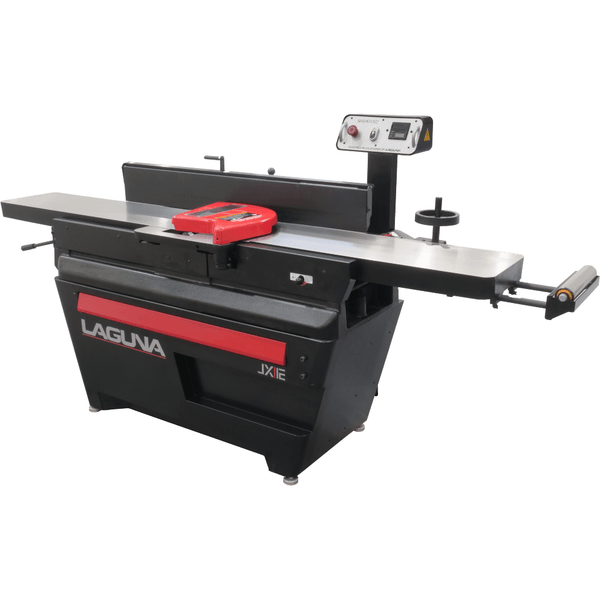
Credit: landmarktools.com
Types Of Wood Jointers
Wood jointers help you create smooth edges on boards. They are important for making tight joints in woodworking projects.
There are different types of wood jointers. Each type works best for specific tasks and spaces.
Benchtop Jointers
Benchtop jointers are small and light. You can place them on a workbench or table.
They are good for small projects and limited space. These jointers are easy to move and store.
- Compact size
- Affordable for beginners
- Less power than larger jointers
- Best for light-duty work
Stationary Jointers
Stationary jointers are large and heavy. They stay in one place in your workshop.
They offer more power and wider cutting capacity. These jointers handle big boards and tough jobs well.
- Strong motor and build
- Wide tables for large wood
- Precise and smooth cuts
- Require dedicated space
Portable Jointers
Portable jointers are easy to carry. You can take them to different job sites.
They are smaller than stationary jointers but more powerful than benchtop models. Portable jointers balance power and mobility.
- Lightweight and easy to move
- Good for on-site work
- Moderate power and size
- Flexible for many tasks
Key Features To Consider
Choosing the right wood jointer can make your woodworking projects easier and more precise. Several features affect the tool’s performance and ease of use.
Understanding these features helps you pick the jointer that fits your needs best.
Cutter Head Options
Cutter heads come in different types, each affecting the finish and sharpness of your cuts. Common options include helical, straight knife, and spiral cutter heads.
- Helical cutter headsuse many small blades arranged in a spiral. They create smooth cuts and reduce noise.
- Straight knife cutter headsuse fewer blades and are easier to replace but can be noisier.
- Spiral cutter headsoffer a balance with quieter operation and good cutting quality.
Fence Adjustability
A good fence helps guide the wood and keeps cuts straight. Look for fences that adjust easily and lock firmly in place.
| Feature | Benefit |
|---|---|
| Tilting fence | Allows angled cuts for bevels and chamfers |
| Quick-release clamps | Speed up fence adjustments |
| Scale markings | Help set precise angles |
Table Size And Material
The table supports the wood while cutting. Larger tables handle bigger boards easily.
Table materials like cast iron are durable and reduce vibration for smoother cuts.
Motor Power And Speed
Motor power affects the jointer’s ability to cut hardwood and thick boards. Higher horsepower means more power.
- Look for motors with at least 1.5 HP for most tasks.
- Variable speed controls allow adjusting the feed rate.
- Consistent speed helps maintain smooth and clean cuts.
Safety Tips For Using Jointers
Using a wood jointer can make your woodworking projects smooth and precise. It is important to follow safety rules to avoid accidents and injuries.
This guide gives you easy safety tips for handling, protective gear, and maintenance of jointers.
Proper Handling Techniques
Always keep your hands away from the cutter head. Use push blocks or push sticks to guide the wood safely.
Feed the wood in the right direction and avoid forcing it. Stand to the side to avoid kickbacks.
- Keep fingers at least 4 inches from blades
- Use push blocks for narrow boards
- Feed wood against cutter rotation
- Stand to the side, not behind the wood
- Do not force wood through the jointer
Protective Gear Recommendations
Wear safety glasses to protect your eyes from flying chips. Ear protection helps reduce noise exposure.
Use a dust mask to avoid breathing sawdust. Wear snug clothes and avoid loose jewelry that can catch in the machine.
- Safety glasses or goggles
- Hearing protection like earplugs or earmuffs
- Dust mask or respirator
- Tight-fitting clothing
- Remove rings, bracelets, and watches
Maintenance For Safe Operation
Keep blades sharp and clean to reduce the risk of kickbacks. Check the fence and table for alignment before use.
Regularly inspect the power cord and switches. Clean dust and debris from the machine after each use.
- Sharpen blades as needed
- Align fence and table correctly
- Inspect power cords and switches
- Remove sawdust from machine
- Lubricate moving parts
Top Brands And Models
Choosing the right wood jointer helps you get smooth, flat edges on wood pieces. Many brands offer different jointers with various features. Knowing the best brands and models can guide you to the right choice.
This guide covers top jointers in three categories: budget, premium, and user favorites. Each section shows options that fit different needs and budgets.
Best Budget Choices
Budget jointers are great for beginners or small projects. They offer good performance at a low price. These models are compact and easy to use.
- WEN 6550 6-Amp 6-Inch Jointer
- PORTER-CABLE PC160JT 6-Inch Jointer
- SKIL 3365-02 6-Inch Jointer
These jointers have enough power for light woodworking. They work well on small boards and simple tasks.
Premium Models
Premium jointers offer more power and precision. They suit professionals and serious hobbyists. These models have larger cutting widths and better build quality.
- JET JJP-8BT 8-Inch Jointer
- DELTA 37-071 8-Inch Jointer
- Powermatic 1791213K PM2000 8-Inch Jointer
These jointers can handle big wood pieces. They provide smooth cuts and long-lasting durability.
User Favorites
User favorites balance price, quality, and features. Many woodworkers trust these models for daily use. They offer good value and reliable performance.
- Makita 2012NB 12-Inch Jointer
- Grizzly G0490 8-Inch Jointer
- Ryobi Jointer 6-Inch Jointer
These jointers get positive reviews for ease of use and results. They fit well in home workshops.

Credit: www.familyhandyman.com
Maintenance And Care
Keeping your wood jointer in good shape helps it work better and last longer. Regular care stops problems before they start.
Simple steps like cleaning, sharpening, and storing the tool well make a big difference. Follow these tips to keep your jointer ready for any job.
Cleaning And Lubrication
Dust and wood chips can build up on your jointer. Clean it after every use to keep it working smoothly.
Lubricate the moving parts often. This stops rust and reduces friction, which can wear out parts quickly.
- Use a soft brush or compressed air to remove dust.
- Wipe surfaces with a dry cloth to remove residue.
- Apply machine oil to bearings and gears regularly.
- Check the manufacturer’s guide for recommended lubricants.
Blade Sharpening And Replacement
Sharp blades give clean cuts and keep your jointer safe to use. Dull blades can damage wood and strain the motor.
Check blades often for dullness or damage. Sharpen them if you see rough cuts or replace them if they are chipped.
- Remove blades carefully following safety rules.
- Use a sharpening stone or take blades to a professional.
- Replace blades if sharpening does not improve performance.
- Balance blades properly after sharpening or replacement.
Storage Tips
Store your jointer in a dry place to avoid rust and damage. Protect it from dust and moisture.
Cover the jointer with a cloth or plastic cover. Keep it away from direct sunlight and extreme temperatures.
- Choose a flat, stable surface for storage.
- Keep the jointer unplugged and clean before storing.
- Remove blades if storing for a long time.
- Check the tool regularly during long storage periods.
Troubleshooting Common Issues
Wood jointers help create smooth and flat surfaces on wood pieces. Sometimes, you may face problems that affect your work quality.
This guide covers common jointer issues and simple ways to fix them. Read on to improve your woodworking results.
Uneven Cuts
Uneven cuts happen when the wood does not feed evenly over the blades. This problem creates rough or wavy surfaces.
- Check if the blades are dull or damaged. Replace or sharpen them if needed.
- Ensure the infeed and outfeed tables are level with each other.
- Feed the wood slowly and with steady pressure against the fence.
- Inspect the cutter head for any debris or build-up.
Motor Problems
Motor issues can cause the jointer to stop working or run weakly. These problems reduce cutting power and affect performance.
| Problem | Possible Cause | Solution |
| Motor won’t start | Power supply or switch failure | Check power cord and switch, replace if faulty |
| Motor overheats | Blocked ventilation or overuse | Clean vents, allow motor to cool down |
| Motor runs slowly | Worn brushes or belt slip | Replace brushes, tighten or replace belt |
Fence Misalignment
A misaligned fence causes angled cuts or inconsistent edges. The fence must be straight and secure.
To fix fence misalignment:
- Loosen the fence locking knobs.
- Use a carpenter’s square to align the fence at 90 degrees to the table.
- Tighten the knobs while holding the fence in position.
- Test with a scrap piece of wood to confirm accuracy.
Tips For Perfect Joinery
Choosing the right wood jointer is key to clean and strong joints. Proper techniques help you work safely and efficiently.
This guide covers how to set up the jointer, feeding methods, and using other tools together.
Setting Up The Jointer
Start by adjusting the infeed and outfeed tables. The outfeed table should be level with the cutter head.
- Check the fence for square alignment.
- Tighten all bolts and screws before use.
- Set the depth of cut to 1/32 inch or less for smooth edges.
- Ensure blades are sharp and clean for best results.
Feeding Techniques
Feed the wood steadily and with control. Keep pressure on the board for even cuts.
- Place your hands on the board firmly but not too tight.
- Start feeding at the infeed table, moving the board toward the blades.
- Apply downward pressure near the cutter head.
- Use consistent speed to avoid uneven surfaces.
- Never reach over the cutter head while the jointer runs.
Combining With Other Tools
| Tool | Use with Jointer | Benefit |
|---|---|---|
| Planer | After jointing | Ensures uniform thickness |
| Table Saw | After jointing | Cuts boards to width cleanly |
| Router | After jointing | Adds decorative edges |
Use the jointer first to flatten one face and one edge. Then use other tools to refine and shape the wood.

Credit: www.reddit.com
Frequently Asked Questions
What Factors Should I Consider When Selecting A Wood Jointer?
Consider cutter head type, fence adjustability, motor power, and table size. Choose based on your woodworking needs and budget for best results.
How Does A Wood Jointer Improve Woodworking Projects?
A wood jointer flattens and straightens wood edges, ensuring tight joints. It enhances project accuracy and overall finish quality.
What Is The Ideal Motor Power For A Wood Jointer?
A motor between 1 to 2 HP is ideal for most woodworking tasks. It provides sufficient power for smooth, consistent cuts.
Can I Use A Wood Jointer For Rough Lumber?
Yes, a wood jointer can flatten rough lumber before planing. It prepares wood surfaces for precise cutting and assembly.
Conclusion
Choosing the right wood jointer requires careful thought. Consider your specific needs. Think about the size and type of projects you’ll tackle. Check the machine’s power and capacity. Look at safety features for peace of mind. Budget is crucial; don’t overspend.
Read reviews from other users for insights. Visiting a store can provide hands-on experience. Remember, a good jointer enhances your woodworking. It makes tasks easier and results better. Take your time and make an informed choice. Happy woodworking!
